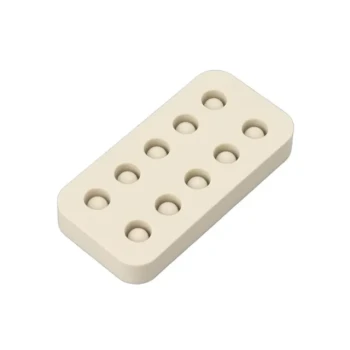
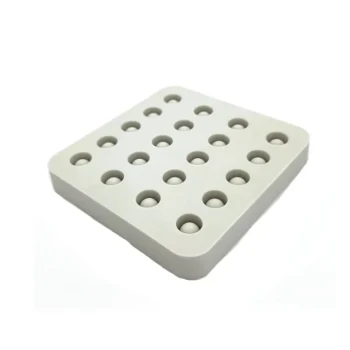
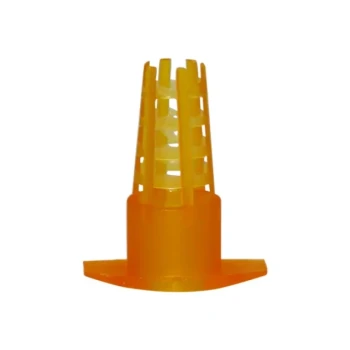
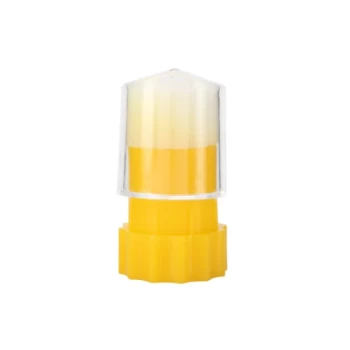
Standard artificial queen cell cups are precision-engineered consumables designed to replicate the geometry of natural cells while enabling industrial-scale workflows. They provide a uniform physical environment that simplifies the complex logistics of grafting, marking, and transferring larvae between the laboratory and the apiary.
By replacing variable natural wax cells with standardized units, breeders achieve consistent larval development and seamlessly integrate queen rearing into high-volume management systems.
Achieving Biological Consistency
Uniform Geometric Environment
In nature, queen cells can vary significantly in shape and size. Standardized cups provide a consistent physical and geometric environment for every developing larva. This uniformity ensures that environmental variables are controlled across the entire breeding batch.
Optimization of Royal Jelly Storage
The internal volume of the cup is not merely a container; it determines the storage capacity for royal jelly. A standardized cup ensures that the specific volume required for maximum nutritional intake is available, directly influencing the vitality and developmental quality of the virgin queen.
Streamlining Breeding Workflows
Batch Processing Capabilities
Artificial cups are designed to be fixed onto grafting frames in large groups. This converts individual cell management into a batch process, allowing beekeepers to rear queens on a large scale with significantly reduced labor per unit.
Simplified Transfer and Marking
Because the hardware is standardized, the physical transfer of larvae between laboratory settings and apiaries is seamless. This standardization also facilitates efficient marking and tracking of genetic lines, which is difficult to achieve with irregular natural cells.
System Integration and Protection
Seamless Hardware Compatibility
These cups are engineered to integrate perfectly with queen rearing frames and mating boxes. This mechanical compatibility eliminates the friction often found when trying to fit natural comb structures into precise management tools.
Enhanced Observation and Safety
When used in conjunction with rearing cages, these cups provide a controlled environment that protects newly emerged queens from worker bee aggression. They also allow breeders to visually monitor development and emergence without disrupting the colony structure.
Understanding the Trade-offs
The Criticality of Volume Precision
While standardization is an advantage, it introduces a dependency on the manufacturing quality of the cup. As noted in technical assessments, the internal volume is a foundational component of success. If a cup is manufactured with insufficient volume, it will physically limit royal jelly storage, inadvertently capping the potential quality of the queen regardless of the breeder's skill.
Material vs. Nature
Artificial cups mimic nature, but they act as a substrate. Unlike natural wax which bees manipulate easily, the rigid plastic of artificial cups requires the breeder to trust the pre-set dimensions. You lose the flexibility of the bees adapting the cell size dynamically, meaning the mold design must be biologically perfect to avoid rejection or poor development.
Making the Right Choice for Your Goal
To maximize the value of artificial queen cell cups, align their use with your specific breeding objectives:
- If your primary focus is High-Volume Production: Leverage the compatibility with grafting frames to maximize the number of larvae processed per batch.
- If your primary focus is Queen Vitality: strict attention must be paid to the internal volume specifications of the cup to ensure maximum royal jelly capacity.
- If your primary focus is Genetic Tracking: Use the standardized form factor to implement a rigorous marking and transfer system for precise lineage control.
Standardization transforms queen rearing from a variable craft into a predictable, scalable science.
Summary Table:
| Feature | Technical Advantage | Impact on Breeding |
|---|---|---|
| Geometry | Uniform physical environment | Eliminates developmental variables across batches |
| Volume | Optimized royal jelly storage | Ensures maximum nutritional intake and queen vitality |
| Design | Batch processing compatibility | Reduces labor costs and simplifies large-scale grafting |
| Integration | Seamless hardware fit | Protects queens from aggression and enables easy monitoring |
| Tracking | Standardized form factor | Facilitates precise genetic marking and lineage control |
Scale Your Apiary with Precision-Engineered Tools
At HONESTBEE, we understand that high-quality queen rearing starts with the right equipment. As a leading provider for commercial apiaries and global distributors, we supply a comprehensive range of beekeeping tools—from specialized hive-making machinery and honey-filling systems to precision-molded queen cell cups.
Our standardized consumables are designed to help you transition from variable craft to predictable, scalable science. Whether you are looking for wholesale beekeeping hardware or honey-themed cultural merchandise, HONESTBEE is your partner in industrial-grade beekeeping excellence.
Ready to optimize your production? Contact us today to discuss your wholesale needs!
References
- Peter Njukang Akongte, Dongwon Kim. The Influence of Environmental Factors on Site Selection Augment Breeding Success in Honey Bees: An Insight of Honey Bee Genetic Resource Conservation. DOI: 10.3390/biology13060444
This article is also based on technical information from HonestBee Knowledge Base .
Related Products
- 10-Cell Silicone Beeswax Bee Queen Cups Forming Mold
- JZBZ Type Wide Base Plastic Queen Cell Cups for Base Mounting and Queen Rearing
- Brown Nicot Queen Cell Cups for Breeding Queen Bees Beekeeping
- JZBZ Push-In Queen Cell Cups for Beekeeping
- Clear Black Plain Polystyrene Queen Bee Grafting Cell Cups No Lug for Bee Queen Cup
People Also Ask
- How do beeswax queen cell cups function? Optimize Queen Rearing with Biological Mimicry
- What is the biological function of beeswax queen cell cups? Boost Acceptance in Artificial Queen Rearing
- What role do specialized queen rearing tools play in developing mite-resistant honeybee stock? Master Genetic Selection
- What materials are used to make artificial queen cell cups for grafting? Beeswax vs. Plastic Guide
- What roles do specialized queen cell cups play in royal jelly production? Optimize Your Hive's Secretion and Yield