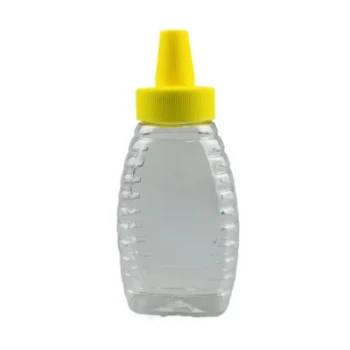
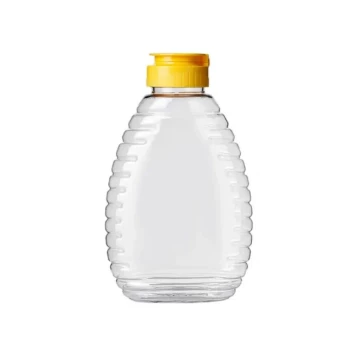
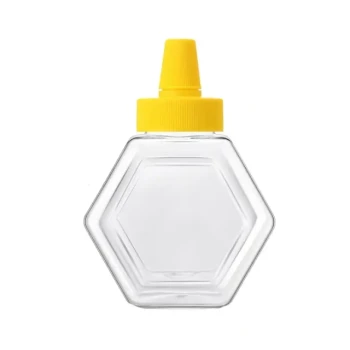
Standard industrial-grade plastic sampling bottles provide the consistency and durability required for reliable large-scale data collection. They explicitly standardize sample volumes to roughly 200 to 300 bees, minimizing statistical errors, while ensuring sample integrity through high resistance to ethanol and superior sealing capabilities.
In large-scale Varroa monitoring, data reliability hinges on minimizing variables. Industrial-grade bottles eliminate physical inconsistencies and chemical failures, ensuring that every sample collected in the field arrives at the lab in a standardized, analyzable condition.
Ensuring Statistical Validity
Minimizing Variable Errors
The primary technical advantage of these vessels is their ability to enforce a consistent sample volume.
By standardizing the container size, you ensure that field collectors consistently gather between 200 to 300 adult bees. This consistency is vital for reducing statistical fluctuations that occur when sample sizes vary wildly between collection points.
Reducing the "Noise" in Data
In large-scale surveys, the "sample base" (the number of bees) must be uniform to calculate infestation rates accurately.
Using non-standard containers often leads to under-sampling or over-sampling, which skews the final Varroa percentage. Industrial-grade bottles act as a physical control to keep this base constant.
Material Integrity and Sample Preservation
Chemical Resistance
Varroa samples are frequently preserved in ethanol, which acts as a solvent.
Industrial-grade plastic is engineered to possess high resistance to ethanol corrosion. This ensures the structural integrity of the bottle remains intact, preventing the plastic from degrading or reacting with the preservative during storage.
Sealing and Transport Security
Transporting samples from remote field sites to a central laboratory introduces significant risk.
These bottles offer superior sealing capabilities, which are essential for preventing leakage. A secure seal protects the sample from drying out and prevents external contaminants from compromising the data.
Evaluating the Trade-offs
Cost vs. Data Security
While industrial-grade equipment ensures standardization, it often represents a higher upfront cost compared to repurposed or consumer-grade containers.
You must weigh this financial investment against the risk of invalidating a study due to leaked samples or inconsistent data sets. In high-stakes monitoring, the cost of the bottle is usually negligible compared to the cost of a failed survey.
Supply Chain Dependencies
Relying on specific industrial-grade models requires a robust supply chain.
Unlike generic containers, these specific bottles may not be available at a local hardware store, requiring advanced procurement planning to ensure all field teams are equipped with identical tools.
Making the Right Choice for Your Survey
Depending on the scale and goals of your project, the necessity for industrial-grade equipment varies.
- If your primary focus is Statistical Accuracy: Prioritize these bottles to lock in a consistent sample base of 200–300 bees, eliminating volume-based data errors.
- If your primary focus is Logistical Integrity: Choose these bottles for their ethanol resistance and sealing quality to ensure zero sample loss during transport.
Standardization is not just about convenience; it is the baseline requirement for scientifically valid data.
Summary Table:
| Feature | Technical Advantage | Impact on Survey Quality |
|---|---|---|
| Standard Volume | Consistently holds 200-300 bees | Minimizes statistical errors and data noise |
| Ethanol Resistance | High chemical durability | Prevents container degradation and sample loss |
| Superior Sealing | Leak-proof design | Protects sample integrity during long-distance transport |
| Industrial Grade | Physical consistency | Eliminates variables across different collection sites |
Elevate Your Beekeeping Operations with HONESTBEE
At HONESTBEE, we understand that precision and reliability are the backbones of successful commercial apiaries and distribution networks. Whether you are conducting large-scale Varroa surveys or scaling your honey production, we provide the industrial-grade tools you need to succeed.
Why partner with us?
- Comprehensive Wholesale Catalog: From specialized hive-making and honey-filling machinery to essential industry consumables.
- Precision Tools: High-quality sampling bottles and beekeeping equipment designed for scientific accuracy and durability.
- Global Support: We cater to distributors and commercial operations with a robust supply chain you can depend on.
Ready to enhance your efficiency and secure your data? Contact us today to explore our full spectrum of beekeeping solutions!
References
- Francisco Estevão Carneiro, Geraldo Moretto. <b> Reproductive ability and level of infestation of the <i>Varroa destructor</i> mite in <i>Apis mellifera</i> apiaries in Blumenau, State of Santa Catarina, Brazil </b> - doi: 10.4025/actascibiolsci.v36i1.20366. DOI: 10.4025/actascibiolsci.v36i1.20366
This article is also based on technical information from HonestBee Knowledge Base .
Related Products
- Classic Beehive Honey Bottle Jar with Squeeze Dispenser Lid
- Squeezable No-Drip Beehive-Shaped Honey Jars with Flip-Top Cap
- Hexagonal Squeeze Honey Bottle with No Drip Lid
- Professional Plastic Honey Dipper for Easy Honey Drizzling
- Food Grade Plastic Honey Bucket Pail for Beekeeping
People Also Ask
- Why use high-quality honey jars? Protect Your Harvest with Superior Plastic & Glass Packaging Solutions
- What are the benefits of squeeze bottles for honey packaging? Unlock Mess-Free Convenience & Control
- How should honey bottles be prepared before pouring honey into them? The #1 Rule for Honey Longevity
- What are the features of honey bottles? Design for Convenience & Long-Term Preservation
- What are the features and benefits of using honey bottles for packaging? Optimize Preservation and Consumer Experience