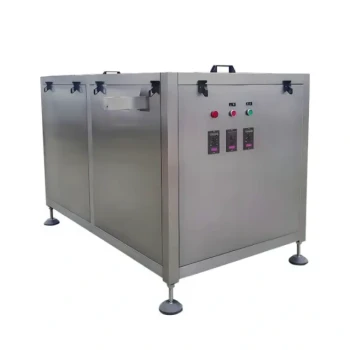
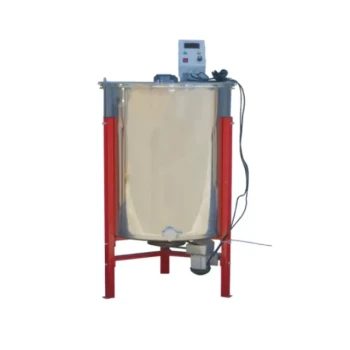
The technical advantages of standardized honey processing facilities lie in their ability to integrate extraction, filtration, and packaging into a seamless, controlled workflow. By utilizing radial centrifuges, producers can extract honey via centrifugal force without damaging the honeycomb, while the facility itself regulates temperature and humidity to ensure food safety and preserve flavor.
Core Takeaway Adopting standardized facilities and radial extraction is not merely about increasing speed; it is about decoupling production volume from product degradation. This infrastructure allows producers to scale operations while satisfying the rigorous hygiene and consistency standards required for high-end, regulated markets.
Optimizing Extraction with Radial Centrifuges
Preserving the Wax Infrastructure
The primary technical benefit of industrial-grade radial extractors is the preservation of the beeswax comb.
By utilizing centrifugal force rather than crushing or pressing, the honey is spun out while the structural integrity of the comb remains intact.
Maximizing Yield Potential
Because the comb is not destroyed during extraction, the empty frames can be returned to the hive.
This allows the bee colony to focus energy on honey production rather than rebuilding wax, leading to a significant increase in total honey yield over time.
The Critical Role of Environmental Control
Regulating Temperature and Humidity
Standardized facilities provide a strictly controlled indoor environment that field processing cannot match.
Precise regulation of temperature and humidity ensures the honey maintains its original flavor profile and prevents moisture absorption that could lead to spoilage.
Mitigating Contamination Risks
Modern processing lines often utilize fully enclosed, automated operations.
This design significantly reduces the risk of secondary contamination from environmental bacteria, dust, or microorganisms, which is critical for maintaining long-term storage safety.
Standardization as a Gateway to Premium Markets
Precision Metering and Consistency
Industrial filling equipment employs precise quantitative control systems.
This ensures standardized portioning across all product units, a necessity for maintaining brand consistency and meeting consumer expectations in retail environments.
Meeting Regulatory Prerequisites
The use of specialized machinery for filtration and dehydration is often a mandatory step for compliance.
These facilities serve as the hardware foundation for obtaining quality certifications, granting access to restricted sales channels such as pharmaceutical chains, cooperatives, and supermarkets.
Understanding the Operational Trade-offs
While the technical advantages are substantial, transitioning to standardized facilities introduces specific operational demands.
- Capital Intensity: Unlike traditional manual methods, this approach requires significant upfront investment in specialized machinery and climate-control infrastructure.
- Maintenance Rigor: The complexity of automated filling and filtration systems necessitates strict maintenance schedules to ensure hygiene standards are continuously met.
- Infrastructure Dependence: Operational success relies heavily on fixed locations with reliable power and space, reducing the mobility associated with traditional, nomadic beekeeping.
Making the Right Choice for Your Goal
To determine if this technical upgrade aligns with your current operational maturity, consider your primary objectives:
- If your primary focus is Maximizing Yield: Prioritize radial centrifuges to preserve honeycombs, allowing your colonies to produce honey faster by eliminating the need to rebuild wax.
- If your primary focus is Market Access: Focus on the controlled facility environment, as this is the prerequisite for the hygiene certifications needed to enter high-end retail and global supply chains.
Standardization is the bridge that transforms raw agricultural output into a high-value, commercially viable commodity.
Summary Table:
| Feature | Technical Advantage | Benefit for Producers |
|---|---|---|
| Radial Centrifuges | Centrifugal force extraction | Preserves comb integrity for hive reuse and higher yields. |
| Environmental Control | Temperature & humidity regulation | Prevents spoilage and preserves original honey flavor profiles. |
| Automated Lines | Enclosed, automated operation | Minimizes contamination risk and ensures pharmaceutical-grade hygiene. |
| Precision Filling | Quantitative control systems | Guarantees consistent portioning for retail and brand reliability. |
| Process Integration | Unified workflow | Simplifies compliance for global quality certifications and market access. |
Scale Your Honey Production with HONESTBEE Expertise
Transitioning to standardized production requires more than just equipment; it requires a partner who understands the demands of commercial beekeeping. HONESTBEE specializes in serving commercial apiaries and distributors by providing a comprehensive wholesale range of professional tools and machinery.
Whether you need industrial radial centrifuges to preserve your wax infrastructure, automated honey-filling machines to ensure retail consistency, or custom hive-making machinery, we deliver the hardware needed to transform raw output into premium, market-ready commodities.
Ready to elevate your operational efficiency? Contact our specialists at HONESTBEE today to discuss how our specialized equipment and industry consumables can secure your place in high-end global supply chains.
References
- Agnès Fortier, Catalina Agnès. Butiner la ville ?. DOI: 10.4000/etudesrurales.23583
This article is also based on technical information from HonestBee Knowledge Base .
Related Products
- electric honey extractor honey centrifuge 3 frame honey extractor stainless steel honey frame extractor
- Fully Automatic High Speed Centrifugal Bottle Unscrambler
- Manual Hand Crank 4 Frame Honey Extractor Centrifuge for Beekeeping
- 24 Frame Honey Extractor Commercial Radial Honey Frame Extraction Machine
- Professional 4 Frame Self Reversing Electric Honey Extractor for Beekeeping
People Also Ask
- What are the characteristics of electric honey extractors? Boost Your Apiary Efficiency with Automated Technology
- What are the disadvantages of using an electric honey extractor? Weighing Cost, Power, and Comb Safety
- What are the advantages of an electric honey extractor? Boost Efficiency and Scale Your Honey Production
- What are the technical advantages of electric honey extractors? Maximize Yield and Protect Your Bee Colony
- How does an electric honey extractor affect the quality of honey? Preserve Flavor & Purity with Precision Extraction