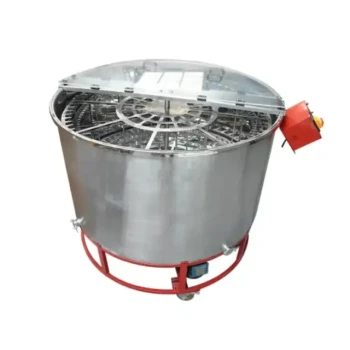
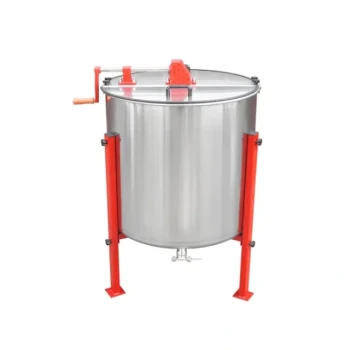
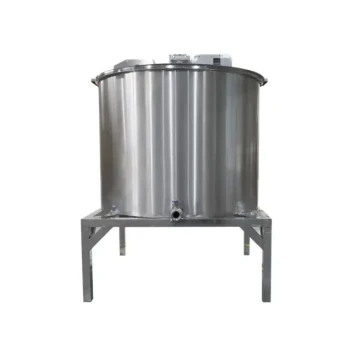
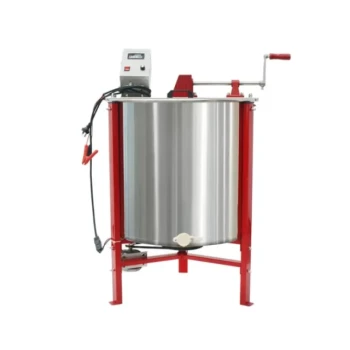
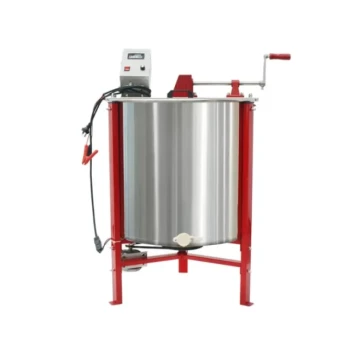
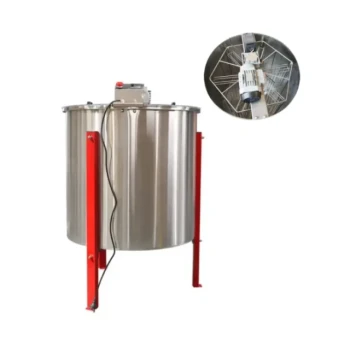
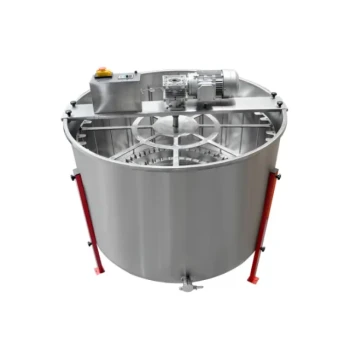
Industrial-grade honey extraction relies on controlled centrifugal force to separate honey from the comb without destroying the delicate wax structure. Unlike manual methods that often crush the comb, this technology significantly improves extraction rates and production efficiency while minimizing contamination risks, ensuring the final product strictly adheres to food safety standards.
The core technical advantage lies in non-destructive separation: by preserving the honeycomb structure, industrial extractors allow for immediate comb reuse, shifting the colony's energy from rebuilding wax to maximizing honey production.
The Mechanics of Preservation
Utilizing Controlled Centrifugal Force
Manual extraction often involves crushing or straining, which destroys the comb. Industrial equipment employs high-speed rotational centrifugal force.
This physical principle flings the liquid honey out of the cells while keeping the wax foundation intact.
Preventing Structural Damage
The primary technical constraint in honey harvesting is the fragility of the beeswax.
Industrial extractors are calibrated to apply sufficient force to evacuate the honey but remain below the threshold that would fracture the comb or warp the frame.
Optimizing Biological Efficiency
The Energy Exchange Principle
Bees consume a significant amount of resources to secrete wax; they must consume several pounds of honey to produce just one pound of wax.
By using non-destructive centrifugal extraction, the empty combs can be returned to the hive immediately.
Increasing Colony Yield
Because the bees do not need to rebuild the wax foundation, they can redirect their metabolic energy solely toward foraging and nectar processing.
This cycle directly results in a higher honey yield per colony over the course of a season.
Hygiene and Standardization
Closed-Loop Contamination Control
Manual handling introduces multiple vector points for bacteria and foreign particulate matter.
Industrial machinery often operates within closed environments incorporating multi-stage filtration systems. This minimizes human contact and environmental exposure, ensuring high clarity and purity.
Meeting Food Safety Standards
Standardized mechanical extraction is a prerequisite for commercial certification.
By automating the process, producers ensure the final product meets rigorous hygiene standards, maintaining consistency in flavor and physical properties that manual methods cannot guarantee.
Operational Throughput
Reducing Processing Time
Manual gravity straining is a slow, bottlenecked process. Mechanical extractors can process dozens or hundreds of frames simultaneously.
This speed is critical during peak harvest times to prevent crystallization in the comb and to free up supers for return to the hives.
Scalability and Labor Costs
Industrial equipment decouples labor hours from output volume.
While manual extraction requires linear labor increases as volume grows, mechanical extractors allow a small team to manage large-scale commercial production efficiently.
Understanding the Trade-offs
Capital and Infrastructure Requirements
While efficient, industrial extractors represent a significant CapEx (Capital Expenditure) compared to manual tools.
They also require dedicated facility space, reliable power sources, and specific sanitation infrastructure (drainage and hot water) to maintain the equipment.
Maintenance and Complexity
Moving from manual to mechanical introduces mechanical points of failure.
Operators must adhere to strict maintenance schedules for bearings, motors, and variable speed drives to prevent downtime during critical harvest windows.
Making the Right Choice for Your Goal
To determine if industrial-grade equipment is the right technical solution for your operation, consider your volume and end-goals:
- If your primary focus is Commercial Scalability: Prioritize centrifugal extractors to maximize throughput and reduce the labor cost per unit of honey produced.
- If your primary focus is Colony Health and Yield: Choose non-destructive extraction to allow for comb recycling, which significantly reduces the biological stress on your bees.
- If your primary focus is Market Certification: Adopt automated, closed-system equipment to ensure the hygiene consistency required for retail distribution channels.
True efficiency in beekeeping is not just about how fast you harvest, but how quickly you can return intact resources to the hive.
Summary Table:
| Feature | Manual Extraction | Industrial-Grade Extraction |
|---|---|---|
| Mechanism | Crushing or straining | Controlled centrifugal force |
| Comb Integrity | Often destroyed | Preserved and reusable |
| Honey Yield | Lower per colony | Higher (energy diverted to nectar) |
| Hygiene | Higher contamination risk | Closed-loop filtration systems |
| Efficiency | Labor-intensive & slow | High-speed, large-scale throughput |
| Market Readiness | Variable quality | Consistent food safety compliance |
Elevate Your Commercial Honey Production with HONESTBEE
Transitioning from manual methods to industrial-grade efficiency is essential for scaling your apiary. At HONESTBEE, we specialize in empowering commercial apiaries and distributors with the high-performance machinery needed to maximize yields and ensure food safety.
Our Value to You:
- Comprehensive Equipment Range: From specialized hive-making and honey-filling machines to industrial-grade extractors and essential consumables.
- Technical Excellence: Our solutions prioritize non-destructive extraction to reduce biological stress on your colonies and maximize honey output.
- Scalable Wholesale Solutions: We offer a full spectrum of beekeeping tools and honey-themed cultural merchandise tailored for large-scale operations.
Ready to optimize your harvest and reduce labor costs? Contact us today to explore our wholesale catalog!
References
- Md Akter Faruk Fuad. Potentials and Prospects of Beekeeping Entrepreneurship in Dinajpur Region: A Participatory Analysis. DOI: 10.19080/artoaj.2019.21.556178
This article is also based on technical information from HonestBee Knowledge Base .
Related Products
- HONESTBEE 72 Frame Industrial Electric Honey Extractor for Beekeeping
- Electric 8 Frame Honey Spinner Extractor Equipment for Beekeeping
- 6 Frame Manual Stainless Steel Honey Extractor Beekeeping Equipment
- 32 Frame Commercial Electric Honey Extractor for Beekeeping and Honey Production
- HONESTBEE 2 Frame Manual Acrylic Honey Extractor Beekeeping Equipment
People Also Ask
- What is the importance of balancing honeycomb frames within a honey extractor? Ensure Stability and Protect Machinery
- How is honey separated from the frames after they are uncapped? Efficient Extraction Methods for High Yields
- What are the main benefits of using a honey extractor? Maximize Yields and Protect Your Honeycomb
- What are the recommended methods for removing honey from the honeycomb? Top Extraction Techniques for Maximum Efficiency
- How do manual honey extractors compare to electric honey extractors? Choosing the Right Tool for Your Apiary Growth