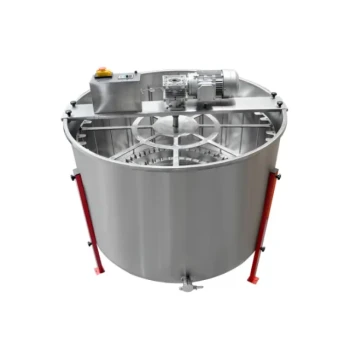
The extraction process for Himalayan Giant Honey Bee honeycombs requires a specialized approach driven by the product's chemical instability and high moisture content. Unlike standard commercial honey, this variety—often known as "Red Honey"—demands immediate manual or mechanical squeezing and filtration to separate the liquid from the wax without compromising its unique pharmacological properties.
The success of this extraction process hinges on combating rapid fermentation. You must prioritize speed and equipment sterility to preserve the honey's active grayanotoxins and prevent microbial spoilage.
Managing Moisture and Chemical Stability
The Urgency of Extraction
The primary technical challenge with Himalayan honey is its high moisture content. This characteristic makes the honey extremely prone to rapid fermentation if not processed immediately upon harvest.
Preserving Pharmacological Potency
Speed is not only about preventing spoilage; it is about efficacy. Delayed processing can degrade unique active ingredients, specifically grayanotoxins, which are responsible for the honey's distinct medicinal properties.
Immediate Filtration
Once the honey is separated from the comb, it must undergo filtration without delay. This step halts microbial activity that can flourish in the moisture-rich environment of the raw honey.
Mechanical Separation Techniques
Squeezing Over Spinning
Standard centrifugal extraction is often unsuitable for this varietal. The process relies on manual or mechanical squeezing to force the honey out of the wax structure effectively.
Material Integrity
To maintain organic standards and chemical purity, all extraction and bottling equipment must be constructed from food-grade stainless steel. This is a non-negotiable requirement to prevent oxidation and contamination from metal ions.
Purity and Classification Standards
Selective Comb Processing
You cannot process the hive indiscriminately. Organic standards strictly prohibit the extraction of honey from combs containing larvae, requiring a sorting process prior to extraction.
Classified Extraction Workflows
To ensure superior physical properties, operational workflows must support the classified extraction of individual honey-only combs. This separation guarantees that the final product maintains a higher purity level compared to conventional mixed-comb products.
Understanding the Trade-offs
Speed vs. Precision
The critical need for immediate extraction creates a logistical pressure that can compromise sorting precision. Operators must balance the rush to filter the honey with the careful selection of larva-free combs to meet organic standards.
Equipment Costs
While manual squeezing is low-cost, it is slower and carries higher contamination risks. Moving to mechanical squeezing increases throughput and hygiene but requires significant investment in specialized stainless steel machinery.
Making the Right Choice for Your Goal
To optimize your extraction process, align your workflow with your primary objective:
- If your primary focus is Pharmacological Potency: Prioritize the speed of the squeeze-and-filter cycle to lock in grayanotoxin levels before fermentation begins.
- If your primary focus is Organic Certification: Invest heavily in stainless steel infrastructure and rigorous pre-extraction sorting to ensure zero larval contamination.
By rigorously adhering to these material and timing standards, you ensure the production of a safe, high-potency product that retains its value.
Summary Table:
| Technical Aspect | Requirement/Characteristic | Impact on Quality |
|---|---|---|
| Moisture Content | Extremely High | High risk of rapid fermentation |
| Active Compounds | Grayanotoxins | Requires speed to preserve medicinal potency |
| Extraction Method | Manual/Mechanical Squeezing | Prevents wax contamination; avoids centrifuge issues |
| Material Standard | Food-grade Stainless Steel | Prevents oxidation and chemical degradation |
| Sorting Standard | No larval combs | Mandatory for organic certification and purity |
Scale Your Speciality Honey Production with HONESTBEE
Processing unique varieties like Himalayan Giant Honey Bee honey requires more than just standard tools—it demands precision-engineered equipment that preserves chemical integrity. At HONESTBEE, we empower commercial apiaries and distributors with the high-performance machinery needed to handle challenging extractions.
From food-grade stainless steel honey-filling machines to advanced harvesting tools, our comprehensive wholesale portfolio is designed to prevent fermentation and ensure purity. Whether you are looking for specialized hardware or essential industry consumables, HONESTBEE provides the end-to-end solutions your business needs to succeed in the global market.
Ready to upgrade your apiary’s efficiency? Contact us today to explore our wholesale offerings!
References
- Michelle Gregory, Cameron Jack. Himalayan Giant Honey Bee, Cliff Honey Bee (suggested common names) Apis laboriosa Smith (Insecta: Hymenoptera: Apidae). DOI: 10.32473/edis-in1348-2021
This article is also based on technical information from HonestBee Knowledge Base .
Related Products
- HONESTBEE 8 Frame Electric and Manual Three Use Honey Extractor
- HONESTBEE 3-Frame Manual Acrylic Honey Extractor
- Professional Sectional Comb Honey Frame with 250g Cassette System for Beekeeping
- HONESTBEE 72 Frame Industrial Electric Honey Extractor for Beekeeping
- HONESTBEE 6 Frame Three Use Electric Honey Extractor for Beekeeping
People Also Ask
- How is honey extracted from bees? A Guide to Efficient, Bee-Friendly Harvesting
- How long does it take to extract a frame of honey? A realistic guide to harvest time.
- How does an electric honey extractor function? Streamline Your Harvest with Motorized Efficiency
- What are the characteristics of electric honey extractors? Boost Your Apiary Efficiency with Automated Technology
- How does an electric honey extractor affect the quality of honey? Preserve Flavor & Purity with Precision Extraction