Inconsistent fill volumes in honey stick machines are primarily caused by three distinct factors: incorrect pump calibration, air entrapment within the honey, or compromised physical seals. To resolve these variances, operators must systematically recalibrate the filling pump, remove air through degassing, and replace any defective seals on nozzles or filling hoses.
Core Takeaway Accuracy in viscous liquid filling relies on a stable, air-free hydraulic path. Inconsistency is rarely random; it is a symptom of mechanical drift (calibration), volume displacement (air bubbles), or pressure loss (leaking seals).
Diagnosing Mechanical Calibration Issues
The Critical Role of the Pump Filler
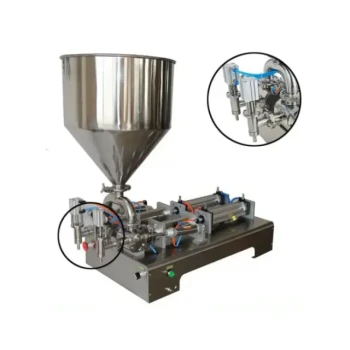
The pump filler is the metering heart of your machine. It dictates exactly how much product is dispensed per cycle.
If the internal settings do not match the physical displacement of the pump, the machine will dispense erratic amounts. This is often the first place to look when volumes drift gradually over time.
Corrective Action: Recalibration
You must perform a formal recalibration of the pump filler. This process realigns the machine’s control logic with the physical mechanism, ensuring the programmed weight matches the actual output.
Addressing Product Consistency
The Impact of Air Bubbles
Honey is a viscous fluid that easily traps air. When air bubbles are present in the honey supply, they occupy volume that should be filled by product.
Because the machine fills by volume or time, an air bubble passing through the nozzle results in a honey stick that appears under-filled or "light," even if the machine cycled correctly.
Corrective Action: Degassing
To prevent this, you must remove air bubbles from the honey before it reaches the filling stage. This is achieved through a process called degassing, which pulls trapped air out of the viscous liquid to ensure a solid pack.
Inspecting System Integrity
Identifying Defective Seals
The filling system operates under pressure. If there are defective seals on the nozzles or filling hoses, the system loses the pressure required to push the honey consistentl.
Leaks allow honey to escape or, conversely, allow air to be sucked into the line, both of which lead to under-filled packs.
Corrective Action: Component Replacement
Inspect all connection points along the fluid path. You must replace any damaged seals immediately. Worn gaskets and cracked hoses cannot be repaired; they must be swapped out to restore vacuum and pressure integrity.
Common Pitfalls to Avoid
Calibrating Before Inspecting
A common mistake is attempting to recalibrate the pump while a physical leak exists. If seals are defective, recalibration is a waste of time. Always verify physical integrity (seals and hoses) before adjusting digital settings.
Ignoring the Source of Air
Simply popping bubbles in the hopper is insufficient. If you do not degas the bulk supply properly, the pump will continue to draw in air pockets, leading to intermittent fill failures that are hard to diagnose.
Making the Right Choice for Your Goal
Troubleshooting requires a logical order of operations to minimize downtime.
- If your primary focus is erratic, random under-filling: Prioritize degassing the honey, as random air pockets are the most likely culprit.
- If your primary focus is visible leakage or mess: Prioritize replacing seals and hoses on the nozzles to restore system pressure.
- If your primary focus is consistent, gradual drift: Prioritize recalibrating the pump filler to reset the mechanical metering accuracy.
By methodically eliminating air, sealing the path, and calibrating the pump, you ensure every stick meets your precise quality standards.
Summary Table:
| Cause of Inconsistency | Primary Symptom | Corrective Action |
|---|---|---|
| Mechanical Drift | Gradual, consistent volume shift | Recalibrate pump filler settings |
| Air Entrapment | Erratic, random under-filling | Degas honey before filling |
| Compromised Seals | Visible leaks or pressure loss | Replace gaskets, seals, and hoses |
Maximize Your Apiary's Efficiency with HONESTBEE
Maintaining precision in honey packaging is vital for commercial success. At HONESTBEE, we specialize in supporting commercial apiaries and distributors with high-performance honey-filling machines and specialized beekeeping hardware designed for durability and accuracy.
Whether you need to upgrade your machinery, source essential industry consumables, or expand your inventory with honey-themed cultural merchandise, we provide the comprehensive wholesale solutions your business deserves.
Ready to streamline your production? Contact our experts today to find the perfect equipment tailored to your operational needs!
Related Products
- Honey Stick Filler Vertical Paste Sachet Packing Machine for Honey Sachets
- Precision Durable Efficient HONESTBEE Rotary Honey Filling Machine
- Fully Automatic Honey Filling Packaging Machine for Processing Line
- Small Honey Filling Machine Sachet Packing Equipment Single Nozzle
- Automatic Honey Filling and Filtering Machine for Beekeeping Bottle Filling
People Also Ask
- How do honey stick and honey sachet machines differ? Choose the Right Packaging for Your Honey
- What are the main functions of a honey sachet packing machine? Boost Efficiency with Automated Precision
- What are the advantages of honey sachet packing machines? Boost Efficiency & Unlock New Markets
- What types of filling and packing machines are available for different scales of honey production? Expert Solutions
- What is the working principle of a honey stick packing machine? Automate Your Honey Production Line