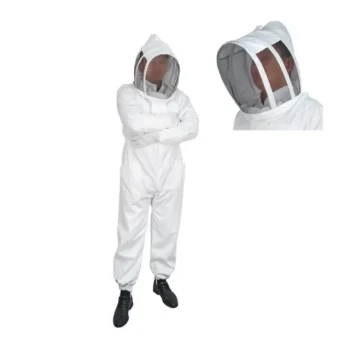
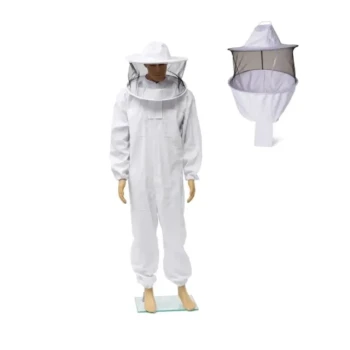
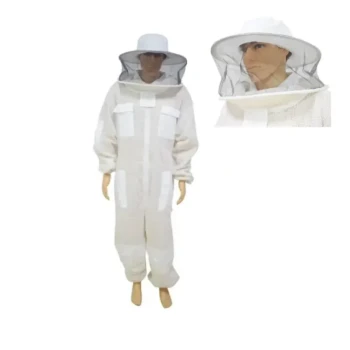
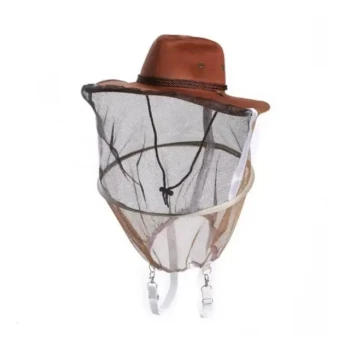
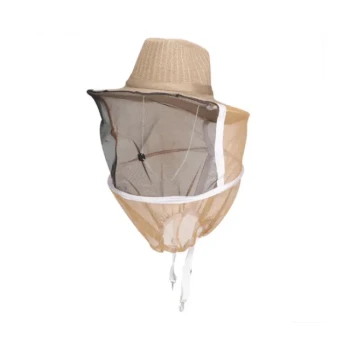
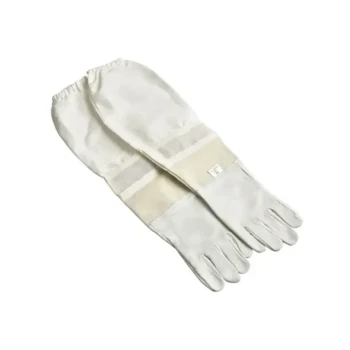
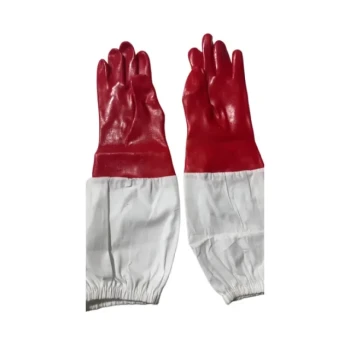
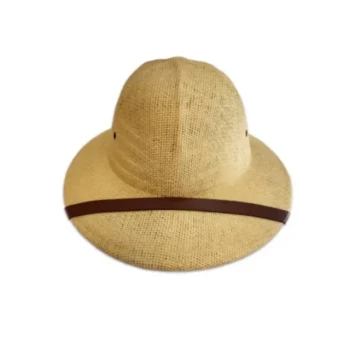
A beekeeper’s protective system is anchored by a helmet and veil, which are often integrated with or accompanied by a full-body suit, jacket, or coveralls. While the configuration can vary from individual pieces to a single garment, the primary function is to cover the skin and create a secure barrier against stings.
The most critical components of beekeeping gear are the helmet and veil, as stings to the face are particularly dangerous. A comprehensive protective system extends this defense through a one-piece suit designed with specialized seals to eliminate any gaps where bees might enter.
Essential Head and Face Protection
The Helmet and Veil
According to industry standards, the helmet and veil are the most important components of the ensemble.
Because stings around the eyes, nose, and lips can be severely painful and potentially dangerous, protecting the head is the first priority.
Connecting the Veil
To ensure integrity, the veil often attaches directly to the body of the suit or jacket.
A zipper is frequently used to securely fasten the veil to the neckline, ensuring that bees cannot crawl up from the chest area into the helmet.
Body Coverage Configurations
The Full-Body Bee Suit
For maximum protection, a full-body bee suit is the standard choice.
This is typically a one-piece garment that includes long sleeves and long pants. It offers a continuous layer of protection from the neck down to the ankles.
Modular Options
Beekeepers may also choose modular protection based on their needs.
Instead of a full suit, some utilize a protective jacket or separate coveralls. While some experienced beekeepers may work in regular clothing, specialized gear is universally recommended for safety.
The Mechanics of the Seal
Eliminating Gaps
The effectiveness of a suit depends on its ability to prevent bees from finding an entry point.
It is crucial that there are no gaps at the hands, feet, or neck. If a gap exists, a bee will likely find it.
Elastic and Thumb Holes
To maintain this seal during movement, suits are equipped with specific retention features.
Elastic bands are standard at the wrists and ankles to keep the fabric tight against the skin or boots. Additionally, thumb holes are often included to prevent sleeves from riding up and exposing the wrists while working.
Understanding the Trade-offs
Protection vs. Comfort
While a full-body suit offers the highest level of security, it can be heavy or hot.
Experienced beekeepers sometimes trade this full protection for the comfort of regular clothes, relying on their skill to avoid stings. However, this increases the risk of accidental stings in sensitive areas.
Component Integration
Using individual pieces (like a jacket and separate pants) allows for flexibility but introduces potential gap risks.
A one-piece full suit eliminates the waist gap entirely, but it takes longer to put on and take off compared to modular components.
Making the Right Choice for Your Goal
Selecting the right components depends on your experience level and tolerance for risk.
- If your primary focus is maximum safety: Prioritize a full-body, one-piece suit with thumb holes and elastic seals to ensure zero gaps.
- If your primary focus is vital protection only: Ensure you have a high-quality helmet and veil, as facial protection is the non-negotiable safety standard.
The best protective gear is the one that gives you the confidence to work calmly and effectively with your hive.
Summary Table:
| Component | Primary Function | Key Features |
|---|---|---|
| Helmet & Veil | Protects face, eyes, and neck | Mesh screen, zipper attachment, structural support |
| Full-Body Suit | Continuous skin coverage | One-piece design, heavy-duty fabric, white color |
| Elastic Seals | Prevents bee entry at openings | Located at wrists and ankles for a snug fit |
| Thumb Holes | Secures sleeve position | Prevents fabric from riding up during hive work |
| Zippers | Seals junctions | Heavy-duty, often Velcro-covered for extra security |
Elevate Your Apiary with HONESTBEE Protective Gear
At HONESTBEE, we understand that safety is the foundation of successful beekeeping. We offer commercial apiaries and distributors a comprehensive wholesale range of professional-grade protective suits, specialized hardware, and honey-themed cultural merchandise. Whether you need full-body armor for large-scale operations or precision honey-filling machines, our portfolio is designed to enhance your efficiency and safety.
Ready to scale your beekeeping business? Contact us today to explore our wholesale catalog and see how our premium equipment can support your success.
Related Products
- Premium Cotton Beekeeper Suit with Reinforced Fencing Veil
- White Cotton Beekeeping Jacket and Veil for Bee Keepers
- Professional Beekeeping Suit for Kids and Girls Childrens Bee Keeper Suit
- Professional Cotton Beekeeper Suit with Round Veil Design for Commercial Apiaries
- Beekeeping Jacket with Hood and Veil for Beekeepers
People Also Ask
- What material and design specifications are recommended for a high-quality beekeeper suit? Top Gear Selection Guide
- How to Pre-treat Propolis Stains on Beekeeping Suits? Master Advanced Fabric Care and Soil Removal
- What features should be considered for sting protection in a beekeeping suit? Ensure Total Safety and Comfort
- What are the differences between full suits and jackets with veils in beekeeping? Choose Your Best Protection
- What features should be looked for in a beekeeping suit for maximum comfort? Prioritize Ventilation and Fit