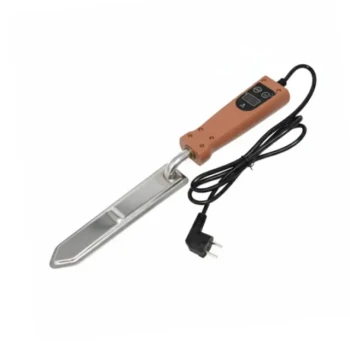
High-precision temperature monitoring devices provide critical quantitative data on transmittance stability curves and liquid viscosity reduction. By recording these specific metrics, the devices allow operators to correlate thermal motion with mixing efficiency. This data reveals how increased temperatures accelerate the dissociation of molecular aggregates, directly influencing the time required to achieve macroscopic uniformity.
Core Takeaway These devices do not merely report heat levels; they establish a thermal control baseline that mathematically proves higher temperatures reduce viscosity and shorten processing time. This data is the foundation for optimizing industrial mixing speeds without sacrificing uniformity.
The Mechanics of Thermal Optimization
Monitoring Viscosity Reduction
The primary data point for optimization is the correlation between heat and resistance. Monitoring devices provide evidence that higher temperatures significantly reduce liquid viscosity.
This reduction is critical for the dissolution process. It demonstrates that thermal motion lowers the physical resistance within the mixture, allowing for more fluid movement of the honey content.
Tracking Molecular Aggregates
Beyond simple flow, high-precision tools track the dissociation of molecular aggregates.
The data illustrates that as thermal motion increases, these aggregates break down more rapidly. This insight allows engineers to tune the process for the fastest possible breakdown of solid or semi-solid structures.
Establishing a Process Baseline
Utilizing Transmittance Stability Curves
To measure success, these devices record transmittance stability curves across various temperature ranges.
This is the definitive metric for process stability. By analyzing these curves, you can visually identify exactly when the mixture stops changing and becomes stable.
Defining the Uniformity Threshold
The data serves as a thermal control baseline for industrial applications.
It proves that increasing process temperature substantially shortens the time required to reach macroscopic uniformity. This allows operators to move away from guesswork and rely on specific time-to-uniformity data points.
Understanding the Trade-offs
Balancing Speed vs. Control
While the data confirms that higher temperatures shorten mixing times, relying solely on heat introduces complexity.
The "thermal control baseline" is essential because it defines the limit. Without precise monitoring, simply increasing heat can lead to energy waste or overshoot, rather than optimized efficiency.
Reliance on Quantitative Data
Optimization requires a shift from qualitative observation to quantitative analysis.
You cannot optimize what you do not measure. The trade-off here is the requirement for sophisticated equipment to generate transmittance curves; simple thermometers are insufficient for studying molecular dissociation efficiency.
How to Apply This to Your Project
If your primary focus is Speed:
- Use the viscosity reduction data to determine the maximum temperature that yields the fastest flow rate before diminishing returns set in.
If your primary focus is Consistency:
- Rely on transmittance stability curves to identify the exact moment macroscopic uniformity is achieved, ensuring no batch is under-mixed.
If your primary focus is Energy Efficiency:
- Use the thermal control baseline to find the minimum temperature required to reach uniformity within your acceptable time constraints.
Data-driven thermal control transforms honey dissolution from a simple heating task into a precise, optimized industrial process.
Summary Table:
| Data Metric | Impact on Optimization | Key Benefit |
|---|---|---|
| Viscosity Reduction | Maps heat vs. physical resistance | Decreases mixing resistance for faster flow |
| Molecular Dissociation | Tracks breakdown of aggregates | Accelerates transition from solid to liquid |
| Transmittance Curves | Monitors light stability | Defines the exact point of macroscopic uniformity |
| Thermal Baseline | Establishes mathematical control | Minimizes energy waste while maximizing speed |
Elevate Your Honey Processing Efficiency with HONESTBEE
At HONESTBEE, we understand that high-precision data is the backbone of a successful commercial apiary. As a premier global supplier of beekeeping machinery and industrial equipment, we provide the tools you need to turn data into profit. From high-performance honey-filling machines to specialized hardware designed for large-scale distributors, our portfolio is built to optimize your production line.
Whether you are a commercial producer seeking to refine your dissolution process or a distributor looking for comprehensive wholesale beekeeping tools and industry consumables, HONESTBEE delivers the expertise and hardware you require. Let us help you achieve perfect uniformity and operational excellence.
Contact Our Expert Team Today to explore our full spectrum of specialized beekeeping solutions!
References
- Henrique Ferreira, Isabela S. Bijotti. Method to mix tea with honey and use of transient light attenuation as an indicator of homogeneity. DOI: 10.1051/emsci/2018001
This article is also based on technical information from HonestBee Knowledge Base .
Related Products
- Digital Honey Refractometer for Precision Measurement of Optimal Honey Quality
- Precision Honey Refractometer Instrument for Quality Assessment
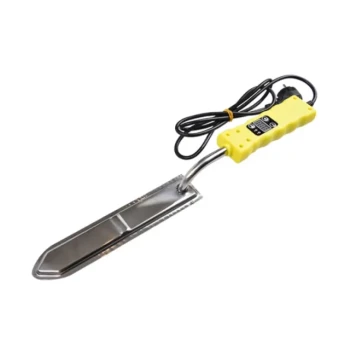
- Professional Electric Honey Uncapping Knife with Heated Digital Temperature Control for Beekeeping
- Commercial Rotary Honey Filling Machine for Production
- Professional Thermostatic Conical Honey Melter
People Also Ask
- What role do high-precision refractometers play in determining the maturity and quality of honey? Ensure Honey Purity.
- Do the color and viscosity of honey affect its refractometer reading? Mastering Moisture Measurement Accuracy
- What is a honey refractometer? The Essential Tool for Perfect Honey Quality
- Why is a honey refractometer considered essential for commercial beekeepers? Ensure Honey Quality and Profitability
- How is the reading taken from a honey refractometer? A Guide to Accurate Moisture Measurement