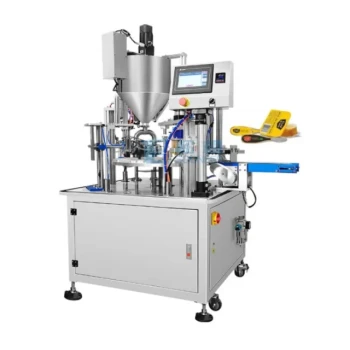
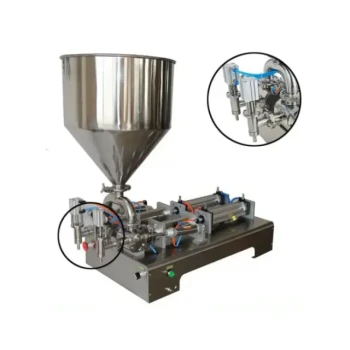
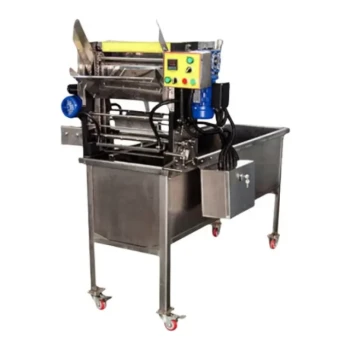
A semi-automated honey filling machine acts as a collaborative bridge between manual labor and full industrial automation. These models are defined by a shared workflow where the machine handles the precise dispensing of the product, while an operator is required to manage specific manual tasks surrounding the packaging process.
Core Takeaway Unlike fully automated lines that manage the entire lifecycle from unscrambling to capping, a semi-automated machine focuses strictly on the volumetric accuracy and dispensing speed of the honey. It relies on human interaction for container handling, offering a cost-effective solution for producers scaling up from hand-filling.
Defining the Workflow: Machine vs. Operator
To understand this equipment, you must distinguish between what the machine controls and what the operator controls.
The Automated Component
The machine’s primary role is dispensing precision. It automates the measurement and flow of honey into the container.
This automation ensures that every jar receives the exact same volume of product, eliminating the inconsistencies inherent in manual pouring.
The Manual Responsibility
As defined by industry standards, these machines do not automate every process step.
An operator is typically required to physically place the empty jar under the nozzle, initiate the fill cycle (often via a foot pedal or button), and remove the filled jar to prepare it for capping.
Mechanisms Suited for Viscosity
Honey is a unique liquid due to its high viscosity and tendency to crystallize. Semi-automated machines utilize specific mechanical principles to handle this texture effectively.
Piston Filling
This is a common mechanism in semi-automated setups. The machine uses a piston to draw a precise volume of honey into a cylinder before pushing it into the jar.
This method provides high precision and is capable of moving thick liquids without relying solely on gravity, which can be too slow for viscous honey.
Integrated Heating
Many semi-automated units include heating components.
By gently warming the honey, the machine reduces the product's viscosity. This allows for a smoother flow, reduces strain on the machine, and helps prevent the formation of unsightly air bubbles in the final product.
Key Operational Benefits
Moving to a semi-automated system addresses several specific business needs regarding quality and hygiene.
Consistency and Waste Reduction
The machine eliminates the "human error" factor regarding volume.
By ensuring consistent fill levels, you prevent product giveaway (overfilling) and customer complaints (underfilling), effectively maximizing the yield from your honey harvest.
Hygienic Standards
These machines are typically constructed with food-grade stainless steel and utilize enclosed systems for the honey path.
This design significantly reduces the risk of contamination compared to open-air manual ladling or pouring, ensuring compliance with food safety standards.
Understanding the Trade-offs
While these machines offer a leap in efficiency, they come with inherent limitations that you must evaluate.
Labor Dependency
You cannot run this machine "lights out." It requires constant operator attention.
If the operator takes a break, production stops. The speed of the line is ultimately dictated by how fast the human operator can load and unload jars, not just the cycle speed of the machine.
Scalability Limits
Semi-automated piston fillers are precise, but they generally cannot match the speed of continuous-flow, pump-based systems found in fully automated lines.
If your production targets require thousands of units per hour, a semi-automated solution may become a bottleneck.
Making the Right Choice for Your Goal
Selecting the correct equipment depends on your current production volume and your future growth targets.
- If your primary focus is Consistency: A semi-automated piston filler will immediately solve issues with uneven jar levels and sticky, messy packaging lines.
- If your primary focus is Budget-Conscious Scaling: This machine offers the highest return on investment for businesses moving away from manual filling without the massive capital expense of a fully automated conveyor system.
- If your primary focus is High-Speed Volume: You should look beyond semi-automation toward fully automated pump-based systems, as manual container handling will restrict your throughput.
Ideally, a semi-automated machine serves as the backbone of a growing operation, professionalizing your product presentation while keeping overhead manageable.
Summary Table:
| Feature | Semi-Automated Filling Machine | Manual Filling | Full Automation |
|---|---|---|---|
| Primary Drive | Piston or Pump Mechanism | Manual Pouring / Ladling | High-speed Conveyor Line |
| Operator Role | Loading & Initiating Cycle | Complete Handling | Monitoring & Maintenance |
| Volume Control | High Precision (Mechanical) | Low (Subject to Human Error) | High Precision (Electronic) |
| Viscosity Handling | Excellent (with Heating Options) | Difficult / Slow | Superior (Industrial Flow) |
| Cost Level | Moderate / High ROI | Low Initial Cost | High Capital Investment |
Professionalize Your Honey Production with HONESTBEE
Are you ready to scale your operations from manual pouring to industrial-grade consistency? At HONESTBEE, we specialize in empowering commercial apiaries and honey distributors with high-performance beekeeping machinery.
Our semi-automated honey filling machines provide the perfect balance of affordability and precision, ensuring every jar meets food safety standards with zero waste. Beyond filling, we offer a comprehensive wholesale portfolio including:
- Specialized Hardware: From hive-making machines to honey-processing lines.
- Full Spectrum Equipment: Professional beekeeping tools and essential industry consumables.
- Cultural Merchandise: Unique honey-themed products to diversify your brand.
Let HONESTBEE help you eliminate production bottlenecks and maximize your harvest yield. Contact us today to find the perfect equipment for your business!
Related Products
- Semi Automatic Small Honey Bottle Filling Machine Honey Filler
- Precision Durable Efficient HONESTBEE Rotary Honey Filling Machine
- Automatic Honey Filling and Filtering Machine for Beekeeping Bottle Filling
- Precision Automated Packaging Turntable Honey Spoon Filling Sealing Packing Machine
- Automatic Single-Dose Snap & Squeeze Honey Sachets Packing Machine
People Also Ask
- What is a semi-automatic honey filler? Scale Your Honey Production with Precision and Efficiency
- What are the key features to consider in a honey filling machine? Optimize Your Production with the Right Equipment
- What are the different types of honey filling machines based on automation level? A Guide for Apiaries & Distributors
- How does a honey filling machine benefit small-scale honey processing businesses? Boost Efficiency & Brand Quality
- What technical advantages do honey filling and packaging machines provide? Optimize Your Large-Scale Production