For a high-throughput frame-hive honey line, build a continuous food-grade sequence: bee removal, frame receiving, uncapping, centrifugal extraction, filtration, settling or storage, and filling. The essential machinery is an automated or high-capacity uncapping system, a radial or tangential centrifugal extractor, honey strainers or filters, heated processing utilities where required, food-grade storage tanks, and a hygienic filling machine.
The extractor is only one part of the line. Reliable commercial throughput depends on matching frame handling, uncapping capacity, extraction volume, filtration, storage, and filling so that no stage becomes a bottleneck.
Design the Line Around the Frame Workflow
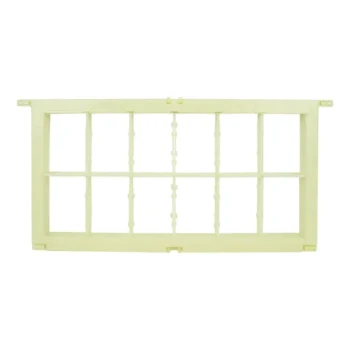
Start with removable, standardized frames
Frame-based extraction depends on removable comb frames, commonly supported by beeswax foundation sheets that help colonies build uniform comb. Standardized frames make loading, uncapping, extraction, and return to the hive more consistent.
The machinery should be selected around the frame dimensions and volume your operation actually uses. Compatibility is more important than simply choosing the largest individual machine.
Establish a one-direction process flow
Arrange the equipment in processing order:
Frame receiving and bee removal → uncapping → extraction → filtering → settling or storage → filling and packaging.
This sequence reduces unnecessary handling and helps prevent clean, filtered honey from being exposed to unprocessed frames or wax debris.
Use a fully enclosed, bee-tight processing room
Extraction should take place indoors in a bee-tight room. Honey odors strongly attract bees, making outdoor harvesting unsuitable for a controlled commercial operation.
The room should also support sanitation, with cleanable floors, accessible warm water, and electrical outlets positioned safely away from wet cleaning areas.
Install the Core Extraction Machinery
Frame receiving and bee-removal equipment
Before frames enter the processing line, bees must be cleared from the honey supers. Suitable equipment may include bee escapes, fume boards, or other approved bee-removal tools.
This stage is operationally essential because frames carrying live bees create disruption, contamination risks, and unsafe working conditions inside the extraction room.
Choose the right uncapping system
The uncapping stage removes the beeswax seals covering the honey cells. Essential options include:
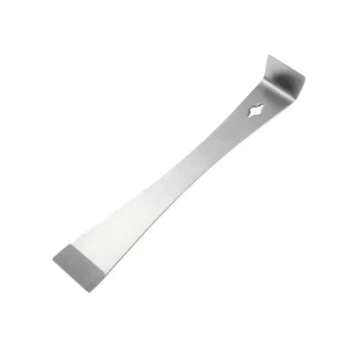
- Manual or heated uncapping knives
- Uncapping forks and hand tools
- Uncapping tanks
- Automated uncapping machines for larger frame volumes
For high throughput, an automated uncapping machine or integrated uncapping station is generally more appropriate than relying solely on hand tools. The system should remove cappings efficiently while preserving the comb for reuse.
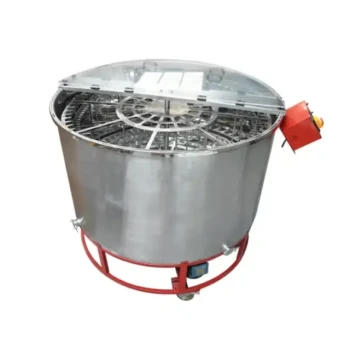
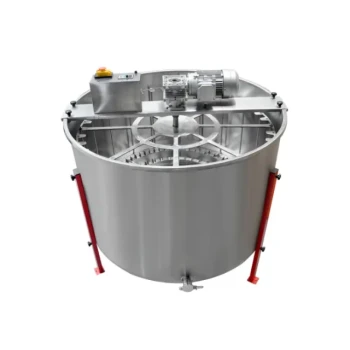
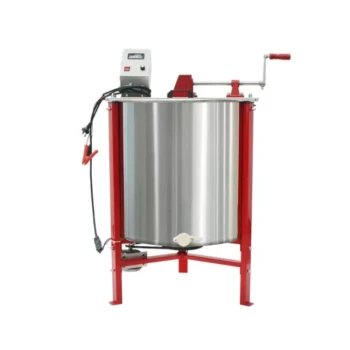
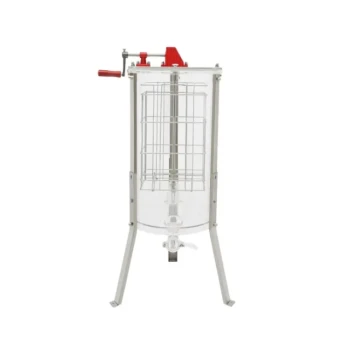
Select a centrifugal honey extractor
The extractor uses centrifugal force to remove liquid honey from the comb without destroying the frame structure. The two principal configurations are:
- Radial extractors: Frames are arranged with the comb surface facing outward, allowing multiple frames to be processed efficiently.
- Tangential extractors: Frames face the drum wall on one side and may require repositioning to extract the opposite side.
The correct choice depends on frame capacity, handling requirements, available labor, and desired throughput. The extractor must be sized to prevent the uncapping station from continuously waiting for extraction capacity.
Add honey strainers or filtration equipment
Raw extracted honey carries wax particles and other debris from the uncapping and extraction stages. Honey strainers, filters, or clarification units should therefore be installed immediately after extraction.
Filtration equipment should be food-grade and easy to disassemble and clean. Its capacity must match the extractor’s output so filtered honey does not accumulate in the processing area.
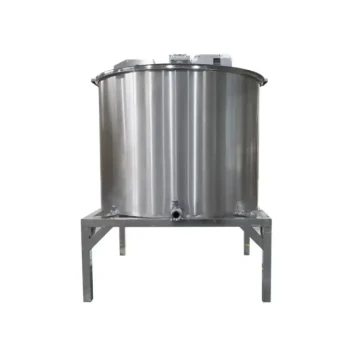
Provide settling and storage tanks
After filtration, honey should move into settling tanks or food-grade storage containers before filling. These vessels provide controlled holding capacity and help separate remaining particles before packaging.
For commercial use, tanks should be made from stainless steel or another approved food-contact material and equipped for hygienic transfer. A bottling bucket or filling tank with a gate valve may be suitable for smaller operations, while larger lines require dedicated storage and filling tanks.
Install a filling and packaging system
The final core machine is a honey-filling machine or hygienic filling setup. It transfers finished honey into retail or bulk containers with improved speed and consistency.
Automated filling and packaging become increasingly valuable when the operation handles large volumes or supplies distributors and wholesalers. The filling system should be coordinated with tank capacity, container formats, labeling, and downstream order fulfillment.
Add Utilities for Commercial Throughput
Use stainless steel or food-grade contact surfaces
All equipment that contacts honey—including uncapping tanks, extractors, strainers, storage vessels, and filling equipment—should be manufactured from stainless steel or suitable food-grade plastic.
Food-grade construction supports hygiene, durability, cleanability, and compliance with applicable food-safety requirements.
Provide controlled heat where needed
Commercial facilities may require steam or hot-water boilers as heat sources for processing and beeswax melting. Heated utilities can support uncapping, wax handling, and cleaning processes.
Heat must be managed carefully because honey quality can be affected by inappropriate processing conditions. The heating system should be selected for the actual process requirements rather than added without temperature control.
Plan water, drainage, and cleaning access
An extraction room needs accessible warm water for cleaning uncapping equipment, extractors, strainers, and floors. Floor protection, such as washable coverings or suitable drop cloths, can reduce cleanup demands during harvesting.
Cleaning access is not a secondary feature. Poor sanitation flow can turn a high-capacity line into a source of contamination and downtime.
Secure electrical service
Electric uncapping knives, automated uncapping equipment, extractors, and filling machines require safely positioned electrical outlets. Outlets must be kept away from water sources and installed in a way that supports safe cleaning and maintenance.
For mobile or field-based operations, electric generators may be required to operate powered equipment where utility power is unavailable.
Match Equipment Capacity Across the Line
Prevent the uncapping stage from becoming the bottleneck
If the uncapping station processes frames more slowly than the extractor can accept them, extraction capacity remains unused. Conversely, an oversized uncapping machine creates waiting time and unnecessary capital cost if the extractor or filling system cannot keep pace.
Specify the entire line as a system rather than purchasing each machine independently.
Provide enough intermediate capacity
High-throughput operations need controlled holding capacity between stages. Uncapped frames, extracted honey, filtered honey, and finished containers should each have an appropriate place in the workflow.
Food-grade tanks and organized staging reduce interruptions and limit unnecessary movement of frames and honey.
Consider mobile extraction requirements separately
A fixed commercial facility and a field extraction unit have different equipment priorities. Mobile operations may require compact extractors, mobile extracting units, generators, and equipment designed for rapid setup and transport.
A mobile system should still preserve the same basic sequence and sanitation standards as a permanent plant.
Understanding the Trade-offs
Automation versus flexibility
Automated uncapping and filling machines improve speed and repeatability, but they require greater investment, suitable electrical service, and careful integration with frame dimensions and line capacity.
Manual tools cost less and provide flexibility, but they demand more labor and generally limit sustained throughput.
Radial versus tangential extraction
Radial extractors can process multiple frames efficiently and reduce frame repositioning. Tangential extractors may be appropriate where the operating team accepts additional handling to extract both sides of the comb.
The best configuration depends on the frame type, volume, labor model, and required production rate—not on the extractor label alone.
Maximum capacity versus practical capacity
A machine’s stated capacity does not automatically equal real-world output. Loading, unloading, uncapping, filtering, cleaning, frame transport, and filling all affect sustained production.
A balanced line with moderate capacity at every stage can outperform a line with one very large extractor and several undersized supporting stations.
Heat and quality control
Heating may assist uncapping, wax handling, and cleaning, but unnecessary or poorly controlled heat can compromise product quality. Heat should be applied only where the process requires it and controlled through appropriate equipment.
Low initial cost versus commercial readiness
A basic setup consisting of manual uncapping tools, a centrifugal extractor, strainers, storage containers, and a filling bucket can support smaller operations. High-volume commercial distribution typically requires automated uncapping, larger extractors, dedicated tanks, and automated filling.
The correct investment level should follow expected frame volume, customer requirements, labor availability, and expansion plans.
How to Apply This to Your Project
The following purchasing priorities help distributors, resellers, and beekeepers configure a complete rather than fragmented solution.
- If your primary focus is high throughput: Prioritize automated uncapping, a correctly sized radial or tangential extractor, matched filtration capacity, sufficient storage tanks, and automated filling.
- If your primary focus is flexible small-to-medium production: Combine manual or semi-automatic uncapping with a food-grade centrifugal extractor, strainers, settling containers, and a hygienic gate-valve filling tank.
- If your primary focus is product hygiene and compliance: Specify stainless-steel or food-grade contact surfaces, a bee-tight indoor room, cleanable floors, warm-water access, and safely positioned electrical service.
- If your primary focus is mobile or field extraction: Evaluate mobile extracting units, compact frame-compatible machinery, generators, and equipment that can be transported without compromising the processing sequence.
- If your primary focus is distributor-ready system sourcing: Source the complete workflow as one coordinated package, including machinery, tanks, utilities, replacement parts, customer support, and rapid fulfillment.
A successful high-throughput honey line is a balanced, food-grade system in which every frame and every kilogram of honey moves efficiently from uncapping to clean, consistent packaging.
Summary Table:
| Equipment Category | Essential Machinery | Key Considerations |
|---|---|---|
| Bee Removal | Bee escapes, fume boards | Ensure bee-free frames for safe processing |
| Uncapping | Automated or manual uncapping knives, uncapping tanks | Match to frame volume for throughput |
| Extraction | Radial or tangential centrifugal extractor | Choose based on capacity and labor |
| Filtration | Strainers, filters | Remove wax and debris effectively |
| Storage | Settling tanks, food-grade containers | Provide holding capacity before filling |
| Filling | Honey filling machine, gate-valve tanks | Ensure speed and hygiene for packaging |
| Utilities | Steam/hot-water boiler, electrical, water access | Essential for cleaning and processing |
| Processing Room | Bee-tight, cleanable surfaces | Prevent contamination and bee intrusion |
Ready to build your high-throughput honey extraction line? At HONESTBEE, we supply the complete spectrum of beekeeping machinery and equipment, from automated uncapping and extractors to storage tanks and filling lines. As your one-stop wholesale partner, we offer rapid delivery, dedicated support, and comprehensive solutions for commercial apiaries and distributors. Whether you need a full system or individual components, our team can help you optimize throughput and efficiency. Contact us today to discuss your requirements, or visit our contact page to get a tailored quote. Let HONESTBEE power your success with reliable equipment and professional service. Contact us now!
Related Products
- Stainless Steel Manual 8 Frame Radial Honey Extractor Machine for Beehives
- HONESTBEE 72 Frame Industrial Electric Honey Extractor for Beekeeping
- Plastic Hand Crank 2 Frame Honey Extractor Low Price
- 32 Frame Commercial Electric Honey Extractor for Beekeeping and Honey Production
- Commercial 48-Frame Stainless Steel Honey Extractor
People Also Ask
- What types of beehive frames are compatible with honey extractor machines? Find the Perfect Match for Your Apiary
- Which type of honey extractor is generally more durable? Focus on Material & Build Quality for Longevity
- What are the key features and benefits of a stainless steel honey extractor? Upgrade to Professional Purity
- What is a manual honey extractor? The Essential Guide to Cost-Effective Beekeeping for Beginners
- Why are manual extractors popular among beginner beekeepers? A Guide to Starting Simple & Saving Money