Protecting the colony must come before maximizing the harvest. Apiary managers should avoid extracting honey too early or removing more than the colony can spare for winter and nectar dearths. The required reserve varies with local climate, hive ventilation, hive size, bee population, and the level of planned supplemental feeding.
Honey extraction is safe only when the colony’s food and energy reserve remains adequate. Equipment should help managers harvest efficiently and return intact comb quickly, but it cannot replace sound seasonal judgment and regular colony assessment.
Determine How Much Honey the Colony Can Spare
Treat honey as essential colony fuel
Honey is the colony’s primary food and energy source. Bees use it to maintain activity and generate heat during winter, cold periods, and times when natural pollen or nectar is unavailable.
Extraction decisions should therefore be based on the colony’s projected needs, not simply on how full the supers appear.
Avoid early-season extraction
Harvesting too early can remove reserves before the colony has secured enough food for the rest of the season. Managers should consider whether the local nectar flow is ending, continuing, or likely to be interrupted by a dearth.
A full super does not automatically represent surplus honey. It may be the colony’s working reserve for upcoming weather or forage shortages.
Adjust reserves to local conditions
There is no universal reserve amount suitable for every apiary. Required reserves depend on:
- Local climate: Cold or prolonged winters generally increase energy demands.
- Hive ventilation: Poor ventilation can increase moisture and winter stress.
- Hive size and configuration: Larger or differently configured hives may support different population and storage requirements.
- Bee population: Larger colonies consume more resources but may also gather more efficiently.
- Supplemental feeding plans: Reliable feeding can provide support during dearths, but it should not be treated as an automatic substitute for natural reserves.
Inspect Colony Condition Before Operating Equipment
Confirm the colony has a functioning population
Before removing honey, managers should evaluate the strength of the bee population and confirm that the colony is active. A weak colony may be less capable of defending remaining stores or recovering from excessive removal.
Regular inspections should also verify queen egg-laying and general colony health.
Check for disease and parasites
Disease and parasite infestations can reduce worker populations and weaken a colony’s ability to gather and conserve food. Pests, mites, and other health problems should be identified and managed before treating a colony as ready for harvest.
Harvest targets should be reduced or postponed when colony health is uncertain.
Watch for heat, moisture, and starvation risks
Excessive heat, moisture buildup, and food shortages can create unfavorable conditions that contribute to colony stress or absconding. Hive designs with adequate ventilation, screened openings, and slight forward tilting for liquid drainage can help manage these risks.
Extraction should not compound an already stressful environment by removing essential stores.
Use Extraction Equipment That Preserves Comb
Choose non-destructive centrifugal extraction
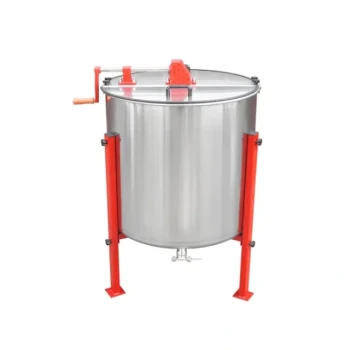
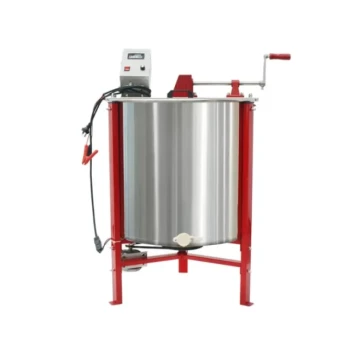
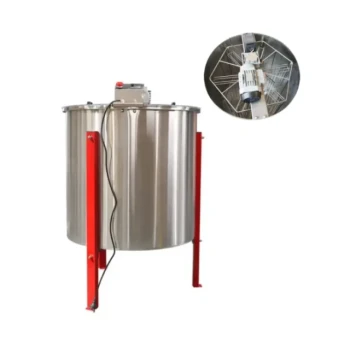
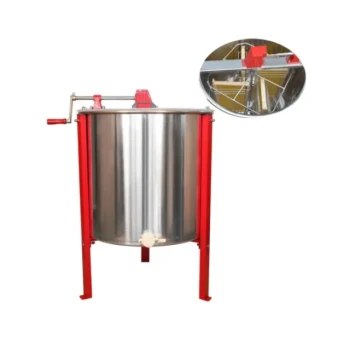
Radial and tangential extractors use centrifugal force to remove honey while preserving the wax comb. Returning intact comb to the hive reduces the energy bees must spend rebuilding it.
This supports faster hive reuse and helps maintain stronger colonies after harvest.
Match extractor capacity to the operation
Commercial and larger apiaries should evaluate frame capacity, extraction speed, and labor requirements. High-capacity motorized extractors can reduce processing time and allow harvested supers to be returned promptly.
However, higher throughput should support better management—not encourage managers to remove more honey than colonies can spare.
Select hygienic, serviceable construction
Food-grade stainless steel, easy sanitation, and reliable drive mechanisms are important for both product quality and operational consistency. Equipment that is difficult to clean can create avoidable hygiene problems during repeated harvests.
For seasonal or temporary extraction spaces, mobile extractors, portable pumps, quick-connect food-grade tubing, and compact bottling tanks can provide efficient processing without permanent infrastructure.
Prevent Robbing During and After Harvest
Seal exposed honey immediately
Open honey, raw product, and wet supers can trigger intense bee activity and robbing. Harvested frames and extracted supers should be covered or sealed promptly rather than left exposed in the apiary.
Robbing can increase colony aggression and may contribute to pest and disease spread.
Keep the apiary difficult to invade
Managers should use entrance reducers or entrance screens on weaker colonies and ensure that hive covers, inner covers, and supers are properly sealed. Eliminating cracks and unnecessary openings makes colonies easier to defend.
Harvest equipment, hive tools, and protective gear should also be kept clean and free from spilled honey or strong odors.
Return wet supers directly to the hive
Extracted “wet” supers should be returned directly to the harvested hives for internal cleaning. They should not be left in the open, where they can attract bees from neighboring colonies.
Using flat covers or boards to cover extracted supers immediately after removal provides an additional control against exposure.
Use Supplemental Feeding Carefully
Support colonies during dearths
Frame feeders and top feeders can provide sugar syrup when natural forage is unavailable. Supplemental feeding may help a colony bridge a food shortage after harvest or during a non-blooming period.
The decision to feed should be part of a broader reserve plan rather than an excuse to extract aggressively.
Feed through enclosed equipment
Open containers of syrup or raw honey should never be left near active hives. Exposed sweet liquids can provoke robbing and create disorder throughout the apiary.
Dedicated enclosed feeders provide better control and reduce unnecessary colony aggression.
Continue monitoring after harvest
A colony that appeared strong before extraction may face changing weather, forage gaps, or pest pressure afterward. Managers should continue inspections to confirm that food stores, queen performance, and population strength remain adequate.
Understanding the Trade-offs
Faster extraction versus colony recovery
Motorized, high-capacity equipment improves labor efficiency and reduces the time supers remain outside the hive. The trade-off is that faster processing can create pressure to harvest more aggressively or process colonies before they are ready.
Operational speed should be used to minimize disturbance, not to override biological limits.
Supplemental feeding versus natural reserves
Feeding can help maintain colonies during nectar dearths, but it requires reliable equipment, labor, and monitoring. It also does not eliminate the need to assess whether the colony has adequate natural stores for its conditions.
Managers should treat feeding as a risk-management tool, not a universal replacement for honey reserves.
Fixed infrastructure versus flexible systems
Permanent extraction lines may suit high-volume operations, while mobile and modular systems are often better for seasonal, temporary, or multi-use spaces. The best choice depends on expected frame volume, cleaning requirements, available labor, and storage capacity.
In either case, sanitation and prompt handling are more important than the size or permanence of the installation.
High yield versus long-term apiary performance
Maximizing a single harvest can weaken colonies, increase feeding requirements, and raise the risk of winter loss or absconding. Preserving strong populations and intact comb often supports more reliable production over multiple seasons.
The correct commercial objective is sustainable yield, not maximum removal at every harvest.
How to Apply This to Your Apiary
Use equipment selection and harvest planning together, with colony survival as the controlling requirement.
- If your primary focus is colony survival: Delay extraction until the colony has adequate reserves for its climate, population, and expected dearth periods.
- If your primary focus is commercial throughput: Choose appropriately sized food-grade extractors and mobile processing equipment, but use capacity to shorten handling time rather than increase removal beyond safe levels.
- If your primary focus is comb preservation: Use radial or tangential centrifugal extraction and return intact, wet supers directly to the harvested hives.
- If your primary focus is robbing prevention: Seal harvested frames, cover supers immediately, reduce vulnerable hive entrances, and use enclosed feeding equipment.
- If your primary focus is seasonal flexibility: Build a modular extraction line with portable pumps, quick-connect food-grade tubing, and equipment that can be cleaned, stored, and reconfigured efficiently.
- If your primary focus is reliable sourcing: Select a supplier able to provide extractors, pumps, feeders, sanitation-compatible components, and hive-management tools through one coordinated product channel.
Sustainable honey production begins when extraction efficiency serves colony health rather than replacing it.
Summary Table:
| Factor | Consideration |
|---|---|
| Honey Reserve | Determine spare honey based on climate, hive size, bee population, and feeding plans. Avoid early extraction. |
| Colony Health | Inspect for population strength, disease, and parasites before harvesting. |
| Equipment Choice | Use non-destructive centrifugal extractors and match capacity to operation size. |
| Robbing Prevention | Seal exposed honey, cover supers, and use entrance reducers. Return wet supers directly. |
| Supplemental Feeding | Use enclosed feeders during dearths, but don't rely on feeding as a substitute for natural reserves. |
Ensure your honey extraction equipment supports sustainable beekeeping and colony survival. At HONESTBEE, we provide a comprehensive range of beekeeping tools, machinery, and equipment designed for efficiency and gentleness on your bees. Whether you're a commercial apiary or a distributor, our full-spectrum portfolio, rapid response, and dedicated service ensure you get the right equipment and support. Contact us today to discuss your needs and discover how we can help you achieve sustainable yields while protecting your colonies. Get in touch with us.
Related Products
- Electric 8 Frame Honey Spinner Extractor Equipment for Beekeeping
- 6 Frame Manual Stainless Steel Honey Extractor Beekeeping Equipment
- HONESTBEE 2 Frame Manual Acrylic Honey Extractor Beekeeping Equipment
- HONESTBEE 72 Frame Industrial Electric Honey Extractor for Beekeeping
- 32 Frame Commercial Electric Honey Extractor for Beekeeping and Honey Production
People Also Ask
- What are the advantages of an electric honey extractor? Boost Efficiency and Scale Your Honey Production
- What are the characteristics of electric honey extractors? Boost Your Apiary Efficiency with Automated Technology
- What are the disadvantages of using an electric honey extractor? Weighing Cost, Power, and Comb Safety
- What are the features of an electric honey extractor? Boost Your Apiary's Productivity with Motorized Efficiency
- What are the technical advantages of electric honey extractors? Maximize Yield and Protect Your Bee Colony