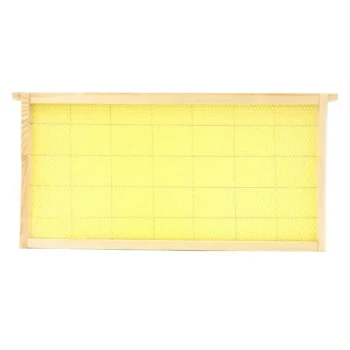
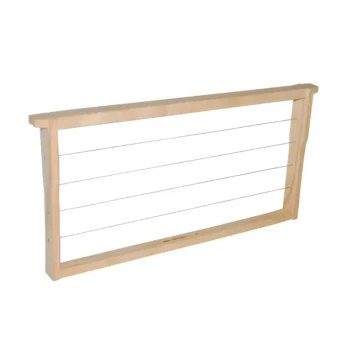
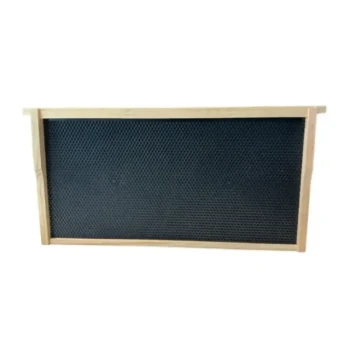
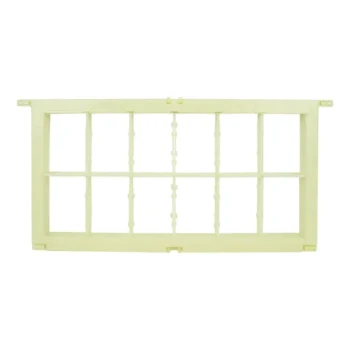
Selecting between pure beeswax and plastic comb foundations depends on the production method, required durability, labor capacity, bee acceptance, and total operating cost. Pure beeswax is usually the stronger choice for rapid comb drawing and cut-comb or chunk honey, while plastic foundations are better suited to brood chambers and high-volume extracted honey where frames face repeated handling and centrifugal force.
The right foundation is determined by the job it must perform. Choose natural beeswax when fast acceptance and premium comb presentation are priorities; choose reinforced beeswax or plastic when structural strength, repeat extraction, and long service life matter most.
Start With the Intended Honey Production Method
Cut-comb, chunk, and section honey
Thin, unreinforced pure beeswax foundations are well suited to cut-comb, chunk, and section honey production.
Bees generally accept natural wax quickly because of its scent and familiar material. This can help colonies draw comb rapidly when conditions are suitable.
Extracted honey
Frames used in mechanical honey extractors must withstand centrifugal forces. Thin, unsupported beeswax can sag, deform, or fail during extraction.
For extracted honey, use plastic foundations or thicker wired beeswax foundations. These provide substantially better support than thin, unreinforced wax sheets.
Brood chambers
Brood frames require durable comb that can tolerate repeated inspections, movement, and long-term use.
Plastic foundations or reinforced beeswax are generally more appropriate for brood chambers than delicate, thin wax foundation.
Compare Structural Durability and Service Life
Pure beeswax foundations
Pure beeswax provides a natural comb-building surface, but it is physically fragile. It can bend, crack, sag, or become damaged during installation, transport, and extraction.
Wax foundation typically requires supporting features such as embedded horizontal wire, support pins, wedge strips, or other frame reinforcement.
Plastic foundations
Plastic foundations offer high physical durability and resist damage during handling and extraction. They are also resistant to rot and less vulnerable to wax moth damage than beeswax foundation.
Their longer service life can reduce replacement and maintenance requirements, particularly in commercial operations with frequent frame cycling.
Frame compatibility
The foundation must match the frame design. Beeswax foundation is traditionally used with wooden wedge frames and may require wiring or additional support.
Plastic foundation is often easier to install in compatible wooden frames with grooved top bars or in systems using snap-in plastic components. Confirm dimensions, frame size, and fitting method before purchasing.
Evaluate Bee Acceptance and Comb-Building Speed
Why beeswax is usually accepted faster
Bees tend to work natural beeswax more readily than plastic. The wax scent and existing hexagonal cell impressions provide a familiar starting surface.
This advantage can be important during early-season buildup or whenever rapid comb production supports short-term honey yield.
Why plastic may require stronger conditions
Bees often draw plastic foundation more slowly than natural beeswax. A strong nectar flow and a populous, active colony may be necessary to encourage efficient comb construction.
Many plastic products benefit from an additional coating of beeswax to improve acceptance. This adds preparation work and should be included in the operational comparison.
The importance of management conditions
Neither material performs independently of colony strength, nectar availability, temperature, and installation quality.
Plastic may be the better long-term asset, but beeswax can provide a faster biological start when rapid drawing is the immediate priority.
Compare Initial Cost and Assembly Labor
Upfront component cost
The comparison should include more than the price of the foundation sheet. Evaluate the combined cost of the foundation, frame, wiring, support hardware, wax coating, and expected replacement rate.
A lower initial purchase price may not remain lower if the material requires more assembly labor or frequent replacement.
Installation and wiring time
Pure beeswax foundations can require wiring, embedding, support pins, and careful installation. This increases preparation time and creates more opportunities for damage before the frames enter the hive.
Plastic foundations are generally faster to install, particularly when using snap-in systems. Faster assembly can be commercially significant when preparing large frame quantities.
Labor availability
For operations with limited skilled labor, rapid-install plastic systems may reduce bottlenecks during seasonal preparation.
Where experienced workers and established wiring equipment are already available, reinforced beeswax may remain a practical compromise between natural acceptance and structural strength.
Consider the Operating Environment
Climate and handling conditions
Local climate affects foundation performance and handling risk. Beeswax is more vulnerable to deformation when exposed to heat and rough handling.
Plastic is more tolerant of repeated handling, but the complete hive system still requires suitable ventilation and moisture management.
Hive and frame materials
The decision should be made at the system level, not only by foundation material. Consider whether the operation uses wooden or plastic frames, the frame’s top-bar design, and how the foundation will be secured.
Plastic hive components can introduce separate concerns, including moisture buildup, poor ventilation, or warping in some conditions. These issues should not be confused with the durability of the plastic foundation itself.
Expected duration of use
For short-term or specialized production, the rapid acceptance of beeswax may justify its higher installation care.
For repeated commercial use over multiple seasons, plastic’s durability and lower maintenance burden may deliver stronger long-term value.
Understand Health and Material Considerations
Natural hive environment
Beeswax is often preferred by beekeepers seeking a more natural hive environment. Bees have a natural affinity for the material, and it does not present the same concern about additives associated with some plastic products.
However, beeswax quality and cleanliness still matter. Buyers should evaluate supplier reliability and product specifications rather than treating all wax foundation as identical.
Plastic product quality
Plastic foundation can be suitable for bee management when it is manufactured for apicultural use and properly prepared.
For commercial purchasing, assess material consistency, dimensional accuracy, surface finish, available colors, wax-coating requirements, and compatibility with the intended frames.
Understanding the Trade-offs
The main compromise
The central trade-off is bee acceptance versus structural durability. Pure beeswax generally supports faster comb drawing, while plastic provides stronger resistance to handling and extraction damage.
There is no universally superior material; the correct choice depends on where the frames sit in the production cycle.
Common mistake: using thin wax for extraction
Thin, unreinforced wax foundation may perform well for cut-comb production but fail under centrifugal extraction.
If the operation uses mechanical extractors, select plastic or adequately reinforced, thicker beeswax foundation.
Common mistake: comparing only purchase price
Initial cost alone can conceal wiring labor, installation time, coating requirements, breakage, replacement, and downtime.
A proper comparison should calculate the total operating cost per usable frame over the expected service period.
Common mistake: ignoring supply and fulfillment requirements
Commercial users also need consistent dimensions, reliable availability, responsive technical support, and predictable delivery.
For distributors, wholesalers, and resellers, a broad product portfolio is valuable because different customers may require thin wax, wired wax, plastic foundation, or complete frame systems.
Making the Right Choice for Your Goal
Foundation selection should match both the biological needs of the colony and the operational demands of the apiary.
- If your primary focus is cut-comb, chunk, or section honey: Choose thin pure beeswax foundation to prioritize rapid acceptance and fast comb drawing.
- If your primary focus is extracted honey: Choose plastic foundation or thick, well-reinforced beeswax that can withstand centrifugal extraction.
- If your primary focus is brood-chamber durability: Favor plastic or reinforced beeswax foundation for repeated handling and extended frame life.
- If your primary focus is minimizing assembly labor: Consider compatible plastic foundation or snap-in frame systems that reduce wiring and installation time.
- If your primary focus is natural comb acceptance: Choose pure beeswax foundation, while accounting for its greater fragility and installation requirements.
- If your primary focus is long-term commercial efficiency: Compare total cost, labor, replacement rates, compatibility, supply reliability, and delivery performance rather than unit price alone.
The best foundation choice is the one that aligns comb-building speed, structural strength, labor efficiency, and dependable supply with your actual beekeeping operation.
Summary Table:
| Factor | Pure Beeswax | Plastic |
|---|---|---|
| Bee Acceptance | High (faster draw) | Lower (may need wax coating) |
| Durability | Low (fragile, may sag) | High (resists handling and extraction) |
| Cost (initial) | Variable (often lower sheet price) | Variable (often higher sheet price) |
| Installation Labor | High (wiring and support) | Low (snap-in, no wiring) |
| Service Life | Short (replaced often) | Long (reusable) |
| Best Use | Cut-comb, chunk, natural comb | Brood, extracted honey, commercial |
Ready to choose the perfect foundation for your apiary? At HONESTBEE, we offer a full range of high-quality beeswax and plastic foundations, along with all the frames and equipment you need. Our experts can help you select the right solution for your production method and budget. As a one-stop supplier for commercial beekeepers and distributors, we ensure fast delivery, competitive pricing, and dedicated support. Contact us today to discuss your requirements and get a tailored quote!
Related Products
- Assembled Wooden Bee Frames with Beeswax Foundation Ready to Use by HONESTBEE
- HONESTBEE Wired and Assembled Wooden Bee Frames Foundation for a Thriving Hive
- Assembled Wooden Bee Frames with Plastic Foundation for Durability and Convenience by HONESTBEE
- Beeswax Foundation Sheets Beehive Foundation for Wholesale
- Food Grade Plastic bee Foundation for Bee Frames
People Also Ask
- Under what circumstances should bee frames be destroyed? Protect Your Apiary from American Foulbrood
- How should frames be rearranged as a bee colony grows? Master Hive Expansion and Nest Management
- Do bee frames need foundation? Choose the Right Approach for Your Apiary
- Can beekeepers switch between wooden and plastic frames? Optimize Your Hive's Performance
- What are bee frames and how are they sized? A Professional Guide to Standardization & Material Choice