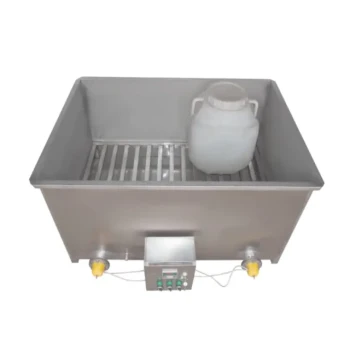
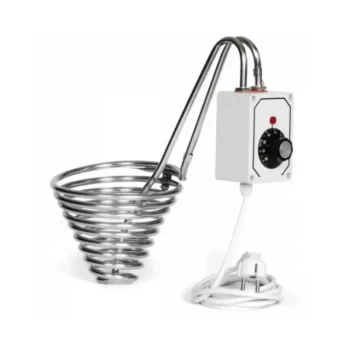
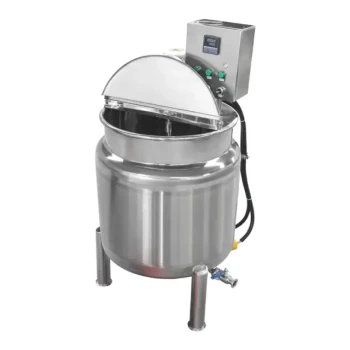
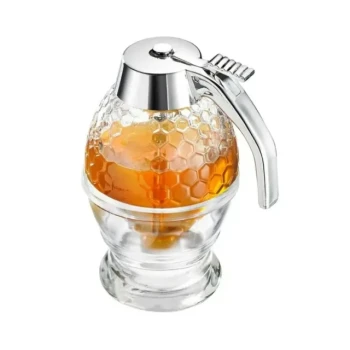
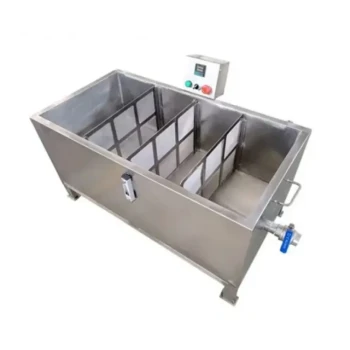
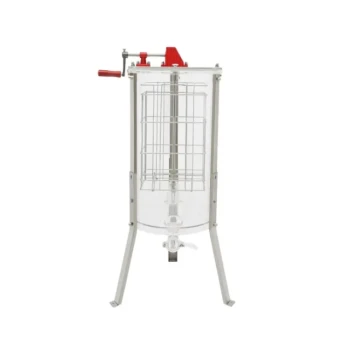
The primary function of a honey decrystallizer is to restore crystallized honey to a uniform liquid state through controlled heating. This preparation step is vital because it ensures the honey possesses the necessary fluidity to pass through automated filling lines without causing mechanical blockages or measurement inaccuracies. By returning the honey to a liquid form, the equipment also preserves the visual transparency and premium texture that consumers expect from high-quality bottled honey.
Decrystallizers serve as the critical link between bulk storage and the final bottling line, transforming solidified product into a flowable liquid while protecting its nutritional integrity. For distributors, this ensures consistent product quality and maximizes the efficiency of high-speed packaging operations.
Optimizing Operational Efficiency in Filling Lines
Restoring Essential Flowability for Bottling
Honey naturally crystallizes over time, becoming a semi-solid mass that cannot be processed by standard pumps. Decrystallizers apply uniform heat to break down these glucose crystals, returning the honey to a viscosity suitable for high-speed automated filling. This transition is necessary to ensure that every bottle is filled with precise volumetric accuracy.
Preventing Equipment Downtime and Damage
Solid crystals can act as abrasives or create physical obstructions within the delicate piping and nozzles of filling machines. By ensuring the honey is completely liquid before it enters the line, decrystallizers prevent mechanical blockages and reduce wear on seals and pumps. This reliability is a cornerstone of efficient, large-scale distribution and fulfillment.
Preserving Product Integrity and Market Value
Protecting Sensitive Nutritional Components
Professional decrystallization equipment utilizes precise constant-temperature control to reliquefy honey without overheating it. This precision is vital to prevent the degradation of heat-sensitive enzymes, antioxidants, and delicate aromatic profiles. For B2B resellers, maintaining these pharmacological activities is key to justifying premium price points.
Ensuring Visual Consistency and Shelf Appeal
Consumers associate liquid, transparent honey with freshness and quality. Decrystallization provides a visual uniformity across large batches, ensuring that every jar on a retail shelf looks identical and appealing. Furthermore, a thorough decrystallization process can actually extend the shelf life of the liquid state, delaying the return of crystals.
Understanding Potential Pitfalls and Trade-offs
The Risk of Thermal Damage
While heat is necessary for decrystallization, excessive temperatures can lead to the production of HMF (hydroxymethylfurfural) and the loss of natural flavors. Overheating permanently damages honey, turning a premium product into a lower-grade sweetener that may fail regulatory inspections. It is essential to use equipment that balances speed with gentle thermal application.
Inefficient Heating and Hotspots
Lower-quality heating methods often result in "hotspots" where honey near the heat source burns while the core remains crystallized. This lack of thermal uniformity leads to inconsistent product quality and potential clogs in the filling line. Professional-grade decrystallizers are designed to circulate heat evenly to avoid these localized failures.
Choosing the Right Solution for Your Distribution Goals
When sourcing honey processing equipment to enhance your supply chain, your choice should align with your specific operational priorities and the needs of your retail partners.
- If your primary focus is high-volume fulfillment: Invest in automated decrystallization units that integrate directly with filling lines to minimize manual handling and maximize throughput.
- If your primary focus is premium product positioning: Prioritize equipment with advanced, digital temperature sensors that guarantee the preservation of delicate enzymes and the honey's natural "raw" characteristics.
- If your primary focus is minimizing operational overhead: Opt for energy-efficient, well-insulated decrystallization tanks that reduce power consumption during large-scale liquefaction cycles.
By mastering the decrystallization stage, you ensure a seamless transition from bulk inventory to retail-ready products that meet the highest standards of quality and consistency.
Summary Table:
| Key Function | Impact on Production Line | Value for Distributors & Wholesalers |
|---|---|---|
| Thermal Reliquefaction | Restores honey to a liquid state for smooth pumping | Ensures precise volumetric filling and high-speed efficiency |
| Blockage Prevention | Eliminates crystals that clog nozzles and wear out seals | Reduces equipment downtime and maintenance overhead |
| Enzyme Preservation | Controlled heating protects heat-sensitive nutrients | Maintains premium product grading and "raw" honey integrity |
| Aesthetic Standardization | Ensures uniform transparency and visual consistency | Enhances retail shelf appeal and consumer trust |
Scale Your Honey Business with HONESTBEE One-Stop Solutions
Maximize your profit margins and operational efficiency with HONESTBEE, your dedicated partner in honey processing excellence. We cater specifically to commercial apiaries, distributors, and B2B resellers by providing a comprehensive full-spectrum product portfolio. From high-performance honey decrystallizers and automated honey-filling machines to hive-making hardware and essential consumables, we offer everything you need under one roof.
Why partner with HONESTBEE?
- Deep Industry Expertise: Professional guidance tailored to large-scale distribution.
- Rapid Fulfillment: Ultra-fast delivery and efficient order processing to keep your supply chain moving.
- Premium Quality & Support: Exceptional customer service with dedicated OEM/ODM capabilities.
Ready to upgrade your processing line with world-class machinery? Contact us today to receive a wholesale quote!
References
- Osmil Galindo. O Nordeste em busca do ouro adoçante. DOI: 10.61673/ren.2003.833
This article is also based on technical information from HonestBee Knowledge Base .
Related Products
- Heavy Duty Stainless Steel Honey Processing Machine Decrystallizing Tank
- Professional Thermostatic Conical Honey Melter
- High Quality Honey Dehumidifier Dryer Thickening Machine for Beekeeping
- 0.5T Capacity Honey Dehumidifier Dryer with Vacuum Heating and Thickening Filtering Machine
- Honey Concentrating Vacuum Heating Thickening Machine Dehumidifier for Honey
People Also Ask
- What are the features of the processing tanks offered? Engineered for Purity and Efficiency
- What types of stainless steel processing tanks are used for honey? Essential Equipment for Quality Honey Production
- What design options are available for honey processing tanks? Optimize Efficiency with Custom Geometries
- What types of stainless steel are used for honey processing? Ensure Food Safety with 304 & 316 Grade Equipment
- Why is industrial-grade stainless steel processing equipment required for honey harvesting? Ensure Purity & Compliance