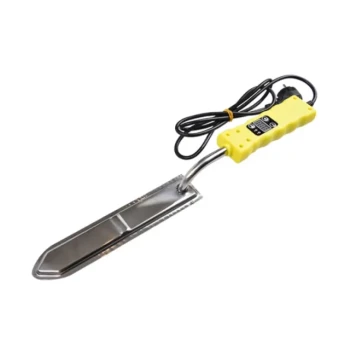
In a bee traffic monitoring system, a waterproof digital temperature sensor functions as a critical baseline tool for interpreting honeybee flight activity. It provides real-time monitoring of the thermal environment both inside and outside the hive, creating a dataset that is essential for distinguishing between behavior driven by weather and behavior driven by colony health.
By correlating physical temperature data with traffic counts, these sensors allow you to determine if fluctuations in bee activity are normal responses to environmental heat or indicators of biological anomalies within the colony.
The Role of Thermal Data in Traffic Analysis
Distinguishing Cause from Effect
Honeybee flight activity is heavily influenced by environmental temperature. Without thermal data, a drop in bee traffic could be misinterpreted as a colony collapse or health issue.
The sensor acts as a background parameter. It allows the system to verify if a traffic decline is simply due to a drop in external temperature, which is a natural biological response, rather than a deeper problem.
Internal vs. External Monitoring
To fully understand traffic patterns, the system monitors two distinct zones.
External monitoring validates whether conditions are suitable for foraging. Internal monitoring assesses the colony's physiological state. Comparing these two data sets helps technicians analyze the specific causes of traffic fluctuations.
Precision and Placement Strategy
Monitoring Brood Health
While the primary reference highlights traffic analysis, supplementary data suggests that internal sensors serve a dual purpose regarding colony health.
When placed at the geometric center of the hive—specifically between frames in the brood area—the sensor tracks the colony's ability to maintain a constant temperature. A healthy colony will actively regulate this zone between 32°C and 36°C, regardless of external weather.
High-Resolution Insights
Modern sensors used in these systems are often high-precision, capable of capturing fluctuations with a resolution of 0.1°C.
This high sensitivity is necessary to detect minute microclimate changes. It reveals how effectively the bees are buffering their environment against meteorological shifts, providing a metric for the colony's overall vitality and "workforce" effectiveness.
Critical Considerations and Trade-offs
The Risk of Microclimate Misinterpretation
A common pitfall is assuming one sensor represents the entire hive.
The "microclimate" varies significantly depending on where the sensor is located. A sensor placed too close to the hive entrance may record data more reflective of the ambient outside air than the actual colony cluster, leading to skewed traffic analysis.
Durability in High Humidity
The "waterproof" specification is not merely for rain protection; it is essential for internal hive survival.
Beehives are high-humidity environments due to bee respiration and nectar evaporation. Non-waterproof sensors frequently fail or drift in accuracy when exposed to the corrosive, moist atmosphere of a living colony, resulting in data gaps that render traffic monitoring useless.
Making the Right Choice for Your Monitoring Goals
To derive the most value from your sensor data, you must align the sensor's function with your specific analytical objectives.
- If your primary focus is behavioral analysis: specific external sensors are required to correlate peak traffic windows with optimal foraging temperatures.
- If your primary focus is colony health diagnostics: prioritize internal placement within the brood zone to ensure the colony is successfully thermoregulating during traffic lulls.
By integrating precise thermal data, you transform raw traffic counts into actionable biological insights.
Summary Table:
| Feature | Function in Monitoring System | Key Benefit |
|---|---|---|
| Environmental Baseline | Correlates traffic counts with external weather | Distinguishes weather-driven behavior from health issues |
| Internal Regulation | Tracks brood zone temperature (32°C - 36°C) | Assesses colony vitality and thermoregulation success |
| 0.1°C High Resolution | Detects minute microclimate shifts | Provides precise data for workforce effectiveness metrics |
| Waterproof Design | Resists high humidity and nectar evaporation | Ensures long-term durability and prevents data drift |
Elevate Your Beekeeping Operations with HONESTBEE
At HONESTBEE, we specialize in empowering commercial apiaries and distributors with the high-precision tools needed for modern apiculture. Whether you are seeking advanced hive-making machinery, specialized honey-filling equipment, or durable sensors for hive monitoring, our comprehensive wholesale portfolio has you covered.
Our Value to You:
- Industrial-Grade Equipment: From specialized hardware to essential consumables, we supply everything to keep your operations running smoothly.
- Scalable Wholesale Solutions: Designed specifically for large-scale apiaries and equipment distributors.
- Expert Support: We help you transform raw data into actionable biological insights for better colony management.
Ready to optimize your production and monitoring efficiency? Contact us today to explore our full spectrum of beekeeping tools and equipment!
References
- Vladimir Kulyukin, Tadd Truscott. BeePIV: A Method to Measure Apis Mellifera Traffic with Particle Image Velocimetry in Videos. DOI: 10.3390/app11052276
This article is also based on technical information from HonestBee Knowledge Base .
Related Products
- Digital Honey Refractometer for Precision Measurement of Optimal Honey Quality
- Professional Electric Honey Uncapping Knife with Heated Digital Temperature Control for Beekeeping
- HONESTBEE Adjustable Voltage Wire Embedder with Digital Display
People Also Ask
- What role do high-precision refractometers play in determining the maturity and quality of honey? Ensure Honey Purity.
- Do the color and viscosity of honey affect its refractometer reading? Mastering Moisture Measurement Accuracy
- What is a honey refractometer? The Essential Tool for Perfect Honey Quality
- Why is a honey refractometer considered essential for commercial beekeepers? Ensure Honey Quality and Profitability
- How is the reading taken from a honey refractometer? A Guide to Accurate Moisture Measurement