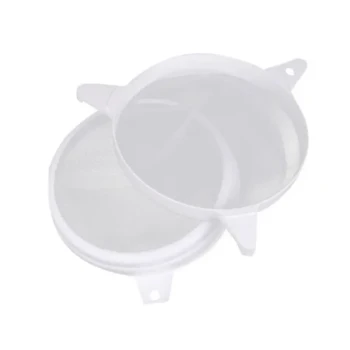
Multi-Stage Precision Filter Paper serves as the definitive mechanical separator in the propolis extraction workflow, tasked with isolating the liquid extract from solid byproducts. By utilizing a specific combination of medium and fine pore sizes, this material systematically intercepts insoluble residues such as beeswax, pollen, and suspended resin particles. The immediate result is a highly clarified, transparent ethanol extract suitable for sensitive downstream applications.
Propolis extraction inevitably produces a crude suspension containing dissolved actives mixed with solid waste. Multi-stage filtration provides the necessary fractionation to produce a standardized liquid sample, ensuring the purity required for high-precision instrumentation like gas chromatography.
The Mechanics of Purification
Progressive Particle Interception
The effectiveness of this method lies in the "multi-stage" approach, which typically employs a gradient of filter specifications.
Rather than relying on a single barrier, the process uses medium pores to capture larger debris and fine pores to trap microscopic particulates.
This stratification prevents rapid clogging and ensures the thorough removal of trace beeswax and pollen residues that would otherwise contaminate the final product.
Leveraging Ethanol Solubility
This filtration step is designed to exploit the specific chemical properties of the solvent.
While ethanol dissolves the desirable resins, balsams, and flavonoids (approx. 50-60% of propolis), it leaves beeswax and mechanical impurities as solids.
The precision filter paper acts as the physical gatekeeper, allowing the bioactive solution to pass while retaining the undissolved solid fraction.
Critical Impacts on Downstream Analysis
Enabling Gas Chromatography
The primary reference highlights that this specific filtration method is a prerequisite for high-precision gas chromatography.
Chromatography columns are extremely sensitive to particulate matter; even microscopic solids can cause blockages or skew data.
By producing a "clear and transparent" extract, the filter paper protects analytical equipment and ensures data integrity.
Standardization for Biological Testing
Beyond chemical analysis, the clarity provided by this filtration is essential for biological applications.
Supplementary data indicates that producing a standardized raw material is crucial for in vitro antimicrobial testing.
Removing variable solids allows researchers to attribute biological activity solely to the dissolved chemical constituents, not random impurities.
Advanced Decontamination Capabilities
Removal of Radioactive Contaminants
An often overlooked function of this physical separation is the mitigation of radioactive contamination.
Radioactive nuclides tend to remain in the insoluble solid fractions of propolis rather than dissolving in ethanol.
By effectively separating these solids, filtration—alongside methods like centrifugation—can reduce radioactive contamination by over 97.5%.
Understanding the Trade-offs
Flow Rate vs. Retention
While multi-stage precision paper offers high purity, it introduces significant resistance to liquid flow.
The finer the pore size required for clarity, the slower the gravity-fed filtration process becomes.
To mitigate this, industrial workflows often require high-vacuum systems to create the pressure differential needed to pull the extract through low-porosity media efficiently.
Solubility Limits
It is critical to understand that filter paper only removes insoluble solids.
If the ethanol is too warm during filtration, some waxes may dissolve and pass through the filter, only to precipitate later as the liquid cools.
Therefore, the efficacy of the filter paper is heavily dependent on controlling the temperature of the extraction environment.
Making the Right Choice for Your Goal
To select the appropriate filtration protocol, you must identify the ultimate destination of your extract.
- If your primary focus is Chemical Analysis (GC/HPLC): Prioritize fine-pore precision paper to ensure absolute optical clarity and protect sensitive column instrumentation.
- If your primary focus is Industrial Production: Incorporate vacuum assistance to overcome the flow resistance inherent in high-precision filter media.
- If your primary focus is Safety and Decontamination: Ensure the filtration step is rigorous enough to capture all solid residues, as this is where radioactive nuclides are sequestered.
Precision filtration is not merely a cleaning step; it is the bridge between a raw natural substance and a reliable scientific reagent.
Summary Table:
| Feature | Function & Impact |
|---|---|
| Primary Role | Mechanical separation of liquid extract from solid byproducts like beeswax and pollen. |
| Multi-Stage Gradient | Uses medium to fine pores to prevent clogging and capture microscopic particulates. |
| Analytical Benefit | Ensures optical clarity required for Gas Chromatography (GC) and HPLC protection. |
| Decontamination | Removes over 97.5% of radioactive nuclides by sequestering them in insoluble solids. |
| Industrial Factor | Requires vacuum assistance to maintain flow rates through high-precision media. |
Elevate Your Propolis Processing with HONESTBEE
At HONESTBEE, we understand that purity is the cornerstone of a successful beekeeping business. Whether you are a commercial apiary or a global distributor, our comprehensive wholesale portfolio offers the specialized tools you need to achieve scientific-grade results.
From high-performance filtration consumables to advanced honey-filling and hive-making machinery, we supply the full spectrum of equipment to optimize your workflow. Contact us today to discover how our industry-leading solutions and professional-grade beekeeping hardware can enhance your production efficiency and product quality.
References
- Aslı Özkök, Bekir Salih. The Chemical Analysis of Propolis, Which are Produced in Western of Turkey. DOI: 10.15671/hjbc.20164420575
This article is also based on technical information from HonestBee Knowledge Base .
Related Products
People Also Ask
- What are the benefits of using honey filters? Achieve Purity, Efficiency, and Market Appeal
- How do you filter raw honey at home? A Beekeeper's Guide to Clean, Pure Honey
- Should I filter my honey? A Guide to Clarity, Crystallization & Quality
- What are the types of honey filters? Choose the Right System for Your Honey's Clarity & Quality
- Why do people filter honey? For Clarity, Stability, and Consumer Appeal