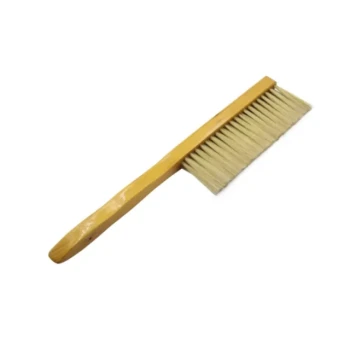
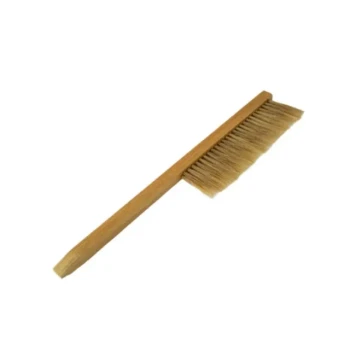
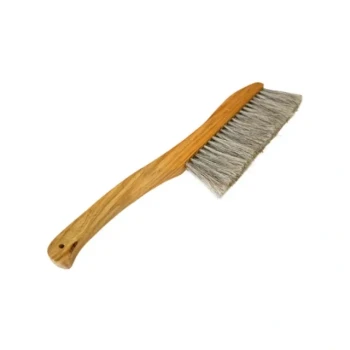
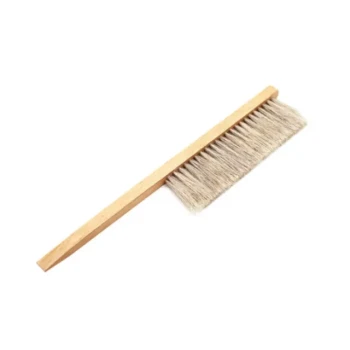
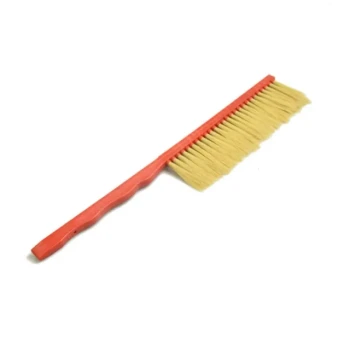
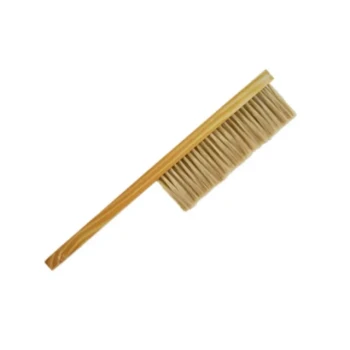
A bee brush is a specialized apiary tool designed to gently sweep bees off honey frames, hive walls, or lids. Typically constructed with long, soft bristles attached to a wooden handle, it allows beekeepers to clear specific areas for inspection or harvesting. Its design prioritizes moving bees effectively without causing physical injury or unnecessary agitation to the colony.
While shaking a frame removes the majority of the colony, the bee brush provides the precision needed to clear remaining stragglers. It serves as a gentle, non-invasive bridge between simple observation and active hive management, such as honey extraction.
Anatomy and Function
Designed for Softness
The defining feature of a bee brush is its bristles. Beekeepers require a material that is rigid enough to move a bee but flexible enough to prevent crushing it.
The bristles are specifically chosen for their softness to ensure they displace rather than harm the insect. Some brushes utilize materials as fine as camel hair to guarantee the safety of the bees and the delicate wax structures of the honeycomb.
The Handle Mechanism
These bristles are mounted on a long handle, which is typically made of wood.
This construction provides the beekeeper with a comfortable grip. It allows for a controlled reach, enabling the manipulation of frames without forcing the beekeeper to place their hands too deep into the cluster.
When to Utilize a Bee Brush
During Honey Harvesting
The most critical use of a bee brush occurs during the extraction process. Before a frame can be uncapped and placed into an extractor, it must be entirely free of bees.
Beekeepers often shake the frame first to dislodge the bulk of the bees. The brush is then used to sweep away the few stubborn bees that remain clinging to the comb.
Routine Hive Inspections
During standard hive checks, visibility is paramount. A beekeeper may need to inspect the brood pattern or look for specific indicators on the comb surface.
The bee brush allows the operator to gently clear bees from a specific area of interest—such as a lid, box rim, or frame face—to gain a clear view without disrupting the rest of the hive.
Understanding the Trade-offs
Shaking vs. Brushing
It is important to understand the hierarchy of bee removal. The bee brush is generally a secondary tool, not the primary method for clearing a full frame.
Lifting a frame and giving it a sharp shake is usually the most efficient way to remove the majority of bees. The brush is the supportive tool used to handle the specific bees that shaking cannot dislodge.
The Importance of Technique
While the tool is designed to prevent harm, the technique is equally important. The bristles are soft to avoid injury, but incorrect usage can still cause stress.
The goal is to sweep the bees, not scrub them. A gentle, fluid motion is required to move the bees away without triggering a defensive response or damaging the soft wax cappings of the honeycomb.
Making the Right Choice for Your Goal
The bee brush is an essential component of a beekeeper's toolkit, acting as the final step in ensuring safe frame handling.
- If your primary focus is harvesting honey: Rely on the brush to ensure absolute removal of bees from frames before they enter the processing area.
- If your primary focus is routine inspection: Use the brush sparingly to clear small visual windows on the comb, ensuring you do not accidentally crush the queen or worker bees during reassembly.
Used correctly, the bee brush ensures that both your inspection goals are met and the colony remains calm and intact.
Summary Table:
| Feature | Description |
|---|---|
| Primary Function | Gently sweeping bees off frames, hive walls, or lids |
| Bristle Material | Soft materials (e.g., camel hair or soft synthetic) to prevent injury |
| Main Use Case | Final bee removal during honey harvesting and detailed inspections |
| Key Advantage | Non-invasive and precise compared to frame shaking |
| Technique | Fluid, gentle sweeping motion to avoid colony agitation |
Elevate Your Beekeeping Efficiency with HONESTBEE
At HONESTBEE, we understand that the right tools make the difference between a productive harvest and a stressed colony. As a leading partner for commercial apiaries and distributors, we provide a comprehensive wholesale range of professional-grade equipment. From soft-bristle bee brushes and hive-making machinery to honey-filling systems and unique honey-themed merchandise, we supply everything your business needs to thrive.
Ready to scale your operations? Contact us today to access our premium wholesale catalog and discover how our end-to-end beekeeping solutions can bring unparalleled value to your apiary.
Related Products
- Wooden Bee Brush with Triple Row Artificial Fiber for Beekeeping
- Classic Wooden Bee Brush with Double-Row Boar Bristles
- Premium Triple-Row Horsehair Bee Brush
- Wooden Bee Brush with Double-Row Horsehair Bristles
- Plastic Handle Single Row Artificial Fiber Bee Brush
People Also Ask
- What is the specific function of a bee brush? Ensure Pure Harvests and Colony Welfare During Honey Extraction
- What are the key characteristics of the bristles on a bee brush? Master Gentle and Efficient Bee Removal
- What is the purpose of using a bee brush during the inspection of hive components? Safe & Precise Hive Management
- What problem does a bee brush solve? Protect Your Colony with Gentle Precision Tools
- Why is a bee brush necessary when extracting honeybee hive frames that contain larvae? Protect Your Brood and Colony