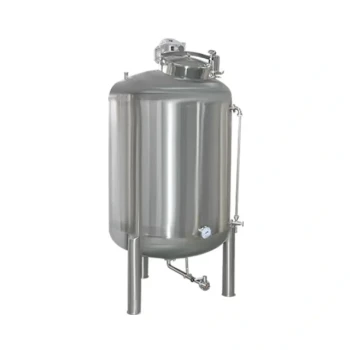
Honey blending is the processing technique of combining multiple batches of honey that have been harvested from the same geographical region. Its primary purpose is to eliminate natural variability, creating a standardized final product that is homogenous in both texture and composition.
Natural honey varies significantly between sources; blending is the technical solution to this inconsistency. By mixing specific batches, producers ensure the final product maintains stable physical and chemical properties throughout the entire volume.
The Mechanics of Standardization
Combining Regional Sources
Blending is not simply mixing random jars of honey; it is a deliberate consolidation of resources from a shared location. According to industry standards, this practice specifically involves mixing honeys sourced from the same geographical area. This allows producers to aggregate smaller harvests into a commercially viable volume while maintaining regional provenance.
Achieving Homogeneity
The core goal of this process is uniformity. Honey is a natural product that changes based on floral sources and environmental conditions. Blending distinct batches during processing ensures that the final mixture is chemically and physically consistent from the first drop to the last.
Why Uniformity Matters
Balancing Natural Variations
Raw honey from different hives or harvest times can possess vastly different characteristics. One batch might be lighter or more viscous than another. Blending smooths out these differences, resulting in a predictable product that consumers or industrial buyers can rely on.
Consistent Physical Properties
Physical attributes such as color, viscosity, and crystallization rates are harmonized during blending. This ensures that the honey looks and pours the same way every time it is purchased.
Consistent Chemical Properties
Beyond appearance, blending standardizes the chemical makeup of the honey. This is critical for maintaining consistent moisture levels, pH balance, and sugar ratios across a large production run.
Understanding the Trade-offs
Standardization vs. Uniqueness
While blending creates reliability, it can mask the unique nuances of individual batches. A specific hive might produce a distinct flavor profile based on a unique bloom, but blending tends to "average out" these peaks to create a consistent middle ground.
Processing Implications
Blending is an additional processing step. While it guarantees homogeneity, it moves the product one step away from its raw, single-hive state in favor of scalability and consistency.
Evaluating Honey Types for Your Needs
To decide between blended and non-blended options, consider your specific requirements for consistency versus character.
- If your primary focus is reliability: Blended honey is the superior choice, as it guarantees consistent flavor, texture, and baking performance every time you use it.
- If your primary focus is unique flavor profiles: Single-source or unblended honey is preferable, as it preserves the distinct "terroir" and specific floral notes of a single harvest.
By understanding the purpose of blending, you can choose the product that best aligns with your culinary or technical standards.
Summary Table:
| Feature | Blended Honey | Single-Source Honey |
|---|---|---|
| Consistency | High (Uniform color/viscosity) | Variable (Seasonal changes) |
| Composition | Standardized chemical properties | Natural peaks and nuances |
| Application | Ideal for industrial/bakery use | Premium gourmet/artisanal |
| Sourcing | Multiple batches (Same region) | Single harvest/Specific hive |
| Primary Goal | Reliability and Scalability | Unique flavor profiles |
Scale Your Honey Business with HONESTBEE
Maintaining product consistency is key to satisfying global distributors and industrial buyers. At HONESTBEE, we specialize in empowering commercial apiaries with the technology needed to achieve professional results. From high-capacity honey-filling machines to advanced honey processing equipment, our comprehensive wholesale solutions are designed for efficiency and scalability.
Whether you are a large-scale producer looking for specialized hardware or a distributor seeking a reliable supplier of beekeeping tools and industry consumables, we provide the expertise and machinery to grow your brand.
Ready to optimize your production and elevate your market presence?
Contact HONESTBEE Today to Explore Our Wholesale Solutions
Related Products
- Economy Honey Homogenizer Mixer and Melting Machine for Beekeeping
- Professional Honey Storage Tank with Agitation System
- Double Wall Honey Heating Stirring Homogenizer Mixing Machine with Various Capacity
- Manual Honey Filling Machine Bottling Machine for Honey
- Automatic Honey Filling and Filtering Machine for Beekeeping Bottle Filling
People Also Ask
- What impact do homogenizers or oscillating equipment have on honey microbial detection? Ensure Testing Accuracy
- Why is thorough mechanical stirring and homogenization emphasized in honey processing? Ensure Sample Accuracy
- How do heating equipment and homogenizers liquefy crystallized honey? Expert Guide to Professional Honey Processing
- What is the significance of honey homogenization? Elevate Commercial Honey Quality and Brand Consistency
- What is the role of homogenization equipment in the sensory evaluation of honey? Ensure Precision and Consistency