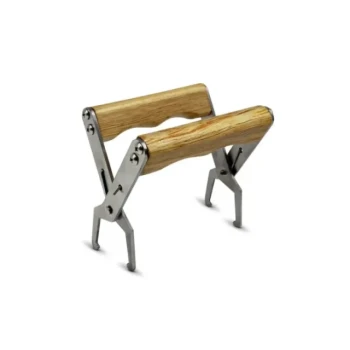
The primary benefit of INSET frame rest construction is superior structural integrity. Unlike standard designs that reduce material thickness at critical joints, the INSET method maintains the full density of the wood. This results in the strongest possible corner construction available for this application.
The INSET frame rest distinguishes itself by maintaining a full 3/4-inch thickness throughout the joint. This eliminates the structural weaknesses common in traditional designs, ensuring consistent finger sizing and maximum load-bearing capability.
The Mechanics of Superior Strength
Consistent Finger Sizing
The defining feature of the INSET frame rest is the uniformity of the construction. This design enables the use of a consistent size finger from top to bottom.
In woodworking and structural design, uniformity allows for even stress distribution. By keeping the interlocking fingers identical in size, the box avoids creating "weak links" at the top edge where weight and manipulation stress are highest.
Maintaining Full Material Density
Standard construction methods often require removing material to create a ledge for frames, effectively thinning the wood. The INSET method takes a different approach.
It maintains a full 3/4-inch thickness throughout the construction. By utilizing the entire dimension of the lumber, the joint retains the natural strength of the wood, preventing the fragility associated with thinner cuts.
Understanding the Trade-offs
The Vulnerability of Standard Designs
To understand the value of the INSET method, one must understand the pitfall of the alternative.
Standard construction frequently relies on creating a shelf that reduces the wood to weaker 3/8-inch thick fingers.
This 50% reduction in material thickness creates a distinct structural vulnerability. These thinner sections are prone to splitting or breaking under the weight of heavy frames or during prying. The INSET design specifically eliminates this failure point by refusing to compromise the 3/4-inch standard.
Making the Right Choice for Your Goal
When selecting hive bodies or woodenware, your choice of construction dictates the longevity of the equipment.
- If your primary focus is maximum durability: Prioritize the INSET frame rest to ensure your equipment withstands heavy loads and frequent manipulation without corner failure.
- If your primary focus is avoiding breakage: Choose INSET construction to eliminate the fragile 3/8-inch fingers found in standard rabbeted designs.
Investing in full-thickness construction ensures your equipment remains functional and secure season after season.
Summary Table:
| Feature | Standard Construction | INSET Construction |
|---|---|---|
| Finger Thickness | Reduced (often 3/8") | Full Density (3/4") |
| Structural Strength | Moderate - Vulnerable at top | Maximum - Full joint integrity |
| Stress Distribution | Uneven | Uniform (top to bottom) |
| Breakage Risk | High (at shelf/rabbet) | Minimal (no weak links) |
| Best For | Casual/Budget use | Commercial/Heavy-duty use |
Scale Your Apiary with Industrial-Grade Strength
At HONESTBEE, we understand that commercial success depends on equipment that withstands the rigors of heavy honey loads and frequent manipulation. Our INSET-constructed hive bodies are designed to eliminate the common failure points of standard designs, ensuring your investment lasts for seasons to come.
Whether you are a commercial apiary seeking durable woodenware or a distributor looking to supply high-performance beekeeping tools and machinery, we provide the full spectrum of industry solutions—from hive-making machines to honey-themed merchandise.
Ready to upgrade your inventory? Contact HONESTBEE today to discuss our wholesale offerings and discover how our superior construction can benefit your operations.
Related Products
- Professional Galvanized Steel Frame Rest for Beehives
- Premium Frame Grip with Ergonomic Wood Handles
People Also Ask
- What are the standard dimensions for frame rests in a beehive? Essential Guide for Perfect Bee Space
- How does balancing the number of frames impact hive productivity? Optimize Your Apiary's Biological Output
- What are the main considerations when choosing between wooden and plastic bee hive frames? Optimize Your Apiary's Efficiency
- How do wooden and plastic hive frames compare in terms of durability? Wood vs. Plastic Longevity & Repairability
- What are the main types of beehive frames used in modern beekeeping? Find the Perfect Fit for Your Apiary