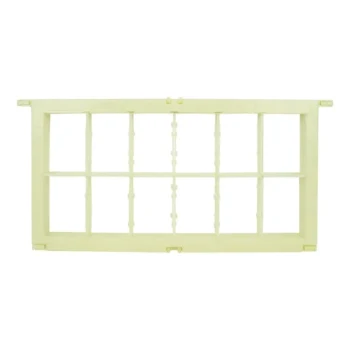
The fundamental distinction lies in guidance versus natural autonomy. Frames with foundation utilize a pre-formed sheet to dictate exactly where bees build their comb, ensuring straight, organized rows that streamline hive management. In contrast, foundationless frames provide an open structure, relying entirely on the colony’s instincts to construct comb, which results in a more natural environment but less predictable architecture.
The choice between foundation and foundationless frames is effectively a choice between beekeeper efficiency and biological mimicry. While foundation ensures structural uniformity for easier inspections, foundationless frames allow the colony to optimize cell sizes according to their specific needs.
The Role of Structural Guidance
The Function of Foundation
Frames equipped with a foundation act as a structural blueprint. By providing a guide, you encourage the bees to build comb in a highly organized, linear manner.
The Foundationless Approach
Foundationless frames contain no preformed beeswax or plastic sheet. This design removes the blueprint, granting the bees total freedom to build natural comb tailored to the immediate needs of the colony.
Impact on Comb Uniformity
The primary result of using foundation is uniformity. Bees build predictable, straight combs that fit neatly within the frame, which is the industry standard for modern hive management.
Without this guide, foundationless frames often result in less uniform structures. Bees may build "cross-comb" or irregular patterns that bridge multiple frames together.
Operational Implications for the Beekeeper
Ease of Inspection
Inspections are significantly easier with foundation frames. Because the comb is straight and contained, you can remove and replace frames without damaging the hive structure or accidentally crushing bees.
Foundationless frames require more careful handling. If the bees have built irregular comb that connects two frames, removing one frame can tear the comb, potentially injuring brood or the queen.
Harvesting Efficiency
When harvesting honey, foundation provides rigidity. This internal strength allows the comb to withstand the centrifugal force of a honey extractor without collapsing.
Foundationless natural comb is delicate. It requires gentler handling during harvest and is often better suited for "crush and strain" harvesting methods rather than high-speed spinning.
Cost and Assembly
From a financial perspective, foundationless frames are often more cost-effective. They eliminate the recurring expense of purchasing wax or plastic sheets.
However, plastic frames with molded foundation offer a speed advantage. They are quick to assemble and durable, whereas wooden frames (common for natural beekeeping) require assembly and are generally heavier.
Understanding the Trade-offs: Durability and Pests
Vulnerability to Pest Damage
The type of frame you choose dictates how easily you can recover from pest infestations like wax moths or mice.
Plastic Foundation Resilience
Plastic frames offer the highest recoverability. If pests damage the wax coating, the frame itself remains intact; it can often be scraped, washed, and re-waxed for reuse.
The Risks of Natural Comb
In foundationless frames, severe pest damage is often fatal to the comb. While bees can sometimes repair small areas, significant damage usually requires you to discard the entire comb structure.
Wax foundation falls in the middle; while it provides a guide, it is often considered a total loss if heavily damaged by pests such as beetles or mice.
Making the Right Choice for Your Goal
To select the correct frame style, you must define the primary objective of your apiary management.
- If your primary focus is efficient management and harvesting: Choose frames with foundation (particularly plastic), as they ensure straight comb and withstand mechanical extraction.
- If your primary focus is natural biology and low cost: Choose foundationless frames to allow bees to build cell sizes based on their needs and to reduce upfront material costs.
- If your primary focus is durability against pests: Choose plastic frames, as they provide a permanent backbone that can be cleaned and reused even after an infestation.
The best decision balances your need for operational control with your desire to support the colony's natural behaviors.
Summary Table:
| Feature | Frames with Foundation | Foundationless Frames |
|---|---|---|
| Comb Structure | Straight, predictable, and uniform | Natural, irregular, and variable |
| Inspection Ease | High; frames move independently | Moderate; risk of cross-comb and tearing |
| Harvest Method | Centrifugal extraction (high speed) | Crush and strain or gentle handling |
| Durability | High (especially plastic foundation) | Delicate; prone to collapse |
| Cost | Higher (recurring material costs) | Lower (minimal materials required) |
| Pest Recovery | Excellent (plastic can be reused) | Low; damaged comb usually discarded |
Scale Your Apiary Operations with HONESTBEE
Choosing the right equipment is vital for the productivity of commercial apiaries and the success of distributors. At HONESTBEE, we provide a comprehensive wholesale range of professional beekeeping tools, machinery, and consumables tailored to your specific management goals.
Whether you need high-durability plastic frames and foundations for mechanical extraction efficiency or specialized hive-making and honey-filling machines to streamline your production, we deliver the hardware that powers the industry. From essential hardware to honey-themed cultural merchandise, we help you optimize every aspect of your business.
Ready to upgrade your equipment? Contact us today to discuss our wholesale offerings and how we can support your growth!
Related Products
- Plastic Bee Frame Beekeeping Hive Frames for Wholesale
- Assembled Wooden Bee Frames with Plastic Foundation for Durability and Convenience by HONESTBEE
- Wooden Bee Hive Frames for Beekeeping and Wholesale
- Professional Wooden Requeening Frame for Beekeeping
- Assembled Wooden Bee Frames with Beeswax Foundation Ready to Use by HONESTBEE
People Also Ask
- How should frames be rearranged as a bee colony grows? Master Hive Expansion and Nest Management
- Under what circumstances should bee frames be destroyed? Protect Your Apiary from American Foulbrood
- Do bee frames need foundation? Choose the Right Approach for Your Apiary
- What types of bee frames can be cleaned and returned to service? A Guide to Safe Apiary Refurbishment
- When should frames with new foundation be given to colonies? Master Timing for a Thriving Hive