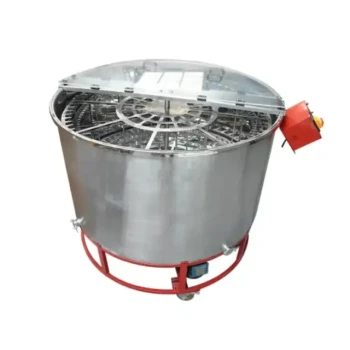
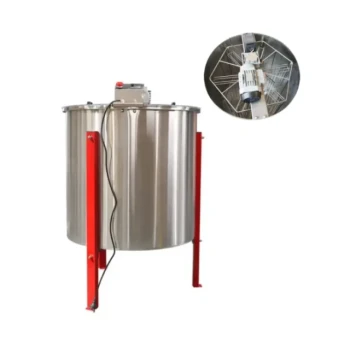
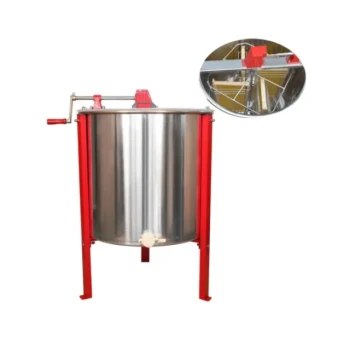
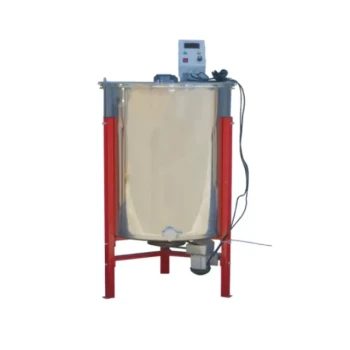
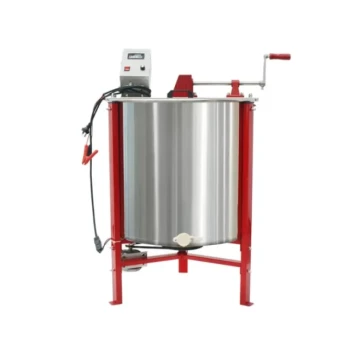
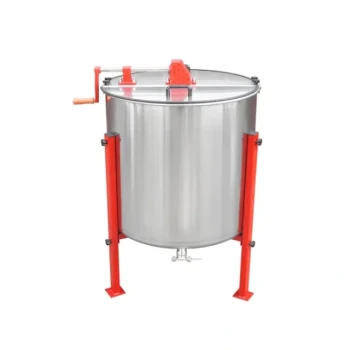
A honey extractor is a specialized mechanical device designed to remove liquid honey from honeycombs without destroying the wax structure. Using centrifugal force, it spins the frames to fling honey out of the cells, allowing it to drain down the walls of a drum for collection and bottling.
The core value of a honey extractor lies in its non-destructive process. It separates honey from the frame while keeping the honeycomb intact, allowing beekeepers to return the drawn comb to the hive for immediate reuse by the colony.
The Mechanics of Extraction
Utilizing Centrifugal Force
The extractor functions by holding honeycomb frames in a central basket within a drum. When the basket spins, the physical force pulls the honey out of the uncapped cells.
The honey hits the inner walls of the extractor and flows down to the bottom. From there, it is collected via a tap or pump, ready for filtering and bottling.
Preservation of the Comb
Unlike older methods that required crushing and straining the comb, an extractor leaves the wax foundation structurally sound. This is the primary technical advantage of the device.
Because the comb remains intact, the frames can be returned directly to the hive. This allows the bees to refill the cells immediately rather than expending time and energy building new wax.
Manual vs. Electric Operation
Extractors are generally categorized by their power source. Manual extractors rely on a hand crank to generate the necessary spinning speed.
Electric extractors automate this process with a motor. By simply pushing a button, the device maintains a consistent speed, significantly reducing the physical labor required for processing multiple frames.
Why Use an Extractor?
Colony Efficiency
Building wax is energy-intensive for bees. By providing them with empty, intact combs, you reduce the stress on the colony.
This conservation of energy allows the bees to focus entirely on foraging and honey production. Consequently, this leads to a more economic process over time.
Improved Product Quality
Extraction generally yields cleaner honey compared to crushing methods. Because the comb isn't pulverized, there is significantly less wax debris and other impurities mixed into the final product.
Operating Constraints and Trade-offs
The Requirement for Balance
A honey extractor acts much like a washing machine during a spin cycle. You must load frames in a balanced manner to ensure the weight is distributed evenly.
Failing to balance the load can cause excessive vibration. This not only makes the machine difficult to control but can also damage the equipment.
Speed vs. Integrity
While electric models offer speed, they introduce a risk of damage if not monitored. Spinning the frames too quickly can exert too much force on the wax.
If the centrifugal force is excessive, the comb itself may break or blow out of the frame. Speed must be controlled carefully to extract the honey without ruining the structure you are trying to save.
Preparation is Essential
The extractor cannot work on sealed cells. Before placing frames in the basket, you must manually "uncap" them.
If the wax cappings are not removed, the honey remains trapped, and the spinning process will be ineffective.
Making the Right Choice for Your Goal
Whether you choose a manual or electric model, the goal remains the same: efficient separation without destruction.
- If your primary focus is minimizing physical labor: Prioritize an electric extractor to automate the spinning process and handle larger volumes of frames with less fatigue.
- If your primary focus is budget and simplicity: Stick to a manual extractor, provided you are willing to carefully manage the cranking speed to protect the combs.
Ultimately, the honey extractor is less about harvesting honey and more about preserving the infrastructure of your hive for future seasons.
Summary Table:
| Feature | Manual Honey Extractor | Electric Honey Extractor |
|---|---|---|
| Power Source | Hand-cranked by operator | Motorized automation |
| Primary Benefit | Budget-friendly & simple | High efficiency & low labor |
| Speed Control | Manual adjustment | Precise, consistent settings |
| Best For | Small-scale hobbyists | Commercial apiaries & large volumes |
| Comb Preservation | High (requires careful cranking) | High (with controlled RPM) |
Scale Your Honey Production with HONESTBEE
Are you looking to streamline your harvest and protect your colony's infrastructure? HONESTBEE provides commercial apiaries and distributors with professional-grade honey extractors and a full spectrum of beekeeping machinery.
From high-capacity electric extractors and honey-filling machines to essential consumables and hive-making hardware, we deliver the tools you need to maximize efficiency. Our comprehensive wholesale offerings are designed to help you grow your business and improve product quality.
Ready to upgrade your extraction process? Contact our expert team today to discuss our volume pricing and custom equipment solutions!
Related Products
- HONESTBEE 72 Frame Industrial Electric Honey Extractor for Beekeeping
- Commercial Electric 12 Frame Honey Extractor Spinner Motorized Honey Extractor
- HONESTBEE 6 Frame Self Reversing Electric Honey Extractor for Beekeeping
- HONESTBEE 3-Frame Manual Acrylic Honey Extractor
- Stainless Steel Manual 8 Frame Radial Honey Extractor Machine for Beehives
People Also Ask
- What is the importance of balancing honeycomb frames within a honey extractor? Ensure Stability and Protect Machinery
- How is honey separated from the frames after they are uncapped? Efficient Extraction Methods for High Yields
- What are the main benefits of using a honey extractor? Maximize Yields and Protect Your Honeycomb
- What are the recommended methods for removing honey from the honeycomb? Top Extraction Techniques for Maximum Efficiency
- How do manual honey extractors compare to electric honey extractors? Choosing the Right Tool for Your Apiary Growth