A honey refractometer is a precision optical instrument designed for one specific purpose: quantifying the water content within honey. By measuring how light bends (refracts) through a small sample, it allows beekeepers to definitively determine if honey has cured enough to be harvested and bottled without the risk of spoilage.
The Critical Link Between Moisture and Stability
Moisture control is the single most critical factor in honey preservation. A refractometer acts as the final gatekeeper, preventing the harvest of unripe nectar and ensuring the product remains high-quality, shelf-stable honey rather than fermenting into sour "baker's honey."
The Core Function: Ensuring Shelf Stability
Preventing Fermentation
The primary biological function of the refractometer is to assess fermentation risk. Honey contains natural yeasts that will activate if the water content is too high.
Once yeast activates, it consumes sugars and produces acetic acid, giving the honey a sharp, sour taste. This spoilage renders the product unusable for table consumption, downgrading it to "baker's honey" which must be discarded or sold at a loss.
Identifying the Ideal Moisture Range
To prevent this, the refractometer validates that honey falls within a specific safety window.
According to industry standards, the ideal moisture range for long-term shelf stability is 16% to 18%. Achieving this specific balance allows for safe bottling and storage while maintaining the proper texture and viscosity.
Meeting Legal Standards
Beyond biological stability, the refractometer ensures regulatory compliance.
Many regions enforce a legal moisture limit for commercial honey, often set at less than 21% (21g per 100g). Using this tool guarantees that sellers do not inadvertently bring a non-compliant product to market.
Operational Advantages for Beekeepers
Determining Harvest Timing
The refractometer moves harvest decisions from guesswork to data-driven science.
Beekeepers use the device to monitor honey ripeness in the field. This ensures that frames are only pulled from the hive when the bees have sufficiently dehydrated the nectar, saving time and labor.
Simplicity and Speed
Compared to laboratory methods, the refractometer offers immediate results in the field.
Complex techniques like isotope ratio mass spectrometry or liquid chromatography (HPLC) are expensive and slow. A refractometer is a handheld, mechanical device that requires no special training to operate effectively.
Proper Usage for Accurate Readings
Preparation and Application
Accuracy depends on proper sample handling. You must stir the honey if testing a bulk container to ensure the sample is representative.
Apply a thin layer to the device's prism and verify there are no air bubbles, as these will distort the light refraction.
The Role of Temperature
Temperature consistency is vital for accurate readings.
Both the device and the honey sample should be at the same ambient room temperature. Thermal discrepancies can alter the density of the honey, leading to false moisture percentage readings.
Understanding the Trade-offs
Calibration Sensitivity
Refractometers are sensitive instruments that are prone to "drift."
If you do not calibrate the device regularly using distilled water or a reference fluid, your measurements will become inaccurate over time. A seemingly small error of 1-2% can mean the difference between stable honey and a fermented batch.
The "Sample Size" Trap
A refractometer uses a tiny droplet to represent potentially hundreds of pounds of honey.
If you test unmixed honey from the top of a bucket, you may get a dry reading while the bottom remains wet. Thorough mixing before testing is the only way to mitigate this risk; failing to do so gives a false sense of security.
Making the Right Choice for Your Goal
To get the most out of this tool, tailor your approach to your specific objective:
- If your primary focus is Harvesting: Test capped and uncapped cells separately to ensure the average moisture across the entire frame is below 18% before removing it from the hive.
- If your primary focus is Selling/Bottling: Thoroughly mix your bulk honey and aim for a strict 16-18% reading to maximize shelf life and meet all legal quality standards.
Mastering the refractometer transforms honey processing from a guessing game into a controlled, professional operation.
Summary Table:
| Feature | Function / Standard | Benefit |
|---|---|---|
| Primary Measurement | Quantifies Water Content (Moisture %) | Prevents fermentation and spoilage |
| Ideal Moisture Range | 16% to 18% | Ensures long-term shelf stability |
| Legal Compliance | Often < 21% (varies by region) | Guarantees product meets market standards |
| Harvest Timing | Field Testing of Ripeness | Optimizes labor and honey quality |
| Operational Speed | Immediate On-site Results | No expensive lab testing required |
Elevate Your Honey Production with HONESTBEE
Maximize the quality and profitability of your apiary by using professional-grade tools. At HONESTBEE, we specialize in supporting commercial apiaries and distributors with a comprehensive wholesale catalog. From high-precision honey refractometers to advanced honey-filling machines and specialized hive-making equipment, we provide everything you need to scale your operations.
Whether you are looking for industrial-scale machinery or essential consumables, our portfolio is designed to enhance your efficiency and product value. Contact us today to discuss how our wholesale solutions can support your business growth.
Related Products
- Digital Honey Refractometer for Precision Measurement of Optimal Honey Quality
- Precision Honey Refractometer Instrument for Quality Assessment
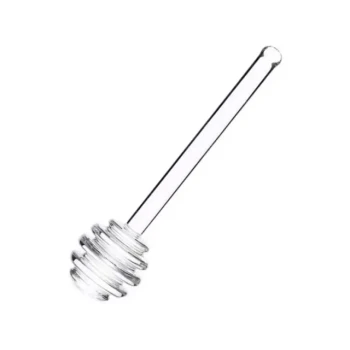
- Premium Heat-Resistant Glass Honey Dipper
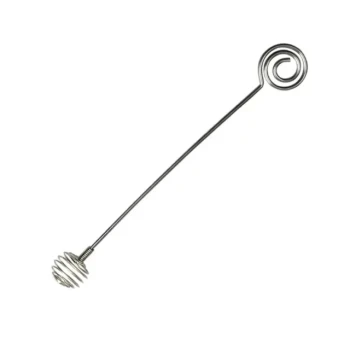
- Modern Stainless Steel Honey Dipper Stirrer
- Heavy Duty 304 Stainless Steel Honey Dipper
People Also Ask
- What role do high-precision refractometers play in determining the maturity and quality of honey? Ensure Honey Purity.
- Do the color and viscosity of honey affect its refractometer reading? Mastering Moisture Measurement Accuracy
- How do refractometers ensure technical precision when measuring honey moisture? Secure Quality and Prevent Fermentation
- How is the reading taken from a honey refractometer? A Guide to Accurate Moisture Measurement
- Why is a honey refractometer considered essential for commercial beekeepers? Ensure Honey Quality and Profitability