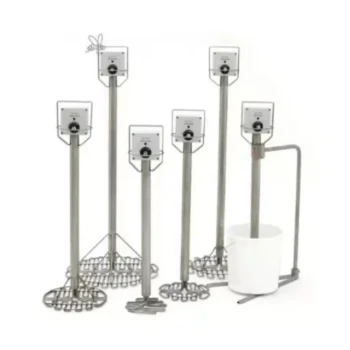
A laboratory oven functions as a precision thermal regulation tool designed to lower the viscosity of honey samples during the initial liquefaction stage. By maintaining a steady temperature of approximately 60°C, it transforms thick, viscous honey into a fluid state suitable for analysis without compromising the sample's integrity.
Core Takeaway: The laboratory oven serves as a critical physical pretreatment device. It uses precise thermal energy to overcome honey's natural resistance to flow, ensuring the sample is sufficiently liquid to be diluted and filtered in subsequent analytical steps.
The Mechanics of Liquefaction
Overcoming High Viscosity
Honey creates significant physical resistance due to its natural thickness. This high viscosity acts as a barrier to effective chemical analysis and physical separation. The primary function of the oven is to apply controlled heat to break this resistance.
Targeting the 60°C Threshold
The process relies on heating the samples to approximately 60°C. This specific temperature point is effective for inducing fluidity. It ensures the honey transitions from a semi-solid or viscous state into a liquid form.
Uniform Thermal Energy
Unlike direct heating methods, a laboratory oven provides an enveloping heat source. This ensures that the thermal energy penetrates the sample evenly. It prevents localized hotspots that could occur with other heating methods.
Facilitating the Analytical Workflow
A Critical Pretreatment Step
Liquefaction is not merely a convenience; it is a critical physical pretreatment step. Without this phase, the honey is too dense to process. It serves as the foundation for the entire microplastic extraction protocol.
Enabling Efficient Filtration
The ultimate goal of liquefaction is to prepare the sample for filtration. Microplastic analysis relies on capturing particles on filters. By reducing viscosity, the oven ensures the honey solution can pass through fine membranes efficiently during the dilution stage.
Understanding the Trade-offs
Precision vs. Aggression
While heating is necessary, the method of heating matters. A laboratory oven offers precise thermal control, which is a significant advantage over faster, less controlled methods. However, this precision often requires a longer duration than direct heat.
Risk of Sample Alteration
If temperature control fails and exceeds the 60°C target, there is a risk of degrading the sample matrix. Precise control helps avoid damaging the very microplastics you are trying to detect. You are trading speed for the assurance of sample integrity.
Optimizing Your Sample Preparation
To ensure the most accurate microplastic analysis, align your oven usage with your specific analytical priorities:
- If your primary focus is workflow efficiency: Pre-heat the laboratory oven to exactly 60°C before inserting samples to minimize the time required for viscosity reduction.
- If your primary focus is data integrity: Utilize the oven's precision controls to ensure the temperature never exceeds the target, preventing potential thermal deformation of plastic particles.
By utilizing a laboratory oven for controlled liquefaction, you convert a difficult substrate into a manageable fluid, laying the groundwork for reliable microplastic quantification.
Summary Table:
| Feature | Function in Honey Analysis | Key Benefit |
|---|---|---|
| Temperature Control | Maintains a steady 60°C threshold | Prevents sample degradation & particle damage |
| Thermal Uniformity | Provides enveloping heat distribution | Eliminates hotspots for consistent liquefaction |
| Viscosity Reduction | Breaks physical resistance of honey | Enables efficient dilution and membrane filtration |
| Pretreatment Role | Physical preparation of substrate | Essential foundation for accurate data quantification |
Elevate Your Honey Processing with HONESTBEE
At HONESTBEE, we understand the precision required by commercial apiaries and distributors. Whether you are performing advanced lab analysis or scaling production, we provide the full spectrum of beekeeping tools, machinery, and essential consumables to optimize your workflow. From high-performance honey-filling machines to specialized hive-making hardware, our wholesale solutions are designed to enhance your efficiency and product quality.
Ready to upgrade your operation? Contact us today to explore our comprehensive portfolio!
References
- P. Mühlschlegel, R. Sieber. Lack of evidence for microplastic contamination in honey. DOI: 10.1080/19440049.2017.1347281
This article is also based on technical information from HonestBee Knowledge Base .
Related Products
- Professional Thermostatic Conical Honey Melter
- Economy Honey Homogenizer Mixer and Melting Machine for Beekeeping
- HONESTBEE Commercial Upright Honey Melter
- Heavy Duty Stainless Steel Honey Processing Machine Decrystallizing Tank
- Double Wall Honey Heating Stirring Homogenizer Mixing Machine with Various Capacity
People Also Ask
- What is melter honey used for? A Low-Cost Ingredient for Bakers and Brewers
- How does a honey melter address the issue of crystallized honey in storage? Restore Flow and Quality Efficiently
- How do you melt a bucket of honey? Safely Reliquefy Crystallized Honey Without Damage
- When is a honey melter necessary? Optimize Your Facility's Workflow for Crystallized Honey
- What factors should be considered when selecting a heater for honey containers? Optimize Your Warming Efficiency