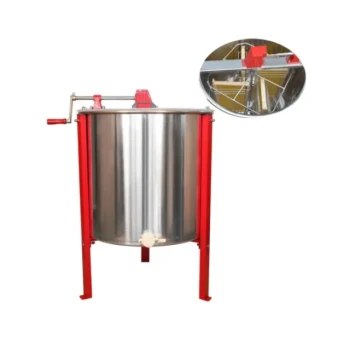
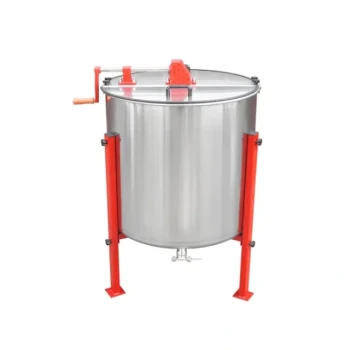
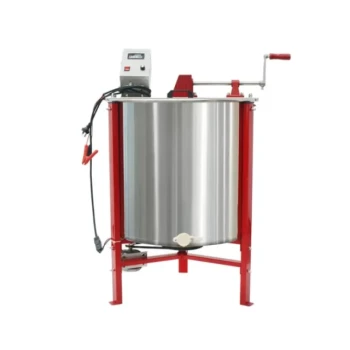
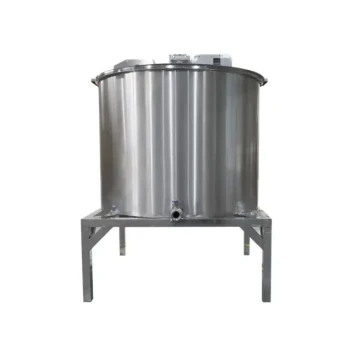
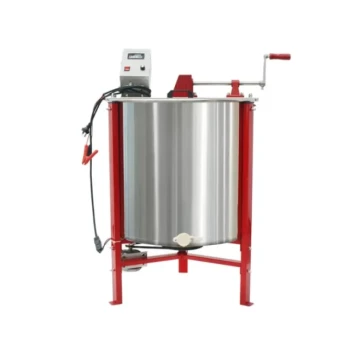
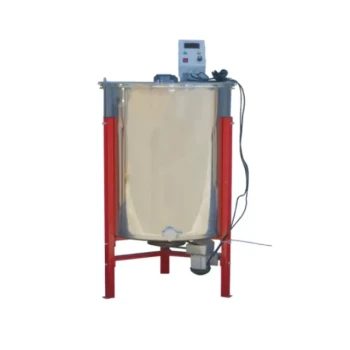
The primary function of a manual honey extractor during pollen analysis is to isolate raw honey from capped combs using controlled physical centrifugal force. This mechanical process separates the liquid honey from the wax structure effectively. It allows for the collection of a sufficient volume of raw substrate to serve as a representative sample for subsequent laboratory testing.
The extractor’s critical value lies in its ability to separate honey without damaging the microscopic structure of pollen grains. This ensures the biological material remains intact, providing an accurate raw substrate for botanical identification.
The Mechanics of Sample Isolation
Application of Centrifugal Force
The manual extractor operates by placing hive frames inside a drum that is rotated via a hand-cranked handle. This spinning motion generates physical centrifugal force.
The force pulls the honey fluid outward, separating it from the wax cells of the honeycomb. This mechanical separation avoids the need for heat or chemical solvents, which could alter the sample.
Controlled Extraction Speed
Because the device is manual, the operator maintains complete control over the rotational speed and direction.
This allows for a gentle extraction process. It ensures the honey is released without subjecting the sample to excessive forces that might skew the distribution of particulate matter within the fluid.
Preserving Analytic Integrity
Protecting Pollen Morphology
According to the primary technical guidelines, the most significant advantage of this method is the preservation of microscopic structures.
The extraction process is gentle enough to leave pollen grains physically undamaged. Intact grains are essential for accurate microscopic analysis and identification of the honey's floral source.
Ensuring Representative Sampling
To perform a valid pollen analysis, the laboratory requires a raw substrate that truly represents the hive's output.
The manual extractor yields sufficient honey fluid to create this representative sample. By extracting from whole frames, it provides a broader and more accurate snapshot of the pollen spectrum than spot-sampling individual cells.
Operational Considerations and Trade-offs
Manual Labor vs. Sample Quality
While effective for sampling, manual extractors require physical effort and are less time-efficient than mechanized counterparts.
However, in an analytical context, efficiency is often secondary to sample integrity. The manual operation reduces the risk of overheating the sample, a common variable in high-speed mechanical processing.
Equipment Reuse and Efficiency
A secondary benefit of using centrifugal force is that the honeycomb structure remains largely intact.
This allows the comb to be returned to the hive for reuse. While this primarily benefits the bees by saving energy on wax secretion, it also ensures the sampling process is sustainable and less destructive to the colony.
Optimizing Your Sampling Workflow
Selecting the correct extraction method depends heavily on the specific requirements of your analysis and available infrastructure.
- If your primary focus is microscopic accuracy: Prioritize manual extraction to ensure the physical structure of fragile pollen grains remains unaltered for identification.
- If your primary focus is field work in remote areas: Utilize manual extractors as they function independently of electrical infrastructure, allowing for immediate on-site sampling.
By using a manual extractor, you ensure the transition from the hive to the microscope preserves the biological data necessary for precise botanical classification.
Summary Table:
| Feature | Function in Pollen Analysis | Benefit to Sampling Integrity |
|---|---|---|
| Centrifugal Force | Isolates honey from wax combs | Maintains raw substrate without chemical alteration |
| Manual Control | Regulates rotational speed | Prevents damage to delicate microscopic pollen grains |
| Cold Extraction | Avoids heat application | Preserves biological data and botanical markers |
| Frame Integrity | Keeps honeycomb structure intact | Enables sustainable sampling and hive reuse |
Elevate Your Beekeeping Operation with HONESTBEE
At HONESTBEE, we understand that precision and quality are the foundations of a successful apiary business. Whether you are a commercial apiary seeking high-integrity sampling tools or a distributor looking to supply professional-grade equipment, we offer a comprehensive wholesale portfolio tailored to your needs.
Our Value to You:
- Complete Equipment Spectrum: From manual and motorized honey extractors to advanced hive-making and honey-filling machinery.
- Industry Consumables: A wide array of essential supplies and specialized beekeeping hardware.
- Cultural Merchandise: Unique honey-themed products to diversify your retail offerings.
Partner with an industry expert to streamline your workflow and ensure the highest product standards. Contact HONESTBEE today to discuss our wholesale solutions and bulk pricing.
References
- Matěj Pospiech, Bohuslava Tremlová. Pollen diversity in honeys of the Czech Republic in the 2019 season. DOI: 10.5219/1504
This article is also based on technical information from HonestBee Knowledge Base .
Related Products
- Stainless Steel 3 Frame Manual Honey Extractor Spinner for Bee Honey Extraction
- HONESTBEE 3-Frame Manual Acrylic Honey Extractor
- HONESTBEE 4 Frame Manual Self Reversing Honey Extractor for Beekeeping
- Stainless Steel Manual 8 Frame Radial Honey Extractor Machine for Beehives
- 2 Frame Stainless Steel Manual Honey Spinner Extractor for Beekeeping
People Also Ask
- Which type of honey extractor is generally more durable? Focus on Material & Build Quality for Longevity
- What are the disadvantages of a manual honey extractor? Overcome Efficiency Bottlenecks in Your Apiary
- What is a manual honey extractor? The Essential Guide to Cost-Effective Beekeeping for Beginners
- Why are manual extractors popular among beginner beekeepers? A Guide to Starting Simple & Saving Money
- What are the primary advantages of utilizing a manual honey extractor? Cost-Effective & Gentle Harvesting