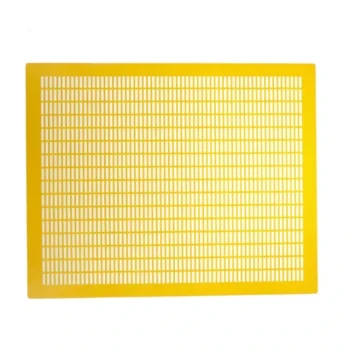
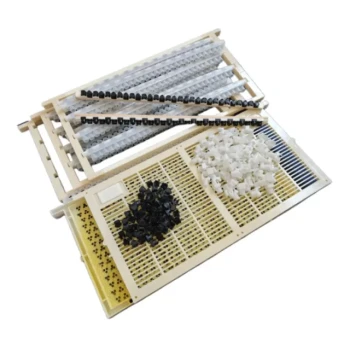
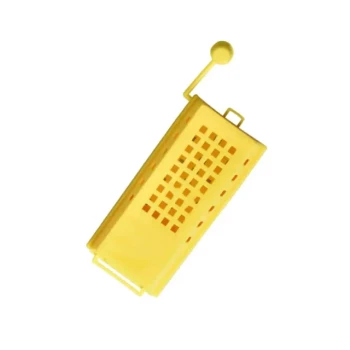
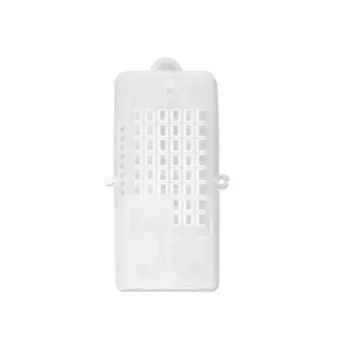
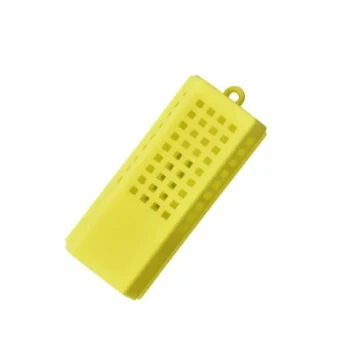
The queen controller serves as a precision management tool used to restrict the queen bee to a specific honeycomb area, ensuring all eggs are laid within a narrow, synchronized timeframe. This spatial restriction is critical for harvesting a large volume of standardized first-instar larvae—typically less than 24 hours old—which is the fundamental requirement for accurate in vitro rearing and drug gradient exposure experiments.
To achieve reliable data in honey bee toxicity studies, researchers must eliminate age as a variable; the queen controller facilitates this by providing a synchronized chronological starting point for all biological samples.
Standardizing Biological Samples for Research
Achieving Strict Age Uniformity
The primary function of a queen controller is to ensure that every larva in a sample set is the exact same age. By limiting the queen's movement for a short, defined period (such as 5 hours), researchers can guarantee that all resulting larvae are within a tight age bracket. This precision is mandatory for chronic toxicity experiments, where even a few hours of age difference can skew results in drug exposure or proteomic analysis.
Facilitating High-Volume Larval Collection
Specialized research requires a high density of larvae that are less than 24 hours old. The controller concentrates egg-laying in a specific zone, making it easier for lab technicians to collect the "first-instar" larvae needed for in vitro rearing. Without this tool, larvae would be scattered across various frames at different developmental stages, making large-scale standardized testing impossible.
Enhancing Experimental Accuracy and Integrity
Eliminating Developmental Variables
In pesticide and chemical exposure studies, the comparability of results depends on using identical biological cohorts. The queen controller removes temporal variables that could otherwise interfere with how larvae metabolize substances or respond to environmental stressors. This level of control is essential for establishing standardized experimental protocols that meet international regulatory requirements for honey bee health assessments.
Supporting Specialized Rearing Needs
Beyond worker larvae, these controllers are utilized for precise drone honey bee rearing and studying variations in Brood Ester Pheromones (BEP). By tracking the exact timing of egg-laying, researchers can monitor sexual maturity patterns and pheromone changes with high resolution. As a technical supplier, offering tools that support these diverse research applications demonstrates a full-spectrum understanding of the apiculture industry's needs.
Understanding the Trade-offs and Limitations
Impact on Hive Dynamics
While restricting the queen is necessary for science, it can temporarily disrupt the natural expansion of the brood area. If a queen is restricted for too long or to a space that is too small, it may cause stress to the colony or trigger swarming impulses. Distributors should ensure that the controllers they supply are designed with precision hole sizes that allow worker bees to pass through freely to nurse the larvae while keeping the queen contained.
Material Quality and Precision
The efficacy of a queen controller depends entirely on its spatial tolerances. Poorly manufactured units may have inconsistent spacing, allowing the queen to escape or injuring worker bees as they attempt to pass through. For wholesalers, sourcing high-quality, precision-engineered controllers is vital to maintaining the purity of the research environment and ensuring the safety of the honey bee colony.
Choosing the Right Sourcing Strategy for Research Tools
How to Apply This to Your Portfolio
Providing technical equipment for bee research requires more than just logistics; it requires an understanding of the end-user's rigorous scientific requirements. Distributors who offer a comprehensive portfolio of specialized tools like queen controllers can position themselves as expert partners in the global research supply chain.
- If your primary focus is research accuracy: Prioritize controllers that offer the most restrictive spatial management to ensure the tightest possible age synchronization for larval cohorts.
- If your primary focus is supply chain efficiency: Select a supplier that offers a wide range of hive management tools and rapid fulfillment to minimize downtime during critical honey bee breeding windows.
- If your primary focus is product reliability: Focus on sourcing precision-manufactured units that guarantee worker bee access while maintaining total queen containment to protect the health of the research colony.
By mastering the technical nuances of queen controllers, you transition from a simple vendor to a specialized partner capable of supporting the most demanding scientific and commercial honey bee operations.
Summary Table:
| Key Feature | Role in Research Management | Technical Requirement |
|---|---|---|
| Spatial Restriction | Synchronizes egg-laying for uniform larval age | Precision-engineered hole sizes |
| Age Standardization | Eliminates developmental variables in drug testing | Strict timing (e.g., <24-hour window) |
| Mass Collection | Facilitates high-volume harvesting of first-instar larvae | High-density zone concentration |
| Colony Safety | Maintains worker access to nurse synchronized brood | High-quality, non-toxic materials |
Elevate Your Research Supply Chain with HONESTBEE
As a leading global partner for commercial apiaries and B2B distributors, HONESTBEE understands that scientific precision requires high-performance equipment. We provide a comprehensive one-stop sourcing solution, ranging from specialized queen controllers and hive-making machinery to honey-filling systems and essential consumables.
Why Partner with Us?
- Full-Spectrum Portfolio: Access everything from precision research tools to industrial honey processing hardware.
- Reliability for Distributors: Benefit from our ultra-fast delivery, deep industry expertise, and robust OEM/ODM support to maximize your profit margins.
- Exceptional Service: Our team ensures rapid response times and efficient fulfillment to keep your inventory synchronized with seasonal demands.
Ready to scale your wholesale operations with a professional industry leader? Contact HONESTBEE today to discuss our premium trading services and bulk procurement options!
References
- Meng‐Jia Li, Haiqun Cao. Systemic Assessment of Chronic Toxicity of Thiamethoxam on Honeybees (Apis mellifera). DOI: 10.3390/insects16090936
This article is also based on technical information from HonestBee Knowledge Base .
Related Products
- Stainless Steel Beekeeping Queen Grafting Tool for Honey Bee Rearing
- JZBZ Langstroth Queen Rearing Frame for Beekeeping
- Wooden Queen Bee Excluder for Beekeeping
- Professional Plastic Queen Excluder for Modern Beekeeping
- Plastic Beekeeping Honey Bee Larvae Grafting Tools for Queen Rearing and Chinese Grafting
People Also Ask
- What is the process of grafting in honey bee queen rearing? A Master Guide for Commercial Success
- Why is it necessary for migratory beekeeping enterprises to utilize professional queen bee rearing tools? Boost Resilience
- What is the step-by-step process for using a queen grafting tool? Master Larva Transfer for Better Queen Rearing
- What is the primary function of a queen grafting tool? Master Precise Larval Transfer for High Queen Acceptance
- What specialized tools and frame configurations are needed for larval grafting during queen rearing, and how are queen cells properly spaced? Master the essentials for efficient queen production