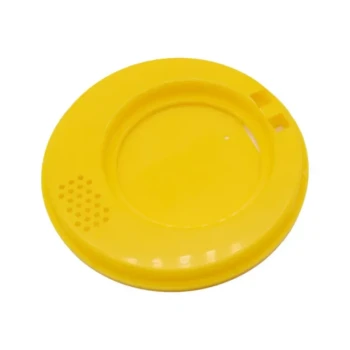
The primary function of a Queen excluder in this context is to act as a precise synchronization tool. By physically restricting the queen bee to a specific honeycomb for a set period, researchers compel her to lay eggs within a narrow timeframe. This ensures that all collected larvae share the exact same chronological age, providing a uniform baseline essential for sensitive experimental analysis.
By isolating the queen to specific frames, the excluder eliminates the natural staggering of egg-laying. This creates a standardized sample set where every larva represents a synchronized chronological starting point, removing developmental noise from the data.
The Mechanism of Synchronization
Establishing a Physical Boundary
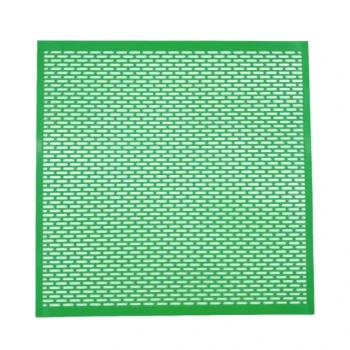
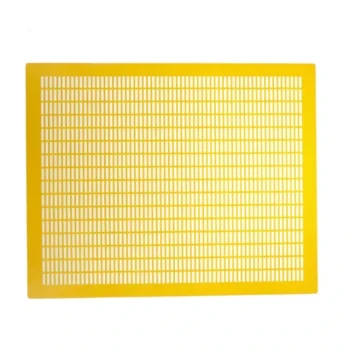
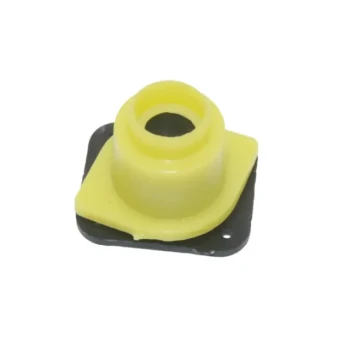
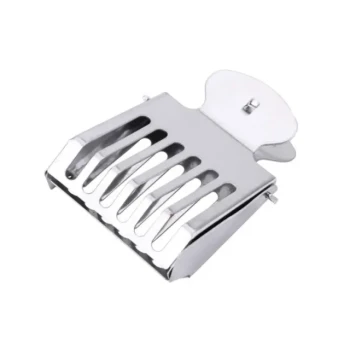
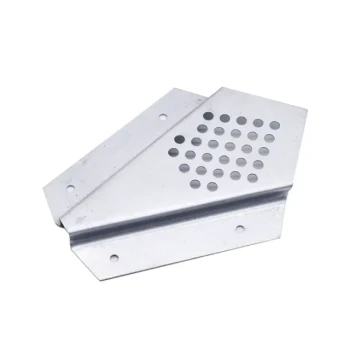
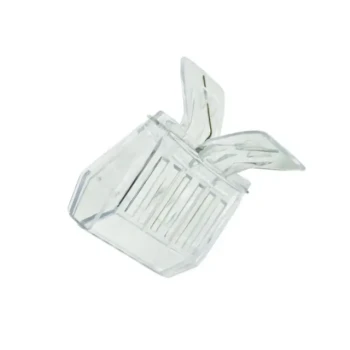
A Queen excluder operates as a physical barrier with fine grid spacing. This grid allows smaller worker bees to pass through freely while preventing the larger queen from leaving the designated area.
Forcing a Chronological Baseline
By confining the queen to a specific frame, researchers dictate exactly when and where eggs are laid. Instead of a natural, scattered distribution of brood, the hive produces a dense batch of eggs laid almost simultaneously.
This process guarantees that the resulting larvae fall within a strictly uniform age range, such as 1 to 3 days old.
Why Uniform Age Matters in Research
Reducing Experimental Variables
In biological experiments, variability is the enemy of accuracy. Without an excluder, a single frame might contain larvae at vastly different stages of development.
Using an excluder removes this variable. It ensures that any differences observed in the larvae are due to experimental conditions, not because one larva is older or more developed than another.
Critical for Chemical and Proteomic Analysis
Precise aging is non-negotiable for studies involving Brood Ester Pheromones (BEP) or proteomic analysis. These chemical markers change rapidly as a larva develops.
If the larvae are not age-synchronized, the levels of BEP will fluctuate naturally, creating "noise" that obscures the data. The excluder provides the consistent sampling required to measure these subtle developmental changes accurately.
Common Pitfalls to Avoid
The Danger of Visual Estimation
A common mistake in apiculture research is attempting to estimate larval age visually without a control mechanism.
Visual estimation is notoriously inaccurate for sensitive chemical studies. Even slight developmental variability, which may be invisible to the naked eye, can skew results in proteomic analysis.
Reliance on Natural Laying Patterns
Relying on the queen’s natural, unrestricted movement introduces chaos into the timeline.
Without the restriction of the excluder, there is no synchronized starting point. Data collected from such samples will lack the chronological precision necessary for high-fidelity biological profiling.
Making the Right Choice for Your Research
To ensure the integrity of your data, you must align your methods with the sensitivity of your experiment.
- If your primary focus is studying Brood Ester Pheromones (BEP): Use a Queen excluder to enforce a synchronized starting point, ensuring all chemical markers reflect the exact same developmental stage.
- If your primary focus is proteomic accuracy: Implement the excluder to create a strict physical barrier, eliminating developmental variability that could invalidate your molecular profiling.
Precision in sample collection is the single most effective way to guarantee the validity of your biological conclusions.
Summary Table:
| Feature | Function in Research | Experimental Benefit |
|---|---|---|
| Physical Boundary | Restricts queen movement to specific frames | Ensures dense, localized egg-laying |
| Temporal Control | Forces egg-laying within a narrow window | Creates a synchronized chronological starting point |
| Variable Reduction | Eliminates natural developmental staggering | Removes 'noise' from chemical and proteomic data |
| Sample Consistency | Guarantees uniform 1-3 day old larval sets | Increases accuracy for BEP and molecular profiling |
Elevate Your Apiary Research and Productivity with HONESTBEE
Precision is the backbone of successful beekeeping, whether in a laboratory or a commercial apiary. At HONESTBEE, we specialize in supporting commercial apiaries and distributors with a comprehensive wholesale portfolio designed for excellence.
Our extensive range includes:
- Specialized Beekeeping Hardware: High-precision Queen excluders, hive-making machinery, and honey-filling systems.
- Essential Consumables: A full spectrum of tools and industry supplies to keep your operations running smoothly.
- Cultural Merchandise: Honey-themed products to expand your market reach.
Whether you are conducting high-fidelity biological research or scaling a commercial honey production line, HONESTBEE provides the specialized tools and machinery you need to succeed.
Ready to upgrade your equipment? Contact us today to explore our wholesale solutions!
References
- Fanny Mondet, Yves Le Conte. Impact of temporal and rearing environment variations on brood ester pheromone production in the honey bee Apis mellifera. DOI: 10.5802/crchim.270
This article is also based on technical information from HonestBee Knowledge Base .
Related Products
- High Performance Plastic Queen Excluder for Beekeeping and Apiary Management
- Lightweight Durable Plastic Queen Excluder Scraper for Beekeeping
- Professional Plastic Queen Excluder for Modern Beekeeping
- Metal Queen Bee Excluder for Beekeeping
- Premium Wood Framed Metal Wire Queen Bee Excluder
People Also Ask
- What are the characteristics of a plastic queen excluder? Key Benefits for Cost-Effective Beekeeping
- What are the operational and cost advantages of using plastic queen excluders over metal or wire excluders in commercial hive management? Discover how they reduce labor, prevent wing damage, and lower total costs.
- What types of queen excluders are available for beekeepers? Choose the Right Tool for Your Hive
- Why are standardized hive frames and queen excluders essential for maintaining honey purity and quality? Scale Your Purity
- Do plastic queen excluders work? A Cost-Effective Solution for Modern Apiaries