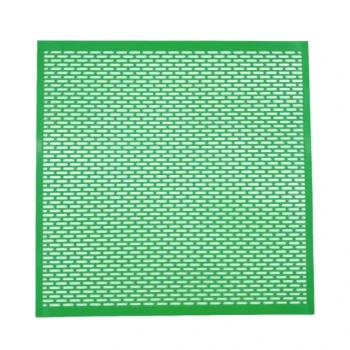
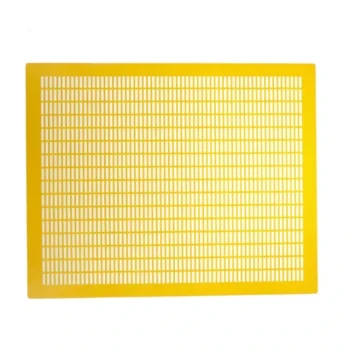
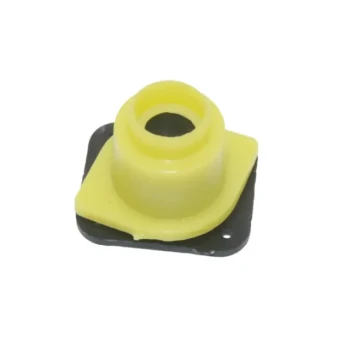
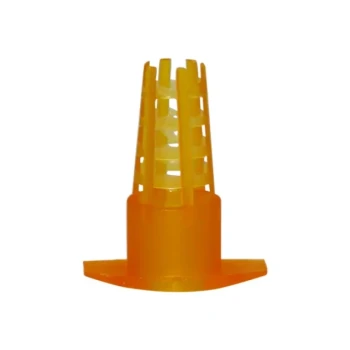
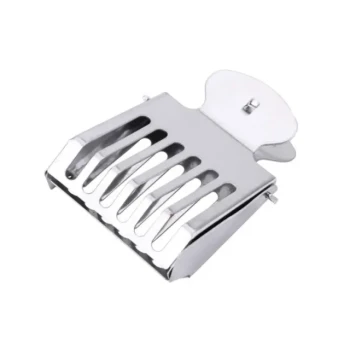
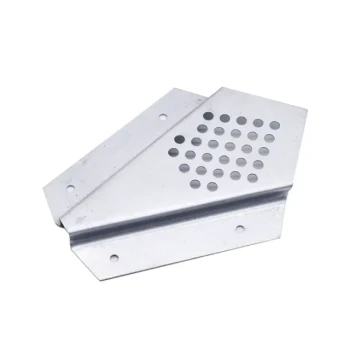
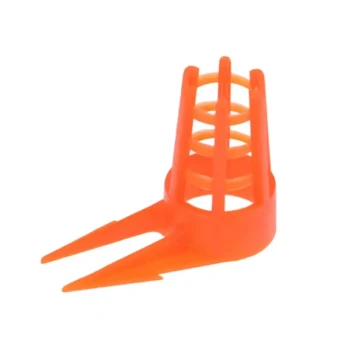
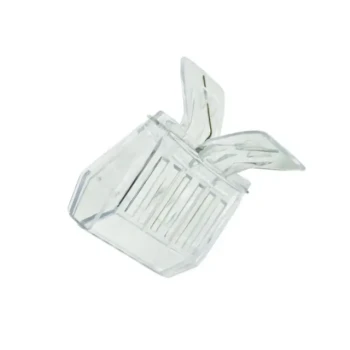
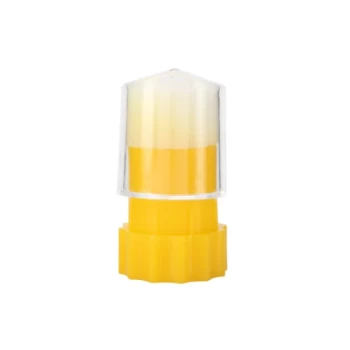
The function of a queen excluder in research is to act as a precise temporal and spatial control mechanism. By physically restricting the queen bee to a single hive frame for a strictly defined duration—such as a 5-hour window—researchers force the laying of eggs to occur within that specific timeframe. This mechanical isolation guarantees that the resulting larvae are of a practically identical age, creating a synchronized biological baseline for experimentation.
Core Takeaway The queen excluder transforms the continuous, natural process of egg-laying into a controlled, discrete event. This synchronization eliminates developmental variance, ensuring that data collected in downstream analysis—such as proteomics or pathogen sensitivity—results from the experimental treatment rather than differences in larval age.
The Mechanics of Experimental Synchronization
Establishing Spatial Control
In a natural hive setting, a queen moves freely, laying eggs across various frames over days or weeks. This results in a brood pattern with a wide gradient of developmental stages.
To conduct rigorous research, you must first eliminate this spatial freedom. The queen excluder serves as a barrier that confines the queen to a single, specific frame or modified comb area.
Enforcing Temporal Limits
Once the queen is spatially confined, the clock starts. The excluder is utilized for a short, pre-determined period.
Primary protocols often dictate a tight window, such as 5 hours, to capture a batch of eggs laid almost simultaneously. After this period, the queen is removed or released, and the frame contains a "snapshot" of eggs that will hatch and develop in lockstep.
Why Uniformity is Critical for Data Integrity
Eliminating Proteomic Noise
Larval development is a rapid biological process where protein expression profiles change quickly.
If larvae are not chemically synchronized, natural developmental variations can obscure experimental results. Identical aging ensures that proteomic analysis reflects the actual subject of the study, rather than random noise caused by age discrepancies.
Standardizing Pathogen and Pesticide Studies
Larvae at different stages of development exhibit vastly different sensitivities to external stressors. A younger larva may be significantly more susceptible to pathogens like chalkbrood or chemical agents than one only a few hours older.
By using an excluder to synchronize laying, researchers ensure that every subject in a dose-response test or infestation study starts with the exact same biological baseline.
Operational Considerations and Trade-offs
The Risk of Disruption
While necessary for data accuracy, confining the queen is an artificial intervention. Restricting her movement can temporarily disrupt the natural flow of the colony or induce stress behavior.
You must weigh the duration of confinement against the potential for colony disturbance.
Precision vs. Yield
There is an inherent trade-off between the strictness of the synchronization and the quantity of samples.
A very short window (e.g., 5 hours) offers the highest proteomic precision but may yield fewer eggs. A longer window (e.g., 48 hours) provides a larger sample size but introduces slightly more developmental variance.
Equipment Requirements
Standard excluders are often insufficient for this level of specific control.
Research often requires modified hives or specialized wire mesh cages designed to fit specific comb dimensions. This ensures the queen is truly isolated to the target area without accidental egress.
Designing Your Synchronization Protocol
If your primary focus is High-Sensitivity Molecular Analysis (e.g., Proteomics):
- Utilize a strict, short-duration confinement (approx. 5 hours) to ensure protein profiles are virtually identical across all samples.
If your primary focus is Dose-Response or Pathogen Testing:
- Prioritize a robust sample size using a slightly wider window (up to 48 hours) while maintaining enough uniformity to rule out developmental resistance.
If your primary focus is Mite Population Monitoring:
- Use the excluder to restrict brood to lower chambers, isolating reproduction zones to prevent experimental error from mixing brood and honey stores.
Control the variable of time at the source, and you secure the validity of your data downstream.
Summary Table:
| Research Variable | Role of Queen Excluder | Benefit to Data Integrity |
|---|---|---|
| Spatial Control | Confines queen to a single frame | Eliminates brood gradient and location bias |
| Temporal Control | Enforces tight laying windows (e.g., 5 hrs) | Ensures larvae are of identical biological age |
| Proteomic Noise | Minimizes age-related expression variance | Isolates experimental effects from natural aging |
| Pathogen Testing | Standardizes larval sensitivity baselines | Increases accuracy in dose-response studies |
| Yield Management | Balances confinement duration vs. sample size | Allows researchers to optimize precision vs. quantity |
Elevate Your Apiary Research with HONESTBEE
Precise research requires professional-grade tools. At HONESTBEE, we specialize in supporting commercial apiaries, distributors, and research institutions with high-performance beekeeping equipment. Whether you need specialized queen excluders, precision honey-filling machines, or hive-making hardware, our comprehensive wholesale portfolio is designed to meet the rigorous demands of the modern honey industry.
Ready to scale your operation? Contact us today to explore how our specialized machinery and essential consumables can enhance your research efficiency and commercial output.
References
- Jianke Li, Yu Fang. Differential Protein Expression in Honeybee (Apis mellifera L.) Larvae: Underlying Caste Differentiation. DOI: 10.1371/journal.pone.0013455
This article is also based on technical information from HonestBee Knowledge Base .
Related Products
- High Performance Plastic Queen Excluder for Beekeeping and Apiary Management
- Professional Plastic Queen Excluder for Modern Beekeeping
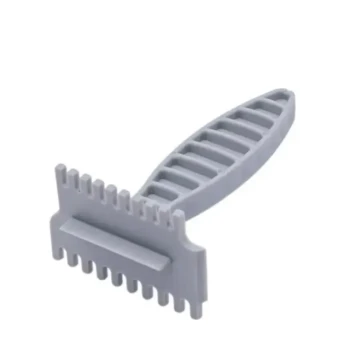
- Lightweight Durable Plastic Queen Excluder Scraper for Beekeeping
- Metal Queen Bee Excluder for Beekeeping
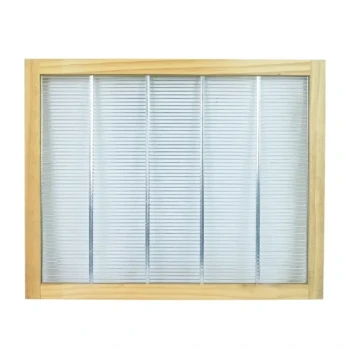
- Premium Wood Framed Metal Wire Queen Bee Excluder
People Also Ask
- What are the characteristics of a plastic queen excluder? Key Benefits for Cost-Effective Beekeeping
- What are the operational and cost advantages of using plastic queen excluders over metal or wire excluders in commercial hive management? Discover how they reduce labor, prevent wing damage, and lower total costs.
- What types of queen excluders are available for beekeepers? Choose the Right Tool for Your Hive
- Why are standardized hive frames and queen excluders essential for maintaining honey purity and quality? Scale Your Purity
- Do plastic queen excluders work? A Cost-Effective Solution for Modern Apiaries