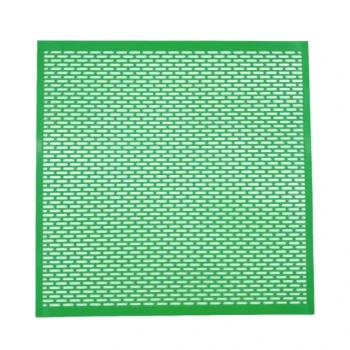
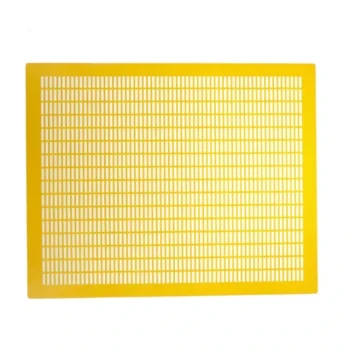
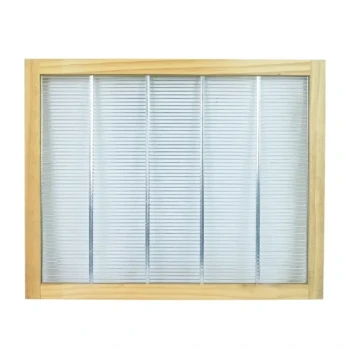
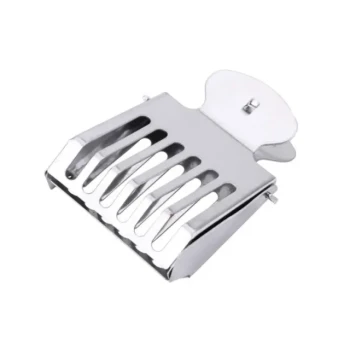
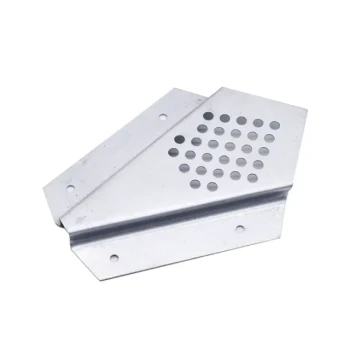
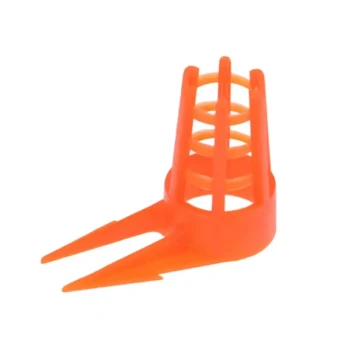
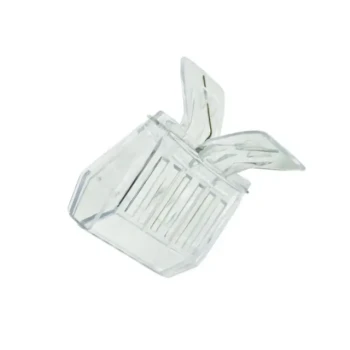
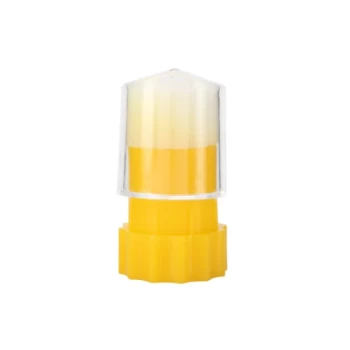
A Queen Excluder acts as a specialized filtration grid placed horizontally between the brood chambers and the honey supers of a beehive. Its primary function is to serve as a physical barrier that defines the vertical boundaries of the queen's egg-laying territory. By restricting the queen to the lower levels of the hive, the excluder ensures that the upper boxes remain reserved exclusively for honey storage.
The Core Utility While worker bees can move freely throughout the entire hive, the Queen Excluder leverages the queen's larger thorax size to physically prevent her from entering upper storage areas. This spatial management guarantees that harvested honey frames are "pure"—meaning they are completely free of eggs, larvae, or developing brood.
The Mechanics of Hive Separation
The Size Differential Principle
The excluder functions on a simple biological variance: size. The grid—typically made of metal or plastic—features openings gauged specifically to the anatomy of the bees.
These gaps are large enough for the smaller worker bees to pass through effortlessly, carrying nectar and pollen to the upper levels. However, they are too narrow for the larger queen bee to navigate, effectively containing her in the lower boxes.
Controlling Spatial Distribution
Without an excluder, a queen will naturally move upward to lay eggs as space becomes available or as the colony expands.
The excluder enforces a specific structural priority. It designates the lower hive bodies as the nursery (brood chamber) and the upper supers as the pantry (honey storage). This vertical limit allows the beekeeper to control exactly where colony expansion occurs versus where surplus resources are stockpiled.
Ensuring Resource Purity
The most direct benefit of this structural management is the impact on harvest quality.
When the queen is excluded from the honey supers, those frames contain only honey and wax. This prevents the accidental harvesting of protein-rich larvae or eggs during extraction, ensuring the final product meets high commercial quality standards for purity.
Considerations and Trade-offs
The Barrier Effect
While the excluder is designed to let workers pass, it can sometimes act as a psychological or physical deterrent to them as well, which is often referred to as "honey binding" the brood nest.
If workers are reluctant to pass through the grid, they may backfill the brood nest with honey instead of moving it up to the supers. To mitigate this, beekeepers often move frames of brood above the excluder temporarily to "draw" the nurse bees upward through the grate.
The Timing Constraint
If you apply an excluder to a hive where the queen has already laid eggs in the upper supers, the device will trap the brood above the barrier.
In this scenario, you must wait for the brood cycle to complete before harvesting. Specifically, a 24-day waiting period is required to ensure all worker and drone brood have hatched and the cells have been backfilled with honey.
Making the Right Choice for Your Goal
The decision to use a Queen Excluder depends on your specific management philosophy and harvest goals.
- If your primary focus is efficient harvesting: Use an excluder to guarantee clean honey frames that can be extracted immediately without sorting through brood.
- If your primary focus is unrestricted colony growth: You may choose to forgo the excluder, allowing the queen to lay eggs wherever she chooses, though this complicates the extraction process.
- If your primary focus is correcting hive organization: Use the excluder to reset the brood nest, ensuring you wait the full 24-day cycle if brood was previously present in the honey supers.
The Queen Excluder is not strictly mandatory for bee survival, but it is the definitive tool for beekeepers seeking organized, segregated, and efficient hive management.
Summary Table:
| Feature | Function & Impact |
|---|---|
| Primary Mechanism | Physical barrier based on the queen's larger thorax size |
| Spatial Management | Restricts queen to brood chambers; reserves supers for honey |
| Harvest Quality | Prevents eggs and larvae from contaminating honey frames |
| Worker Access | Allows unrestricted passage for nectar-carrying worker bees |
| Standard Wait Time | 24 days (if brood is present above the excluder) |
Maximize Your Apiary Productivity with HONESTBEE
Efficient hive management starts with the right tools. At HONESTBEE, we specialize in supporting commercial apiaries and distributors with a comprehensive range of high-quality beekeeping equipment. From precision-gauged Queen Excluders that ensure honey purity to advanced honey-filling machines and hive-making hardware, our wholesale solutions are designed to scale your operations.
Whether you are looking to source durable industry consumables or expand your portfolio with honey-themed cultural merchandise, HONESTBEE provides the professional-grade machinery and tools you need to succeed.
Ready to elevate your beekeeping business? Contact us today to discuss our wholesale offerings!
References
- Xiaodong Duan, Christopher John Topping. The third version of an agent‐based honey bee colony model (ApisRAM.03) for the risk assessment of pesticides. DOI: 10.2903/sp.efsa.2025.en-9293
This article is also based on technical information from HonestBee Knowledge Base .
Related Products
- High Performance Plastic Queen Excluder for Beekeeping and Apiary Management
- Professional Plastic Queen Excluder for Modern Beekeeping
- Lightweight Durable Plastic Queen Excluder Scraper for Beekeeping
- Metal Queen Bee Excluder for Beekeeping
- Premium Wood Framed Metal Wire Queen Bee Excluder
People Also Ask
- What are the characteristics of a plastic queen excluder? Key Benefits for Cost-Effective Beekeeping
- What are the operational and cost advantages of using plastic queen excluders over metal or wire excluders in commercial hive management? Discover how they reduce labor, prevent wing damage, and lower total costs.
- What types of queen excluders are available for beekeepers? Choose the Right Tool for Your Hive
- Why are standardized hive frames and queen excluders essential for maintaining honey purity and quality? Scale Your Purity
- Do plastic queen excluders work? A Cost-Effective Solution for Modern Apiaries