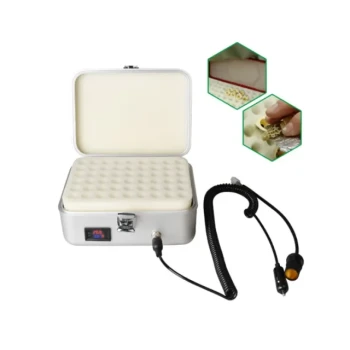
The primary function of an instrumental insemination (II) device is to provide the mechanical stability and precision required to artificially inject drone semen into a queen bee, bypassing the randomness of natural mating. This equipment serves as a foundational tool for genetic research, allowing scientists to create colonies with known, specific paternal lineages for the study of complex traits such as disease resistance.
Core Takeaway Instrumental insemination transforms the queen bee’s mating process from an uncontrollable biological event into a precise laboratory procedure. By enabling absolute control over genetic inputs, it allows researchers to isolate specific genotypes and accurately measure heritability, which is critical for developing mite-resistant honeybee strains.
Establishing Genetic Control
The most critical role of the instrumental insemination device is eliminating the variables inherent in open-air mating.
Creating Known Patrilines
In nature, a queen mates with random drones, making it impossible to know the specific genetic makeup of the offspring. The II device allows researchers to inject a specific mix of drone semen into the queen. This creates offspring with fully traceable multiple paternal lineages, known as patrilines.
Quantitative Precision
The equipment allows for high-precision quantitative control over the insemination process. Researchers can dictate the exact volume of semen injected, such as 1 microliter for single-drone insemination (SDI) or 10 microliters for multi-drone insemination (MDI). This precision enables the independent study of how insemination volume and genetic diversity impact colony health and social interactions.
The Mechanics of the Procedure
To achieve successful fertilization without injuring the queen, the device acts as a high-stability workstation that replaces human hand stability with mechanical fixation.
Stabilization and Exposure
The device uses a specific fixation tube to constrain the queen bee’s body safely. Once secured, precision micromanipulators utilizing ventral and dorsal hooks are employed to open the sting chamber. This exposes the entrance to the reproductive tract and establishes a stable physical pathway for injection.
Non-Destructive Injection
A critical function of the hardware is to allow the operator to bypass the vaginal valve under a microscope. This ensures that recovered frozen or fresh semen is injected accurately into the oviduct. From there, sperm can migrate successfully to the spermatheca for long-term storage, mirroring the result of natural mating but with controlled inputs.
Application in Mite Resistance Research
For genetic breeding programs focusing on Varroa mites, the device is not just a tool for reproduction, but a tool for data validation.
Isolating Genotypes
The device ensures genetic diversity and traceability in experimental samples. This serves as the basis for studying how different honeybee genotypes specifically attract or repel Varroa mites. Without this control, it is difficult to determine if a colony's resistance is due to genetics or environmental luck.
Calculating Heritability
By eliminating interference from unknown drone sources, breeders can establish accurate pedigree information. This data is fundamental for calculating high-confidence heritability parameters (h²) using mixed linear models. This statistical rigor is necessary for fixing desirable traits like Suppressed Mite Reproduction (SMR) and Recapping (REC).
Understanding the Trade-offs
While the instrumental insemination device offers absolute control, it is not a standalone solution for breeding success.
Technical Demands
The device is simply a tool; utilizing it effectively requires advanced beekeeping skills and mastery of the specific technique. It necessitates a program of systematic scientific breeding, which is significantly more labor-intensive than natural methods.
Resource Intensity
Running a selection program based on instrumental insemination is expensive and demanding. It requires a long-term commitment to maintaining the hardware, managing the specialized livestock, and analyzing the resulting data.
Making the Right Choice for Your Goal
To determine how this technology fits into your research or breeding program, consider your specific objectives:
- If your primary focus is trait isolation (e.g., SMR): You must use this device to exclude unknown drone genetics and calculate accurate heritability statistics.
- If your primary focus is physiological study: Use the device's volumetric controls to test how sperm volume independently affects queen longevity and colony behavior.
- If your primary focus is production beekeeping: Relying on this device is likely inefficient; it is better suited for creating breeder queens rather than production stock.
Instrumental insemination is the bridge that turns beekeeping from an observational art into a controllable, quantifiable science.
Summary Table:
| Feature | Function in Breeding & Research |
|---|---|
| Genetic Control | Eliminates random natural mating to ensure known paternal lineages. |
| Quantitative Precision | Allows exact volume control (e.g., SDI vs. MDI) for physiological studies. |
| Mechanical Stability | Uses micromanipulators and hooks to safely bypass the vaginal valve. |
| Mite Resistance | Isolates genotypes to calculate heritability (h²) for SMR and REC traits. |
| Data Validation | Provides the pedigree accuracy required for advanced statistical modeling. |
Elevate Your Breeding Program with HONESTBEE
Precision is the foundation of successful genetic research and mite resistance breeding. HONESTBEE empowers commercial apiaries and distributors with the high-stability instrumental insemination devices and specialized hardware needed to transform honeybee genetics.
From high-precision breeding tools and honey-filling machinery to a full spectrum of essential beekeeping consumables, we provide the comprehensive wholesale solutions your business requires. Partner with us to bring scientific rigor and efficiency to your operations.
Contact HONESTBEE Today to Explore Our Wholesale Catalog
References
- Kaspar Bienefeld, J. Radtke. Does the Genotype of Honeybee Brood Influence the Attractiveness for Varroa Jacobsoni And/or the Reproduction of This Parasite?. DOI: 10.1111/j.1601-5223.1998.00125.x
This article is also based on technical information from HonestBee Knowledge Base .
Related Products
- Queen Bee Artificial Insemination Instrument Equipment for Instrumental Insemination
- Plastic Chinese Queen Grafting Tool for Bee Queen Rearing
- Stainless Steel Beekeeping Queen Grafting Tool for Honey Bee Rearing
- Stainless Steel Queen Grafting Tool for Beekeeping and Bee Queen Grafting
- Black 2 Pack Beekeeper Queen Grafting Tool for Bee Queen Larva Transferring Needle
People Also Ask
- Why is maintaining sanitary conditions important during artificial insemination? Protect Your Queen from Fatal Infections
- Why are artificial insemination instruments critical in bee hybridization? Master Genetic Control & Pure Breeding
- What is the core value of bee artificial insemination instruments in breed improvement? Achieve Precise Genetic Control
- Why is professional bee artificial insemination equipment considered a core tool for genetic control in honeybee breeding? Ensure 100% Purity
- Why is high-purity CO2 used for queen bee artificial insemination? Unlock Precision Breeding & Faster Egg-Laying