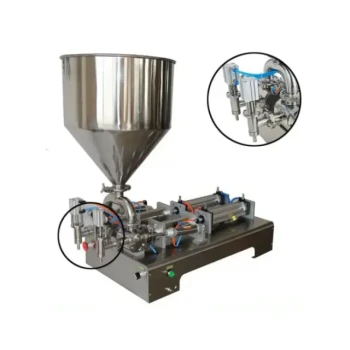
Automated honey bottling machines act as the critical operational bridge between increased raw production and market viability. When apiaries utilize algae nutritional supplements to boost yield, these machines employ high-precision metering pumps and anti-drip technology to process the resulting surge in volume. Their primary function is to convert bulk, high-viscosity honey into standardized, hygienically packaged retail units with consistent weight and quality.
While algae-based interventions drive the biological increase in honey yield, automated bottling ensures the commercial scalability of that yield. It transforms a surplus of raw material into a consistent, shelf-ready product without the bottlenecks of manual labor.
Managing Scale and Viscosity
The immediate challenge created by effective nutritional supplements is a volume of product that exceeds manual processing capabilities. Automated machines address this through specialized mechanical engineering.
High-Precision Metering
Algae supplements often lead to significant increases in hive output. To manage this, automated bottlers use high-precision metering pumps.
These pumps control the flow rate based on exact volume or weight parameters. This ensures that the increased throughput does not result in irregular bottle fills, maintaining strict quantitative control across thousands of units.
Handling High Viscosity
Honey is naturally viscous, a property that can slow down manual packaging lines significantly.
Industrial bottling equipment is designed to maintain flow efficiency despite this thickness. By utilizing consistent pressure and optimized flow paths, these machines prevent the bottlenecks common in manual pouring.
Anti-Drip Technology
Cleanliness is often the first casualty of increased speed.
To combat this, modern machines integrate anti-drip filling technology. This ensures that the nozzle cuts off the flow precisely after each fill, preventing sticky residue on bottles and conveyor belts, which is essential for maintaining high processing speeds.
Ensuring Hygiene and Quality
As production moves from small-scale to industrial levels, maintaining the purity of the product becomes more difficult but more critical.
Enclosed Processing Environments
Automated fillers typically operate within a fully enclosed environment.
This isolation minimizes the honey's exposure to external air and potential contaminants. It significantly reduces the risk of secondary contamination that can occur with increased human handling.
Removing Human Contact
Manual bottling involves significant contact between operators and the product.
Automation reduces this contact to near zero. By eliminating manual handling during the filling stage, the machinery ensures the final product meets strict food safety standards and extends the shelf life of the honey.
Driving Commercial Standardization
The ultimate goal of increasing yield via algae supplements is usually market expansion. Automation is the key to entering higher-value markets.
From Bulk to Retail
Transitioning from selling wholesale drums to individual jars requires differentiation.
Automated machines facilitate this transition by enabling differentiated retail packaging. They allow producers to move away from bulk commodity pricing and towards branded, consumer-facing products.
Meeting Certification Requirements
High-value markets, such as those requiring organic or Geographical Indication (GI) certifications, demand consistency.
Standardized mechanical packaging provides the data and consistency proofs required for these certifications. It ensures that every unit sold matches the sensory and volume specifications promised on the label.
Understanding the Operational Trade-offs
While automation solves the volume problem, it introduces new considerations for the apiary manager.
Calibration Complexity
Precision requires maintenance. The metering pumps and anti-drip systems must be calibrated specific to the viscosity of the honey, which can change based on temperature and harvest conditions.
Failure to calibrate correctly can lead to under-filled products or machine jams, negating the efficiency gains.
Capital vs. Labor
Investing in automation trades variable labor costs for a significant upfront capital expense.
While this reduces the long-term cost per unit as yields increase, it requires a minimum production volume to be financially viable. The increased yield from algae supplements is often the factor that justifies this ROI.
Making the Right Choice for Your Goal
To leverage the increased yield from algae supplements effectively, align your equipment choice with your market strategy.
- If your primary focus is Volume Efficiency: Prioritize machines with high-speed metering pumps and anti-drip tech to maximize throughput without mess.
- If your primary focus is Brand Authority: Focus on machines with enclosed systems and high-precision weight control to ensure the hygiene and consistency required for premium certifications.
Ultimately, the automated bottling machine is not just a packing tool; it is the enabler that allows an apiary to capitalize on the success of nutritional interventions.
Summary Table:
| Key Feature | Functional Benefit | Impact on High-Yield Operations |
|---|---|---|
| High-Precision Metering | Accurate weight & volume control | Eliminates waste and ensures product consistency |
| Anti-Drip Technology | Precise flow cutoff | Maintains cleanliness at high processing speeds |
| Enclosed Environment | Sterile processing path | Minimizes contamination and meets food safety standards |
| Automated Conveying | Reduced manual handling | Lowers labor costs and removes processing bottlenecks |
| Advanced Calibration | Viscosity management | Adapts to different honey types and harvest conditions |
Maximize Your Harvest with HONESTBEE Professional Equipment
Transitioning from high hive yields to market-ready products requires more than just hard work—it requires industrial precision. HONESTBEE specializes in supporting commercial apiaries and distributors by providing the robust infrastructure needed to scale.
From high-speed honey-filling machines and specialized hive-making machinery to a full spectrum of beekeeping tools and essential consumables, we offer the complete hardware solution for your business. Let us help you turn your raw honey surplus into a premium, shelf-ready brand.
Ready to automate your success? Contact our expert team today to find the perfect equipment for your operation.
References
- Benjamin Nichols, Vincent Ricigliano. Uses and benefits of algae as a nutritional supplement for honey bees. DOI: 10.3389/fsufs.2022.1005058
This article is also based on technical information from HonestBee Knowledge Base .
Related Products
- Fully Automatic Honey Filling Packaging Machine for Processing Line
- Semi Automatic Small Honey Bottle Filling Machine Honey Filler
- Automatic Honey Filling and Filtering Machine for Beekeeping Bottle Filling
- Precision Durable Efficient HONESTBEE Rotary Honey Filling Machine
- Manual Honey Filling Machine Bottling Machine for Honey
People Also Ask
- Why are fully automatic honey filling and packaging lines essential? Boost Your Honey's Market Value and Quality
- What is a fully-automatic honey filler? Streamline Your Production with High-Precision Automation
- How do automated honey filling and packaging machines affect profitability? Boost Margins with HONESTBEE Technology
- How do automated honey filling and packaging machines contribute to the market value of honey products? Maximize Your ROI
- How do industrial-grade automated honey filling and packaging machines mitigate the risk of physical contamination?