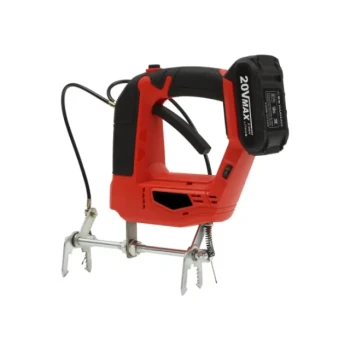
Mechanical shakers and specialized sieves work in tandem to ensure the rigorous extraction and isolation of Varroa destructor mites from honey bee samples. The shaker provides the consistent physical force necessary to dislodge mites, while the sieves utilize a multi-stage filtration process to separate the parasites from the bees for accurate counting.
Core Takeaway: This system replaces variable manual efforts with standardized mechanical precision, ensuring that infestation rates are calculated based on accurate, repeatable data rather than rough estimates.
The Role of Mechanical Shakers
The primary function of the mechanical shaker is to standardize the physical agitation process, removing the variability inherent in manual testing.
Achieving Consistent Detachment
Mechanical shakers deliver vigorous physical impact through high-frequency reciprocating or rotary motion. This forces bee samples to collide and rub against one another in a detergent or alcohol solution.
Dislodging Stubborn Parasites
The mechanical force is specifically calibrated to dislodge mites attached to the bees' abdomens or thoraxes. By maintaining this motion for a set duration (e.g., 15 minutes), the shaker ensures thorough separation that manual shaking often misses.
The Role of Specialized Sieves
Once the physical agitation is complete, specialized sieves function as a sorting mechanism to isolate the target data point: the mite.
Multi-Stage Filtration
The system employs grading sieves to separate biological materials by size. The first layer features a mesh specifically sized to retain adult honey bees while allowing smaller particles to pass through.
Isolating the Mite for Counting
A secondary fine-mesh sieve (or collection area) captures the dislodged mites. This step effectively separates the parasites from the bees and other fine debris, such as excess icing sugar or liquid solution.
Enabling Quantitative Analysis
By cleanly isolating the mites from the bee biomass, technicians can perform precise quantitative statistics. This clarity allows for the calculation of specific infestation metrics, such as the number of mites per 100 bees.
Avoiding the Pitfalls of Manual Detection
It is critical to understand why this equipment is preferred over simpler field methods for high-accuracy requirements.
Eliminating Human Error
Manual shaking introduces inconsistent force and duration. If the agitation is too weak, mites remain attached to the host, leading to under-counting and a false sense of security regarding colony health.
Ensuring Data Reliability
Mechanical systems provide standardized oscillation force. This ensures that results are comparable across different samples and time periods, which is essential for determining accurate colony health thresholds.
Making the Right Choice for Your Goal
Using this mechanical and filtration system is about moving from guesswork to granular data.
- If your primary focus is Research Accuracy: Rely on the mechanical shaker to standardize the detachment force, ensuring high-purity mite samples for study.
- If your primary focus is Colony Management: Use the sieve-enabled separation to calculate exact infestation percentages (mites per 100 bees) to determine if treatment thresholds have been reached.
Precision in detection is the only path to effective intervention.
Summary Table:
| Component | Primary Function | Key Benefit |
|---|---|---|
| Mechanical Shaker | Delivers standardized high-frequency physical agitation | Eliminates human error and ensures total mite detachment |
| Primary Sieve | Filters out adult honey bee biomass | Separates the hosts from the parasitic samples |
| Fine-Mesh Sieve | Captures and isolates individual mites | Enables clean, accurate counting for infestation metrics |
| Aqueous Solution | Acts as a lubricant/surfactant during shaking | Facilitates the release of mites from the bee's body |
Elevate Your Apiary Management with HONESTBEE Precision
Accurate Varroa detection is the foundation of colony health. At HONESTBEE, we empower commercial apiaries and distributors with the professional-grade tools needed to move beyond guesswork. From high-precision Varroa detection equipment to automated honey-filling machines and specialized hive-making hardware, our comprehensive wholesale portfolio is designed to optimize every stage of your beekeeping operation.
Ready to scale your business with industry-leading machinery and consumables?
Contact HONESTBEE Today to discuss how our specialized equipment and wholesale solutions can drive efficiency and profitability for your apiary.
References
- Krystyna Pohorecka, Kamila Torój. A Comparative Study of Environmental Conditions, Bee Management and the Epidemiological Situation in Apiaries Varying in the Level of Colony Losses. DOI: 10.2478/jas-2014-0027
This article is also based on technical information from HonestBee Knowledge Base .
Related Products
- Varroa Easy Check Mite Tester Kit Counter Alcohol Wash Jar
- Langstroth Screen Bottom Board for Beekeeping Wholesale
- Compact Circular Bee Mite Treatment Dispenser
- Adjustable Formic and Acetic Acid Dispenser for Bee Mite Treatment
- High Performance Cordless Electric Bee Shaker for Beekeeping
People Also Ask
- What tools are utilized within an Integrated Pest Management (IPM) strategy for honeybees? Optimize Colony Health
- What is the significance of standardized detection tools in Varroa control? Data-Driven Beekeeping Strategies
- Why is surfactant added to 70% alcohol for Varroa detection? Ensure Accurate Mite Counts for Professional Beekeeping
- What is the purpose of using white filter cloth for Varroa mite screening? Enhance Detection and Accuracy
- How does a specialized Varroa mite tester with sugar powder facilitate mite diagnosis? Precise B2B Hive Health Solutions