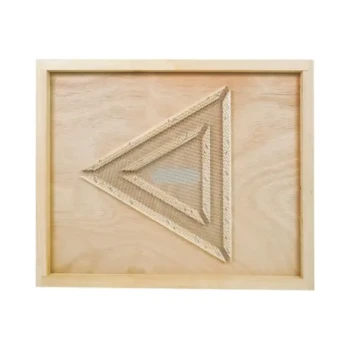
Mesh bottom boards function as a critical isolation interface between the honeybee colony and the parasites they dislodge. Specifically, they utilize a metal grid or wire mesh that allows fallen Varroa mites to pass through while preventing them from climbing back into the brood nest. This physical separation is essential for researchers to capture an accurate census of eliminated mites, which serves as a direct metric for evaluating the colony's hygienic and grooming behaviors.
Core Takeaway Mesh bottom boards convert biological activity into quantifiable data by permanently separating dislodged mites from the colony. This isolation preserves the "evidence" of grooming, allowing researchers to measure parasitic resistance based on mite drop counts and physical damage analysis without interference from the bees.
The Mechanics of Isolation and Capture
To evaluate grooming behavior scientifically, you must ensure that every mite removed by a bee is counted and preserved. Mesh bottom boards facilitate this through three specific mechanical functions.
The Selective Barrier
The core feature is a specific grid or metal mesh. The spacing is engineered to be permeable to Varroa mites and small debris but impermeable to honeybees.
Preventing Parasite Re-entry
Once a bee dislodges a mite via self-grooming or social grooming, the mite often remains alive. Without the mesh, the parasite could simply crawl back onto a host or into a brood cell. The mesh ensures that once a mite falls, it is permanently removed from the colony's ecosystem.
Preserving the Sample
In standard hives, worker bees are fastidious cleaners and will remove debris, including dead mites, from the hive floor. The mesh creates a "no-go" zone that prevents bees from reaching the fallen mites. This ensures the sample remains undisturbed on the collection tray or monitoring paper below.
Quantifying Grooming Behavior
The primary utility of the mesh board in research is to translate vague observations into hard statistics regarding resistance.
Measuring Mite Drop Counts
By collecting every fallen mite, researchers can calculate the "natural mite fall." A higher daily drop count relative to the total infestation level often indicates a colony with aggressive grooming traits.
Analyzing Physical Damage
Supplying a collection area beneath the mesh allows for detailed microscopic analysis. Researchers examine the collected mites for mechanical damage, such as bitten legs or crushed carapaces.
Calculating Resistance Efficiency
The ratio of damaged mites to the total drop count provides a quantifiable score of the colony’s grooming intensity. This data is vital for selecting and breeding honeybee strains with superior disease resistance.
Understanding the Trade-offs
While mesh bottom boards are excellent for data collection, they require specific management to ensure accuracy.
Vulnerability to Scavengers
The mesh separates bees from the mites, but it does not stop smaller scavengers like ants from entering the collection tray. If ants remove the mite samples, your data becomes statistically invalid.
Dependence on Sticky Substrates
To counter scavengers and wind, the collection surface below the mesh usually requires a sticky coating. This prevents mites from being blown away or eaten, ensuring the weekly data reflects reality rather than biological loss.
Differentiation Difficulties
The mesh captures all falling mites, including those that died of natural causes or old age. Careful analysis is required to distinguish between mites that fell due to bee grooming (often damaged) and those that simply died naturally (intact).
Making the Right Choice for Your Goal
Whether you are a researcher or a manager, the utility of the mesh board depends on your specific objective.
- If your primary focus is breeding for resistance: Prioritize the analysis of the mites collected below the mesh; look specifically for physical damage to legs and shells to confirm active grooming behavior.
- If your primary focus is general population monitoring: Use the mesh board simply to count the total daily drop, which provides a reliable estimate of the overall infestation severity without chemical interference.
The mesh bottom board is the standard tool for transforming the invisible defense mechanisms of honeybees into visible, actionable data.
Summary Table:
| Feature | Function in Research | Impact on Data Accuracy |
|---|---|---|
| Selective Grid | Permits mite passage while blocking honeybees | Prevents bees from removing mite evidence |
| Isolation Zone | Prevents dislodged mites from re-entering the brood | Ensures fallen mites are permanently captured |
| Debris Collection | Allows for microscopic analysis of mite damage | Confirms physical grooming (e.g., bitten legs) |
| Sticky Substrate | Secures fallen mites against wind and scavengers | Prevents loss of sample for daily counts |
Optimize Your Apiary with HONESTBEE Professional Equipment
Are you looking to enhance your honeybee breeding programs or scale your commercial operations? At HONESTBEE, we specialize in supporting commercial apiaries and distributors with a complete range of high-quality beekeeping machinery and tools.
From advanced hive-making and honey-filling machines to specialized consumables and mesh bottom boards, our comprehensive wholesale offerings are designed to boost your efficiency and help you breed mite-resistant colonies.
Partner with HONESTBEE today to access premium beekeeping hardware and industry expertise.
References
- Kekecoglu Meral, Kambur Acar Merve. Relationships between hygienic and grooming behaviour in Yıgılca Honey Bee (Apis mellifera L.) Ecotype. DOI: 10.22271/j.ento.2023.v11.i1a.9135
This article is also based on technical information from HonestBee Knowledge Base .
Related Products
- HONESTBEE Wooden Bee Escape Board with Triangle Mesh Design for Beekeeping
- Langstroth Solid Bottom Board for Beekeeping
- Langstroth Screen Bottom Board for Beekeeping Wholesale
- Solid Bottom Board Australian Pine Wood Langstroth Bottom Board for Wholesale
- Australian Pine Wood Langstroth Screen Bottom Board for Wholesale
People Also Ask
- How is a bee escape board used to clear a hive body for honey harvesting? Optimize Your Chemical-Free Harvest
- What is a bee escape board and what problem does it solve? Simplify Your Honey Harvest with Passive Clearing
- How is a bee escape board used and how does it function? Master This Gentle Honey Harvesting Tool
- What are the proper steps for using a bee escape board for honey harvesting? Master the Passive Clearing Technique
- What tools and methods are used to clear honey bees from honey supers? Efficient Harvesting for Commercial Beekeepers