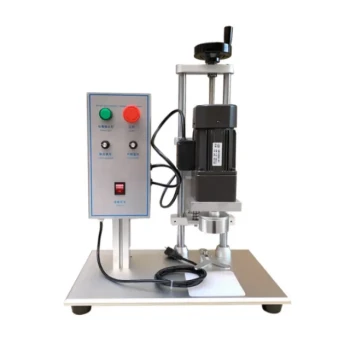
The primary function of the electronic control unit (ECU) is to optimize the filling machine's operation by managing a variety of customizable parameters. It acts as the digital "brain" of the device, replacing manual guesswork with precision control. By offering many different optional settings, the unit ensures a significantly more efficient workflow than purely mechanical alternatives.
The electronic control unit transforms the filling machine from a static tool into a dynamic instrument. Its core value lies in providing the optional settings necessary to tailor the workflow to specific production needs, ensuring efficiency and consistency.
The Role of the ECU in Workflow Efficiency
The electronic control unit is not just an add-on; it is the driver of operational efficiency.
Customization Through Optional Settings
The primary reference highlights that the ECU provides many different optional settings. This allows the operator to adapt the machine to different tasks rather than being locked into a single mode of operation.
Instead of a "one-size-fits-all" mechanical cycle, the ECU allows you to toggle specific configurations. This flexibility is what enables the machine to handle distinct production requirements without requiring physical re-tooling for every minor change.
Streamlining the Filling Process
The filling machine typically operates by dispensing a predetermined amount of product into a container. The ECU is responsible for adhering to this specific volume.
By electronically controlling the parameters, the unit ensures that the "Filling" step described in the supplementary references—where the nozzle dispenses the product—is consistent every time. This reduces waste and ensures uniform packaging.
Understanding the Operational Context
To appreciate the ECU's function, one must view it within the wider three-step process of the machine.
Coordination of Feeding and Filling
The machine relies on a supply mechanism, often gravity or a pump, to move product into the tank. The ECU helps bridge the gap between this continuous supply and the discrete action of filling.
It manages the timing and settings required to ensure the workflow remains uninterrupted. This electronic coordination prevents bottlenecks that might occur if the filling speed does not match the feeding supply.
Preparing for Capping and Sealing
While the ECU primarily dictates the filling parameters, its efficiency directly impacts the final stage: Capping and Sealing.
By ensuring the predetermined amount is dispensed accurately and efficiently, the ECU ensures the containers are ready for the sealing hardware immediately. A precise electronic fill level prevents issues like overfilling, which could compromise the seal or label application later.
Operational Considerations and Trade-offs
While the electronic control unit offers superior efficiency, it introduces specific complexities that operators must manage.
Complexity vs. Simplicity
The introduction of "many different optional settings" increases the learning curve for operators. Unlike a simple mechanical lever, an ECU requires the user to understand which settings correspond to their specific product viscosity or container size.
Dependency on Configuration
The efficiency of the workflow is entirely dependent on the accuracy of the inputs. If an operator selects the wrong optional setting, the ECU will execute that command precisely but incorrectly. The machine is only as efficient as its configuration allows it to be.
Making the Right Choice for Your Goal
To get the most out of your filling machine's electronic control unit, you must align the settings with your specific production targets.
- If your primary focus is Speed: Prioritize settings that streamline the cycle time between the feeding and filling stages to maximize throughput.
- If your primary focus is Accuracy: Focus on the optional settings that control the "predetermined amount" to ensure every container meets exact weight or volume specifications.
The electronic control unit is your tool for bridging the gap between mechanical capability and production reality.
Summary Table:
| Feature | Function of the ECU | Impact on Production |
|---|---|---|
| Parameter Control | Manages customizable optional settings | High flexibility for various products |
| Volume Precision | Ensures a predetermined amount is dispensed | Reduced waste and uniform packaging |
| Workflow Sync | Coordinates feeding, filling, and sealing | Eliminates bottlenecks and increases speed |
| Process Automation | Replaces manual guesswork with digital logic | Enhanced repeatability and lower error rates |
Scale Your Apiary Operations with HONESTBEE Precision
As a commercial apiary or honey distributor, your success depends on the efficiency and consistency of your bottling line. At HONESTBEE, we specialize in providing high-performance honey-filling machines equipped with advanced electronic control units designed to handle the unique viscosity of honey with unmatched accuracy.
From industrial-grade machinery to specialized hive-making tools and honey-themed cultural merchandise, we offer a comprehensive wholesale portfolio to support every aspect of your business. Let us help you transition from manual guesswork to automated precision.
Ready to upgrade your equipment? Contact us today to explore our wholesale solutions!
Related Products
- Automatic Honey Filling and Filtering Machine for Beekeeping Bottle Filling
- Fully Automatic Honey Filling Packaging Machine for Processing Line
- Pneumatic Double Nozzle Honey Filling Bottling Packaging Machine
- Precision Durable Efficient HONESTBEE Rotary Honey Filling Machine
- Pneumatic Paste Filling Machine Bottling Packaging Machine Single Nozzle
People Also Ask
- What process advantages do professional honey filtering and filling machines provide? Optimize Your Organic Honey Output
- How do honey filling and filtering machines increase product value? Turn Raw Honey into Premium Export-Grade Goods
- How do honey filtration and filling machinery contribute to industrialization? Scale Your Commercial Honey Production
- What specific issues do industrial filtration and automated filling machinery address? Ensure Honey Quality & Compliance
- How does the use of professional honey filtration and filling machinery facilitate international honey exports?