The transition from traditional apiary craft to industrial operation relies heavily on hardware precision. Professional hive-making machinery provides the absolute dimensional standardization necessary for equipment interchangeability, while automated filling systems deliver the high-speed throughput and strict hygiene control required for commercial viability.
The Core Insight: Large-scale efficiency is not just about speed; it is about eliminating variability. By standardizing the physical infrastructure of the hive and automating the post-harvest workflow, operators reduce per-unit costs, ensure biological security, and create the consistent "physical interfaces" required for modern supply chains.
The Role of Standardization in Hive Construction
Achieving Operational Interchangeability
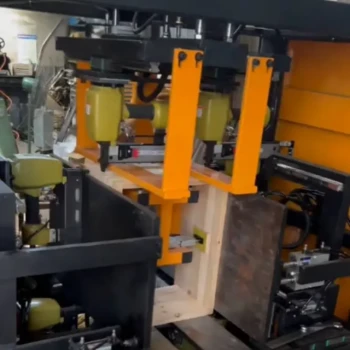
The primary efficiency gain from professional hive-making machinery is dimensional standardization. In large-scale operations, frames and supers must be seamlessly interchangeable across thousands of colonies and different apiary sites.
High-precision woodworking technology ensures that every component fits perfectly. This eliminates the manual adjustments often required with hand-built or inconsistent equipment, streamlining the management of large colony movements.
Facilitating Automated Harvesting
Standardized hives act as the necessary physical foundation for downstream automation. Uniform dimensions provide the physical interfaces required by automated honey harvesting and centrifugal extraction lines.
Without this structural consistency at the source, advanced harvesting machinery cannot function efficiently. This hardware integration ensures that the purity and scale of the raw honey supply are maintained from the moment of harvest.
Enhancing Colony Health and Logistics
Beyond logistics, industrial-grade machinery produces structurally durable components that support high-density beekeeping. Well-constructed, standardized hives support better overwintering protection and healthy colony reproduction.
This durability reduces the frequency of equipment repair and replacement. It supports regional production strategies by ensuring equipment can withstand the rigors of transport and intensive commercial use.
Efficiency in Post-Harvest Processing
Maximizing Throughput and Accuracy
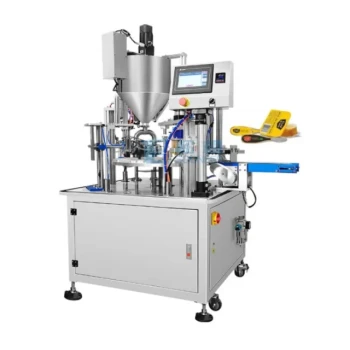
Automated honey-filling equipment is fundamental for transitioning from family-scale production to commercial operations. These machines provide precise control over filling volumes, ensuring consistent product dosing at high speeds.
By utilizing automated assembly lines, operators can achieve output rates impossible with manual labor. This significantly increases the efficiency of post-processing workflows and allows for the rapid transformation of raw honey into retail-ready products.
Ensuring Hygiene and Reducing Contamination
In mass production, maintaining strict hygiene is a critical efficiency metric. Automated machinery minimizes human contact with the product, significantly reducing the risk of secondary contamination.
This automation preserves the natural physical and chemical characteristics of the honey. It ensures the final product meets stringent market safety requirements without the bottlenecks associated with manual quality control measures.
Reducing Comprehensive Costs
The integration of these technologies directly impacts the bottom line. By minimizing material loss during filling and reducing the labor required for packaging, these systems lower the comprehensive operating cost per kilogram of honey.
This efficiency allows commercial beekeepers to bypass intermediaries. With the capacity to package large volumes in-house, operators can retain higher margins and manage their own supply chains more effectively.
Understanding the Operational Trade-offs
The Requirement for Uniform Inputs
Automation creates efficiency, but it demands uniformity. Automated filling machines require consistent honey viscosity and temperature to maintain precise metering, meaning the "art" of handling variable raw products must be replaced by strict process control.
Infrastructure Dependency
Adopting this level of machinery shifts the operation from labor-intensive to capital-intensive. The efficiency gains are realized only when the volume of production is high enough to justify the equipment; for smaller operations, the "efficiency" of automation may be negated by the capital cost and maintenance requirements.
Making the Right Choice for Your Scale
To determine if this hardware investment aligns with your operational goals, consider your primary objective:
- If your primary focus is Commercial Scalability: Prioritize hive-making machinery to ensure frame interchangeability, which is the prerequisite for managing thousands of colonies efficiently.
- If your primary focus is Market Access and Quality: Invest in automated filling equipment to guarantee the hygiene standards and consistent dosing required by retail chains and food safety regulators.
True efficiency in modern beekeeping is achieved when the precision of the hive matches the speed of the processing line.
Summary Table:
| Feature | Efficiency Impact | Key Benefit for Large-Scale Operations |
|---|---|---|
| Dimensional Standardization | High | Ensures equipment interchangeability across thousands of colonies. |
| Structural Durability | Medium | Reduces repair frequency and supports rigorous commercial transport. |
| Automated Filling Lines | Very High | Maximizes throughput while ensuring precise dosing and volume control. |
| Hygienic Automation | High | Minimizes human contact to meet strict global food safety standards. |
| Process Integration | Medium | Lowers per-unit costs by streamlining the transition from harvest to retail. |
Scale Your Beekeeping Business with HONESTBEE Professional Hardware
Transitioning from traditional craft to industrial-scale success requires more than just bees—it requires precision. HONESTBEE specializes in empowering commercial apiaries and distributors with the high-performance tools necessary for global competitiveness.
Why partner with us?
- Standardized Infrastructure: Our professional hive-making machines ensure every component is perfectly interchangeable, reducing labor and logistics headaches.
- High-Speed Processing: Our automated honey-filling and centrifugal extraction lines maximize your output while maintaining the highest hygiene standards.
- Comprehensive Wholesale Support: From specialized machinery to essential industry consumables and honey-themed merchandise, we provide the full spectrum of equipment for your growth.
Ready to eliminate variability and boost your margins? Contact us today to explore our wholesale solutions!
References
- Seble Tigistu. Review on Actors and their Value Adding Activities in Honey Value chain; Challenges and Opportunities in Ethiopia. DOI: 10.5281/zenodo.7668740
This article is also based on technical information from HonestBee Knowledge Base .
Related Products
- Fully Automatic Honey Filling Packaging Machine for Processing Line
- Automatic Honey Filling and Filtering Machine for Beekeeping Bottle Filling
- Semi Automatic Small Honey Bottle Filling Machine Honey Filler
- Precision Automated Packaging Turntable Honey Spoon Filling Sealing Packing Machine
- Precision Durable Efficient HONESTBEE Rotary Honey Filling Machine
People Also Ask
- Why are fully automatic honey filling and packaging lines essential? Boost Your Honey's Market Value and Quality
- What is a fully-automatic honey filler? Streamline Your Production with High-Precision Automation
- How do automated honey filling and packaging machines affect profitability? Boost Margins with HONESTBEE Technology
- How do automated honey filling and packaging machines contribute to the market value of honey products? Maximize Your ROI
- How do industrial-grade automated honey filling and packaging machines mitigate the risk of physical contamination?