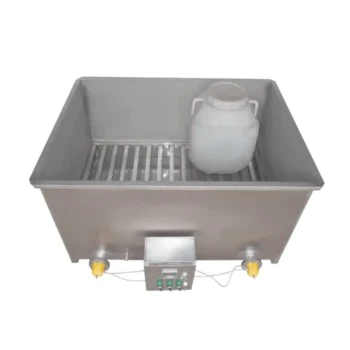
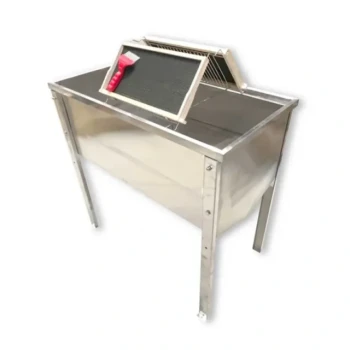
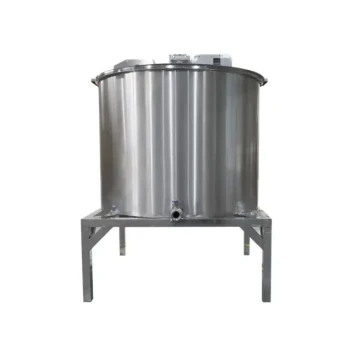
The fundamental role of professional honey processing equipment is to establish an uncompromising hygienic barrier. By utilizing food-grade stainless steel tanks and specialized extraction gear, producers effectively isolate the honey from soil, airborne contaminants, and microorganisms. Crucially, this equipment safeguards against honey's hygroscopic nature—its tendency to absorb moisture from the air—thereby preventing spoilage, fermentation, and the degradation of viscosity or texture.
Core Insight: Professional equipment is not merely about increasing speed; it acts as a preservation ecosystem. By creating a chemically inert and hermetically sealed environment, this hardware allows producers to maintain the honey's biological stability while decoupling harvest time from sales time to maximize revenue.
Preserving Chemical and Physical Integrity
The primary technical justification for high-grade equipment lies in its ability to maintain the honey's natural state against environmental threats.
Combating Moisture Absorption
Honey is highly hygroscopic, meaning it naturally pulls moisture from the surrounding environment.
If honey absorbs excess humidity, the water content rises, leading to decreased viscosity and a high risk of fermentation. Professional storage tanks feature superior sealing capabilities that isolate the product from external humidity changes, ensuring the honey remains chemically stable.
Ensuring Chemical Inertia
Honey is naturally acidic, which can cause reactions with inferior metals.
High-grade stainless steel tanks, specifically those made from AISI 304 or 316L, offer excellent acid and corrosion resistance. These materials provide chemical inertia, preventing the leaching of heavy metals or the development of off-odors that can occur with lower-grade storage solutions.
Natural Purification via Sedimentation
Stainless steel tanks facilitate a critical passive purification process known as static sedimentation.
Due to differences in specific gravity, micro-bubbles and light impurities rise to the surface, while heavier sediments settle at the bottom. This allows for clear, clean honey without aggressive heating or filtering that could damage the product.
Operational Efficiency and Economic Control
Beyond quality preservation, professional equipment fundamentally changes the economics of honey production.
Optimizing the Harvest Cycle
Professional centrifugal extractors replace labor-intensive manual squeezing methods.
This machinery provides stable rotation speeds tailored to different honey viscosities, significantly reducing labor intensity and shortening the operational cycle. This efficiency allows beekeepers to complete harvests rapidly before necessary seasonal colony migrations.
Protecting Hive Assets
Manual extraction often destroys the honeycomb; professional centrifugation preserves it.
By maintaining the structural integrity of the comb, beekeepers can return the empty frames to the hive. This allows the colony to reuse the wax rather than expending energy to rebuild it, directly increasing future honey extraction rates.
Strategic Market Timing
Storage tanks convert time into economic value.
Without proper storage, producers are often forced to sell during peak harvest when prices are lowest. Large-scale stainless steel storage allows producers to hold inventory safely until periods of market scarcity, increasing revenue per kilogram without altering the product's chemistry.
Understanding the Trade-offs
While the benefits are substantial, adopting professional equipment introduces new management requirements.
Capital Intensity vs. Long-Term Value
The shift to food-grade stainless steel and automated extractors represents a significant upfront capital expenditure.
Small-scale producers must weigh this initial cost against the long-term reduction in average production costs. The return on investment relies on utilizing the equipment to achieve price competitiveness in the global market over several seasons.
Maintenance and Sanitation Standards
High-end equipment requires rigorous maintenance protocols.
To maintain organic certifications, tanks must be compatible with Cleaning-In-Place (CIP) systems. This requires operators to be trained in specific sanitation procedures to prevent the equipment itself from becoming a source of contamination.
Making the Right Choice for Your Goal
Select your equipment based on the specific bottleneck in your current production model.
- If your primary focus is Organic Certification: Prioritize AISI 304/316L stainless steel tanks to ensure chemical inertia and compatibility with rigorous CIP sanitation standards.
- If your primary focus is Profit Margins: Invest in large-capacity storage to enable holding stock for off-season sales when market prices are higher.
- If your primary focus is Production Volume: Focus on centrifugal extraction machinery to protect honeycombs for reuse, allowing bees to focus on honey production rather than wax building.
Professional equipment transforms honey production from a raw agricultural harvest into a controlled, scalable manufacturing process that guarantees both safety and value.
Summary Table:
| Feature | Advantage of Professional Equipment | Impact on Honey Quality |
|---|---|---|
| Material | AISI 304/316L Stainless Steel | Prevents chemical leaching and corrosion |
| Sealing | Hermetic/Airtight Seals | Blocks moisture absorption and fermentation |
| Extraction | Centrifugal Technology | Preserves honeycombs for colony reuse |
| Storage | Large-scale Sedimentation | Natural purification without heat damage |
| Economics | Strategic Inventory Control | Allows selling during peak market prices |
Elevate Your Honey Production with HONESTBEE
At HONESTBEE, we specialize in empowering commercial apiaries and distributors with the high-performance tools needed to dominate the market. From food-grade AISI 304/316L stainless steel storage tanks that guarantee chemical inertia to precision honey-filling machines and centrifugal extractors, our comprehensive wholesale catalog covers your entire production line.
Why partner with HONESTBEE?
- Maximize Yield: Our machinery preserves your hive assets, allowing bees to focus on honey, not wax.
- Global Standards: All equipment meets rigorous hygiene and organic certification requirements.
- End-to-End Solutions: We supply everything from heavy-duty hardware to honey-themed cultural merchandise.
Ready to transform your harvest into a scalable, high-value manufacturing process? Contact us today to discuss your wholesale equipment needs!
References
- Afrânio Silva Madeiro, Fernando Gomes de Souza. BEEKEEPING PRODUCTIVE ABILITY FOR BEE HONEY: Apis mellifera, IN THE SAVANNAH REGION, IN THE STATE OF RORAIMA. DOI: 10.22533/at.ed.9733192328118
This article is also based on technical information from HonestBee Knowledge Base .
Related Products
- Stainless Steel Honey Storage and Settling Tank with Double Strainer
- Stainless Steel Honey Storage Tank with Lid for Honey
- Heavy Duty Stainless Steel Honey Processing Machine Decrystallizing Tank
- Stainless Steel Uncapping Tank with Stand and Strainer
- Professional Honey Storage Tank with Agitation System
People Also Ask
- What economic role do honey storage tanks play? Boost Your Revenue Through Strategic Inventory Management
- What roles do industrial honey storage tanks and filtration meshes play in processing? Ensure Purity & Consistency
- What is the purpose of a honey storage tank? Streamline Your Honey Processing for Quality & Efficiency
- What role do settling tanks play in honey production? Achieve Pure, High-Clarity Honey Naturally
- Why are large settling tanks used in the honey clarification process? Achieve Natural Purity & Batch Consistency