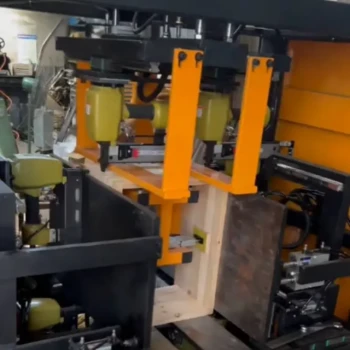
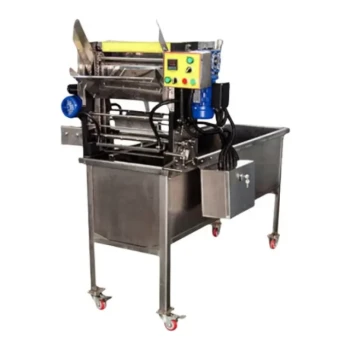
The indirect impact of automated hive-making and honey-filling machines is the stabilization of the agricultural pollination supply chain through financial diversification. By reducing labor costs and standardizing the packaging of secondary products like honey and beeswax, this machinery significantly increases the comprehensive income of beekeepers. This added profitability acts as a financial buffer, allowing apiaries to maintain the large-scale, healthy colonies required for pollination services even during periods of market volatility.
Core Takeaway By converting pollination byproducts into high-value commercial goods, automation subsidizes the operational costs of keeping bees. This creates a resilient economic model where honey revenue protects the availability of critical pollination services, ensuring food security goals are met regardless of fluctuations in service fees.
The Economic Mechanics of Stability
The connection between honey processing equipment and pollination market stability is not immediately obvious, but it is fundamental. Automation transforms the "byproducts" of pollination into a primary source of financial resilience.
Subsidizing Operational Costs
Pollination services often operate on thin margins due to high logistics and maintenance costs. Automated machinery allows beekeepers to offset these costs by efficiently processing honey collected during pollination.
The revenue generated from these processed goods effectively subsidizes the beekeeping operation. This ensures that the costs of raising and transporting bees do not rely solely on pollination fees.
Enhancing Product Value and Competitiveness
High-precision honey-filling machines utilize fluid control technology to ensure hygienic, standardized packaging. This allows beekeepers to meet strict market entry requirements and safety standards.
By elevating raw ecological products into "market-ready" commodities, apiaries can command higher premiums. This increased capital flow provides the liquidity needed to expand or maintain colony numbers.
Reducing Labor Dependencies
Automated hive-making and filling equipment significantly reduce the manual labor required for maintenance and harvest. This reduction in overhead directly improves the net profitability of the apiary.
When labor costs are controlled, beekeeping operations become more economically viable. This viability is the prerequisite for maintaining the consistent supply of colonies that the agricultural sector relies on.
Ensuring Supply Chain Resilience
The ultimate beneficiary of this automation is the agricultural sector, which requires a dependable supply of pollinators.
Buffering Against Market Fluctuations
Commercial apiaries equipped with industrial processing machinery are better protected against policy changes or economic downturns. The diversified income stream acts as a shock absorber.
A financially stable industry prevents the sudden collapse of beekeeping operations. This ensures that farmers have access to a reliable pool of pollinators year after year.
Incentivizing Large-Scale Operations
The economic incentive provided by efficient processing encourages operators to maintain large-scale, professional colonies. Large-scale operations are critical for meeting the demands of modern, industrial agriculture.
Without the profitability of processed secondary products, the incentive to maintain the massive hive counts necessary for broad food security would diminish.
Understanding the Trade-offs
While automation stabilizes the market, it introduces specific dependencies that must be managed.
The Risk of Dual-Dependency
By using honey revenue to subsidize pollination, the stability of the pollination market becomes partially dependent on the honey market. If global honey prices crash, the "financial safety net" for pollinators weakens, potentially exposing the pollination market to instability despite the automation.
Capital Intensity Barriers
Industrial filling and processing machinery requires significant upfront investment. This creates a barrier to entry that favors established, large-scale commercial apiaries over smaller operators, potentially leading to a consolidation of the pollination supply market.
Making the Right Choice for Your Goal
To leverage this relationship effectively, stakeholders must align their investment in automation with their broader operational objectives.
- If your primary focus is Market Stability: Invest in automation to diversify income streams, ensuring your ability to provide pollination services is not strictly tied to service fee fluctuations.
- If your primary focus is Profit Maximization: Focus on high-precision filling technology to meet premium hygiene standards, capturing the maximum added value from your pollination byproducts.
Ultimately, automated processing equipment transforms honey from a simple commodity into a strategic financial asset that underwrites the security of the entire pollination ecosystem.
Summary Table:
| Impact Category | Key Benefit of Automation | Market Stability Effect |
|---|---|---|
| Financial Resilience | Offsets pollination costs via honey revenue | Buffers against service fee volatility |
| Product Value | Standardized, high-precision packaging | Ensures liquidity for colony maintenance |
| Labor Overhead | Reduced manual hive-making & filling labor | Improves viability of large-scale operations |
| Supply Security | Economic incentive for hive expansion | Guarantees consistent pollinator availability |
Secure Your Apiary’s Future with HONESTBEE
At HONESTBEE, we empower commercial apiaries and distributors to build a more resilient business model. Our comprehensive range of beekeeping tools, hive-making machinery, and high-precision honey-filling equipment allows you to transform byproducts into high-value assets, ensuring your pollination services remain profitable regardless of market fluctuations.
From specialized hardware to essential industry consumables, we provide the industrial-grade solutions needed to scale your operations and meet the demands of modern agriculture.
Ready to enhance your operational stability and maximize your honey revenue?
References
- Tom D. Breeze, Simon G. Potts. Agricultural Policies Exacerbate Honeybee Pollination Service Supply-Demand Mismatches Across Europe. DOI: 10.1371/journal.pone.0082996
This article is also based on technical information from HonestBee Knowledge Base .
Related Products
- Automatic Honey Filling and Filtering Machine for Beekeeping Bottle Filling
- Fully Automatic Honey Filling Packaging Machine for Processing Line
- Precision Durable Efficient HONESTBEE Rotary Honey Filling Machine
- Precision Automated Packaging Turntable Honey Spoon Filling Sealing Packing Machine
- Semi Automatic Small Honey Bottle Filling Machine Honey Filler
People Also Ask
- What process advantages do professional honey filtering and filling machines provide? Optimize Your Organic Honey Output
- How do honey filling and filtering machines increase product value? Turn Raw Honey into Premium Export-Grade Goods
- How do honey filtration and filling machinery contribute to industrialization? Scale Your Commercial Honey Production
- What specific issues do industrial filtration and automated filling machinery address? Ensure Honey Quality & Compliance
- How does the use of professional honey filtration and filling machinery facilitate international honey exports?