The mechanical function of using small scissors in this context is to surgically remove approximately one-half of one of the queen bee's forewings. By physically altering the queen's anatomy, this procedure eliminates her aerodynamic capacity to sustain flight during a swarm event.
While this operation renders the queen flightless, it does not suppress the colony's natural biological instinct to swarm. Instead, it acts as a fail-safe mechanism that forces the swarm to return to the hive or cluster near the ground, preventing the immediate total loss of the colony.
The Mechanical Intervention
Targeting the Flight Mechanism
The procedure requires precision. You must isolate the queen and use small scissors to clip roughly 50% of a single forewing.
This specific alteration creates an imbalance in lift generation. It is not intended to harm the queen's general health, but strictly to disable her ability to navigate through the air.
The Immediate Physical Result
Once the wing is clipped, the queen retains her ability to walk and lay eggs within the hive.
However, she physically cannot leave the immediate vicinity of the hive entrance via flight. She is grounded by simple mechanics.
Operational Outcome on the Swarm
Disruption of the Exodus
When the colony's swarming instinct triggers, the worker bees will exit the hive as normal.
However, because the queen cannot fly, she cannot lead or follow the swarm to a new location.
The "Return" Response
Bees are biologically programmed to follow their leader. When the swarming bees realize the queen is not with them, they are forced to alter their behavior.
They will typically return to the original hive or cluster at a very low height near the ground where the queen has fallen.
Safety Measure, Not Prevention
This mechanism serves primarily as a safety net.
It ensures the beekeeper does not lose the swarm entirely to the wild, making recovery of the bees significantly easier.
Critical Limitations and Trade-offs
The Instinct Persists
It is vital to understand that clipping wings is not a method of behavioral control.
The colony’s drive to swarm remains active. You have removed the means of escape for the old queen, but you have not addressed the cause of the swarm.
The Virgin Queen Risk
Relying solely on this method is a short-term solution. Even if the old queen is grounded, the colony will often continue its reproduction cycle.
Eventually, the colony may swarm successfully with a new virgin queen, whose wings are intact.
Comparison to Other Physical Barriers
This method is often compared to using a queen excluder at the entrance.
However, excluders have their own mechanical failures; queens can sometimes be slimmed down by workers to fit through the mesh, or drones can clog the screen, reducing hive efficiency. Neither method offers a permanent fix.
Evaluating the Strategy for Your Apiary
Wing clipping is a tool for loss mitigation, not swarm prevention. Use the following guide to decide if it fits your management style:
- If your primary focus is mitigating immediate loss: This method effectively prevents the old queen from leading a swarm away, giving you a chance to recover the bees.
- If your primary focus is long-term swarm management: You must look beyond physical modifications and address hive congestion or re-queening, as the colony will eventually swarm with a virgin queen regardless of the old queen's status.
Success with this method relies on understanding that you are managing the queen's mobility, not the colony's biology.
Summary Table:
| Feature | Mechanical Impact | Practical Outcome |
|---|---|---|
| Action | Removal of 50% of one forewing | Disables aerodynamic lift |
| Mobility | Queen remains mobile on foot | Queen is grounded during swarming |
| Colony Behavior | Instinct to swarm remains active | Workers return to hive or low cluster |
| Duration | Permanent physical alteration | Short-term fail-safe (until virgin queen emerges) |
| Primary Goal | Physical loss mitigation | Easier swarm recovery and management |
Maximize Your Apiary Efficiency with HONESTBEE
Effective swarm management is just one part of a successful beekeeping operation. At HONESTBEE, we empower commercial apiaries and distributors with the professional-grade tools needed to scale effectively.
From high-precision scissors and beekeeping hardware to advanced honey-filling machinery and essential consumables, our comprehensive wholesale portfolio is designed to meet the rigorous demands of the modern bee industry.
Ready to upgrade your equipment or stock your distribution line?
Contact HONESTBEE today to discover how our high-quality supplies and machinery can streamline your operations and enhance your productivity.
References
- Sara DeBerry, Jamie Ellis. Swarm Control for Managed Beehives. DOI: 10.32473/edis-in970-2012
This article is also based on technical information from HonestBee Knowledge Base .
Related Products
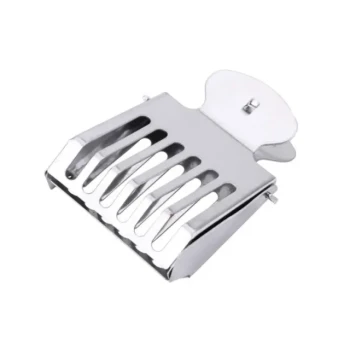
- Heavy Duty Stainless Steel Queen Bee Catcher Clip
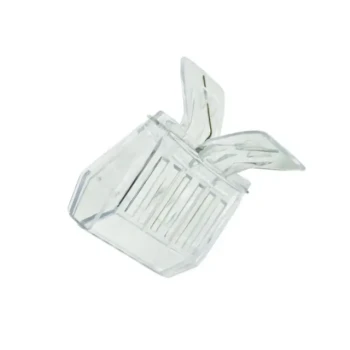
- Professional Queen Catcher and Introduction Queen Cage
- Professional Spring-Action Queen Catcher Clip
- Stainless Steel Queen Grafting Tool for Beekeeping and Bee Queen Grafting
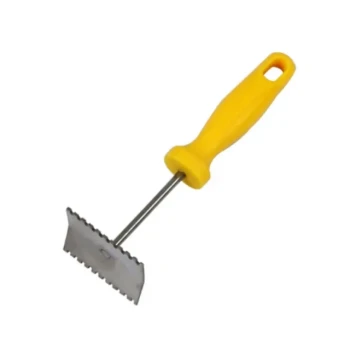
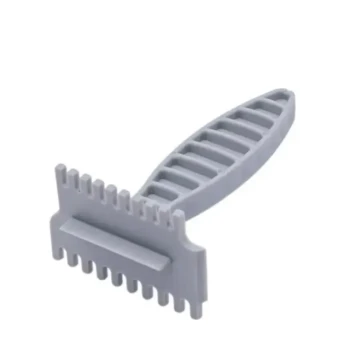
- Stainless Steel Scraper for Metal Queen Bee Excluders
People Also Ask
- What is the function of a queen clip catcher? Ensure Safe Queen Handling & Protect Your Colony
- What are the dual functions of queen bee catchers? Protect Your Queen with Isolation & Precision Management
- What are the advantages of using a queen clip catcher? Protect Your Queen with Precise, Stress-Free Handling Tools
- What is the function of queen clip catchers? Safely Handle Your Queen Bee
- What is the purpose of a queen catcher in beekeeping? Safely Handle Your Queen Bee