The "crush and strain" method is the standard and most practical technique for harvesting honey from a top-bar hive.
Because top-bar hives utilize frameless combs that are too fragile for centrifugal extractors, the process involves cutting the entire honeycomb from the wooden bar, physically crushing the wax cells to release the nectar, and filtering the resulting mash to separate the liquid honey from the beeswax.
Core Insight: Top-bar harvesting is inherently "destructive," meaning the bees’ honeycomb is removed rather than preserved for reuse. While this requires the colony to expend energy rebuilding wax, it simplifies the extraction process significantly and produces honey with a unique, pollen-rich profile.
The Mechanics of Crush and Strain
Step 1: Comb Removal
Unlike fixed-frame hives where frames are lifted out, top-bar harvesting requires precision with basic tools.
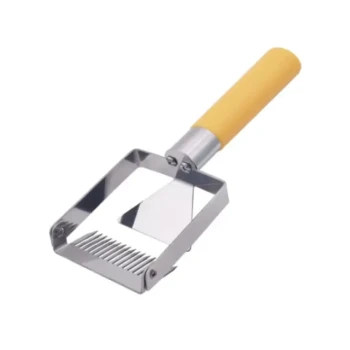
You simply use a sharp kitchen knife to sever the connection between the honeycomb and the wooden top bar.
The comb falls free, and the bar is returned to the hive (often with a small strip of wax left as a guide for future building).
Step 2: Mechanical Extraction
Once the comb is removed, the honey must be liberated from the capped cells.
This is done by mashing the comb in a large bowl or food-grade bucket using a standard kitchen implement, such as a potato masher.
The goal is to thoroughly break open every cell to ensure maximum honey release without pulverizing the wax into dust.
Step 3: Filtration
The final mixture is a slurry of liquid honey and beeswax particles.
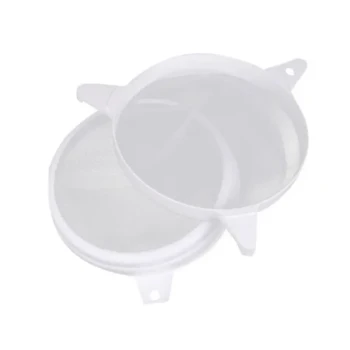
To separate them, the mixture is poured through a strainer system, often using cheesecloth or a dedicated bucket strainer.
Gravity pulls the honey through the mesh, leaving clean, valuable beeswax behind for processing.
Understanding the Trade-offs
The Impact on Honey Yield
The primary downside of this method is the workload it places on the colony.
In conventional hives, the comb is spun and returned intact, allowing bees to refill it immediately.
In top-bar hives, bees must consume resources to rebuild the crushed comb, which generally results in a lower total volume of honey produced per season.
The "Pollen Content" Factor
While volume may be lower, the quality is often considered superior by enthusiasts.
The primary reference notes that crushing the comb mixes more pollen into the honey compared to rotary extraction.
This results in a product that is often more flavorful, opaque, and nutritionally dense than clear, commercial honey.
The Wax Advantage
Because you are harvesting the entire comb, beeswax becomes a major harvest product rather than a scrap material.
Top-bar beekeepers often view this surplus wax as a primary benefit, essential for making candles, balms, or cosmetics.
Making the Right Choice for Your Goal
While crush and strain is the default, your specific objectives should dictate how you approach the harvest.
- If your primary focus is maximum honey volume: Recognize that the crush and strain method limits yield; ensure you leave enough stores for the bees to survive while they rebuild.
- If your primary focus is distinct presentation: Consider skipping the crushing step entirely for some bars and packaging sections as "cut comb," which is highly valued.
- If your primary focus is holistic hive products: Embrace the crush and strain method, as it balances honey production with a high yield of high-quality beeswax.
Top-bar beekeeping trades the efficiency of mechanization for the simplicity of a knife and a bucket, offering a harvest that is closer to the hive's natural state.
Summary Table:
| Feature | Description | Key Advantage |
|---|---|---|
| Core Method | Crush and Strain | Simple tools, no centrifuge needed |
| Honey Quality | Pollen-rich & dense | Superior flavor and nutritional profile |
| Wax Output | High volume | Plenty of wax for candles and cosmetics |
| Hive Impact | Comb is removed | Encourages fresh wax building by bees |
Scale Your Honey Production with HONESTBEE
Whether you are a commercial apiary or a global distributor, HONESTBEE provides the professional-grade equipment you need to succeed. We offer a comprehensive wholesale portfolio, including:
- Beekeeping Machinery: Precision hive-making and honey-filling machines.
- Essential Hardware: Durable tools designed for commercial-scale harvesting.
- Consumables & Merchandise: High-quality industry supplies and honey-themed cultural goods.
Ready to enhance your efficiency and product quality? Contact our experts today to discover our tailored wholesale solutions.
Related Products
- Top Bar Beehive for Beekeeping Wholesales Kenya Top Bar Hive
- Professional Stainless Steel Pry-Bar Hive Tool
- Long Langstroth Style Horizontal Top Bar Hive for Wholesale
- Professional Honey Uncapping Roller for Efficient Harvesting
- Stainless Steel Triangle Support Honey Strainer and Filters
People Also Ask
- How is burr comb and propolis removed from a top bar hive? A Practical Guide for Hive Maintenance
- How does comb construction differ between a top bar hive and a Langstroth hive? Choose the Best Method for Your Apiary
- Why do top bar hives require beekeepers to detach comb? Master the Detach-then-Lift Technique for Comb Safety
- How does the design of a top bar hive minimize disturbance to the bees during inspection? Achieve a Calmer, More Natural Approach
- What are the main differences between a top bar hive and a Langstroth hive? A Guide to Choosing Your Hive