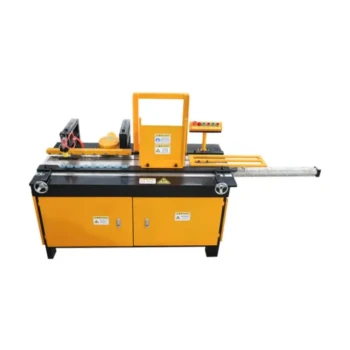
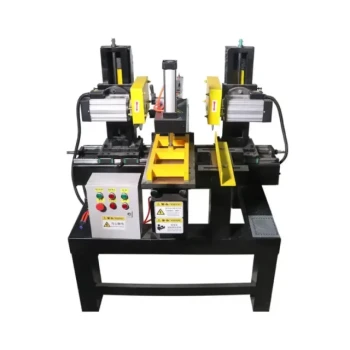
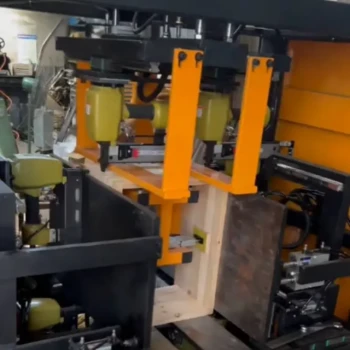
Industrial hive-making machines are the fundamental prerequisite for constructing scalable commercial apiaries. Their primary necessity lies in their ability to produce uniform, nested components and frames with absolute consistency. This standardization ensures that frames are fully interchangeable between different hives, which is the operational linchpin for efficient queen rearing, migratory beekeeping, and mechanized honey harvesting.
The necessity of this technology extends beyond simple production speed; it creates a standardized hardware ecosystem. By ensuring every component is identical, industrial machinery transforms beekeeping from a craft into a scalable industrial process where equipment compatibility drives efficiency.
The Power of Standardization
The core value of industrial hive-making machines is not just volume, but the creation of a standardized infrastructure. Without this, commercial scaling is operationally impossible.
Achieving Total Interchangeability
The most critical output of these machines is the interchangeability of frames and hive bodies. In a commercial setting, you must be able to move a frame from one colony to another without friction. This capability is essential for balancing resources between strong and weak colonies or managing queen rearing across thousands of hives.
Enabling Mechanized Harvesting
Modern apiaries rely on automated extraction and filtration equipment to process honey. Industrial machines ensure that every hive component fits perfectly into these automated lines, eliminating jams or breakages caused by irregular dimensions.
Facilitating Migratory Operations
For apiaries that transport hives to follow honey flows, standardized stacking is non-negotiable. Uniform components allow hives to be palletized and secured efficiently, maximizing space on trucks and ensuring stability during transport.
Operational Efficiency and Scale
Beyond the geometry of the hive, these machines address the economic and logistical challenges of managing large assets.
Reducing Labor and Acquisition Costs
Automated production significantly lowers the unit cost of individual hive components compared to manual assembly. It also reduces the labor intensity required for assembly and maintenance, allowing staff to focus on colony health rather than hardware construction.
Supporting Rapid Expansion
When an apiary needs to scale up quickly, manual construction becomes a bottleneck. Industrial machinery enables the mass production of infrastructure, allowing businesses to deploy thousands of new units rapidly during critical spring expansion windows.
Simplifying Asset Management
Standardization simplifies maintenance and inventory. Because parts are identical, broken components can be swapped out instantly without custom fitting, streamlining the management of fixed assets.
Precision and Biological Impact
High-precision manufacturing has direct implications for the biological health of the colony and the durability of the equipment.
Minimizing Biological Stress
Automated machines utilize high-precision woodworking to ensure tight closures and exact tolerances. This eliminates gaps that can lead to "robbing" by other bees and minimizes external heat loss, providing a stable environment for the colony.
Understanding the Trade-offs
While industrial machinery is necessary for scale, it introduces specific constraints that operators must acknowledge.
High Initial Capital Expenditure
Implementing industrial hive-making machinery requires a significant upfront investment in fixed assets. This shifts the cost structure from variable labor costs to heavy initial capital outlay, which may increase financial risk for smaller operations.
Reduced Flexibility
Once a production line is tooled for a specific standard, changing hive designs or dimensions becomes difficult and costly. Apiaries must be certain of their preferred hive specifications before committing to mass production, as the machinery favors repetition over customization.
Making the Right Choice for Your Goal
The decision to invest in industrial manufacturing capabilities depends on your specific operational targets.
- If your primary focus is Operational Efficiency: Prioritize machinery that guarantees 100% frame interchangeability to streamline queen rearing and harvesting.
- If your primary focus is Rapid Scale-Up: Focus on high-throughput machinery that reduces the per-unit acquisition cost to maximize your asset budget.
- If your primary focus is Colony Health: Ensure the machinery offers high-precision joinery to prevent thermal loss and robbing gaps.
Industrial hive-making machines are not merely tools for construction; they are the strategic enablers that allow apiaries to transition from labor-intensive management to efficient, mechanized agriculture.
Summary Table:
| Key Necessity | Primary Benefit | Operational Impact |
|---|---|---|
| Standardization | Total interchangeability of frames/bodies | Enables efficient resource balancing and queen rearing |
| Mechanized Harvesting | Uniform dimensions for automated lines | Eliminates equipment jams and speeds up honey processing |
| Logistical Efficiency | Optimized palletizing and stacking | Maximizes transport safety and space for migratory beekeeping |
| Rapid Scalability | High-throughput mass production | Allows for quick deployment of thousands of units during expansion |
| Biological Precision | Tight closures and exact tolerances | Minimizes heat loss and prevents robbing by other bees |
Scale Your Apiary with Industrial Precision
At HONESTBEE, we specialize in transforming beekeeping into a scalable, high-efficiency industrial process. As a dedicated partner to commercial apiaries and distributors, we provide a comprehensive wholesale offering that covers everything from specialized hive-making and honey-filling machines to essential industry consumables and honey-themed cultural merchandise.
Whether you are looking to reduce labor costs through automation or need a complete supply of high-precision hardware to ensure equipment compatibility, our experts are here to help you build a standardized infrastructure that drives growth.
Ready to upgrade your production?
Contact HONESTBEE today to explore our full spectrum of beekeeping machinery and tools.
References
- I.H. Ojo, S.O. Sennuga. Effect of training of women beekeepers on production of beehive products in Ogun State, Nigeria. DOI: 10.4314/agrosh.v21i1-2.2
This article is also based on technical information from HonestBee Knowledge Base .
Related Products
- High-Efficiency Pneumatic Bee Hive Making Machine for Rapid Box Assembly
- Beehive Handle and Frame Rest Cutting Machine: Your Specialized Hive Machine
- Beehive Machine Double End Saw for Precision Hive Component Manufacturing
- Mini Desktop Bee Hive Frame Forming Making Machine
- Automatic High-Speed Bee Hive Box Stapling Machine
People Also Ask
- How does the introduction of professional beehive-making machinery benefit sustainable beekeeping? Scale Your Apiary
- Why is specialized beehive-making machinery critical for low-defense breeding? Enhance Selection with Precision Tools
- How does the introduction of specialized beehive making machinery contribute to increasing the scale of regional beekeeping industries?
- What is the importance of specialized beehive making machinery in a circular bio-economy? Build Local Sustainability
- Why is specialized beehive-making machinery essential? Scale Your Apiary with Precision Industrial Standards