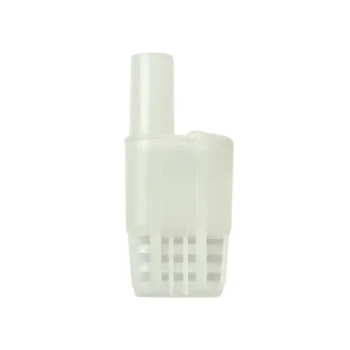
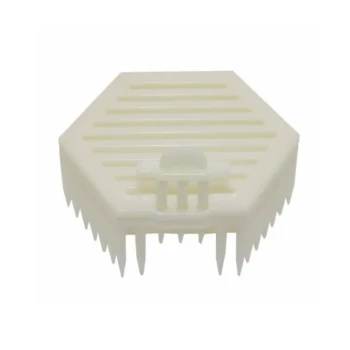
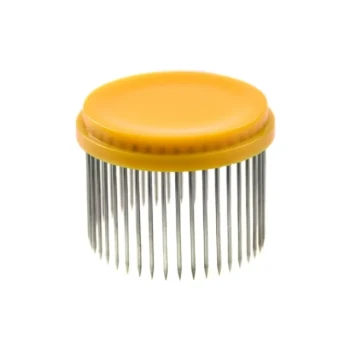
The optimal placement for a queen bee cage is directly in the center of the brood nest. specifically between frames 4 and 5 in an 8-frame hive, or between frames 5 and 6 in a 10-frame hive. Positioning the cage here ensures the queen is surrounded by the highest density of active worker bees, maximizing pheromone distribution.
Core Takeaway: Successful re-queening is not just about physical location; it is about chemical integration. The queen cage acts as a crucial buffer, allowing the colony to acclimate to the new queen's pheromones while protecting her from immediate aggression or rejection.
The Strategy Behind Central Placement
Maximizing Worker Contact
The center of the hive is the hub of activity. By placing the cage between the central frames (4-5 or 5-6 depending on box size), you position the queen exactly where the majority of worker bees are active.
Leveraging the Brood Nest
Worker bees congregate in the center to nurture the existing brood. Placing the new queen here ensures her pheromones flow effectively through the busiest part of the colony.
Accelerating Acceptance
The goal of introduction is familiarity. High traffic around the cage ensures that the maximum number of bees encounter the new queen's scent, speeding up the colony's acceptance of her status.
The Protective Function of the Cage
Preventing Physical Aggression
The cage provides essential physical protection. Existing bees often view a new queen as a threat and may attempt to attack or "ball" her; the cage prevents this injury while acclimation occurs.
Preventing Queen Escape
A new queen is often disoriented and skittish. Without the confinement of the cage, she might fly away immediately upon opening the hive, necessitating a complete restart of the process.
Controlled Release
The cage facilitates a gradual introduction. It ensures the queen remains in the hive long enough for her pheromones to disperse before she is fully released into the general population.
Common Pitfalls to Avoid
Avoiding Peripheral Placement
Do not place the queen cage on the outer frames of the box. These areas have fewer bees, lower temperatures, and poor pheromone circulation, significantly lowering the chances of successful acceptance.
Neglecting Hive Conditions
Placement is irrelevant if the environment is hostile. A hive lacking food, water, or proper ventilation is stressed and more likely to reject a new queen regardless of where she is placed.
Ignoring Health Indicators
Before introduction, you must verify the hive is free of disease and pests. Introducing a healthy queen into a sick hive compromises her health and wastes the time invested in the re-queening process.
Making the Right Choice for Your Goal
To ensure the highest probability of success, tailor your approach based on the current state of your apiary:
- If your primary focus is rapid acceptance: Place the cage strictly between the center frames (4-5 or 5-6) where bee density is highest.
- If your primary focus is colony stability: Inspect the hive for food, water, and disease before attempting introduction to reduce colony stress.
- If your primary focus is risk mitigation: Never release the queen immediately; rely on the cage to prevent escape and physical attacks during the transition.
Correct placement turns a risky introduction into a routine, successful transition for your colony.
Summary Table:
| Placement Aspect | Optimal Location | Key Benefit |
|---|---|---|
| Physical Position | Center of the brood nest | Highest worker density and heat |
| Frame Reference | Between 4-5 (8-frame) or 5-6 (10-frame) | Maximum contact with nurse bees |
| Strategic Goal | Chemical integration | Accelerated pheromone acceptance |
| Protection | Within protective cage | Prevents "balling" and accidental escape |
Maximize Your Apiary Productivity with HONESTBEE
Successful re-queening is the backbone of a thriving colony, but it requires the right tools to execute perfectly. At HONESTBEE, we specialize in supporting commercial apiaries and distributors with a comprehensive range of high-quality beekeeping equipment. From precision-engineered queen bee cages and hive-making machinery to professional honey-filling systems, we provide everything your business needs to scale efficiently.
Whether you are looking to source wholesale beekeeping consumables or specialized hardware, our expertise ensures your operation stays ahead of the curve. Contact us today to discuss how our tailored supply solutions can enhance your production and streamline your beekeeping operations.
Related Products
- Durable Galvanized Steel Spring Queen Bee Cage
- Professional Queen Cage with Sliding Gate and Feeder Plug
- Professional Queen Bee Introduction and Transport Cage
- Professional Bamboo Queen Isolation Cage
- Professional Multi-Functional Queen Bee Cage
People Also Ask
- Why are specialized queen bee cages used for the banking of mated queen bees? Maximize Commercial Apiary Storage Efficiency
- What is the mechanism of action for using temporary queen bee cages? Master Successful Queen Introduction
- What is the step-by-step process for installing a queen bee's cage onto a frame? Ensure Hive Acceptance Safely
- What are the advantages and disadvantages of introducing a queen bee by embedding the cage? Boost Your Queen Acceptance
- How long does it typically take for bees to adjust to a new queen? Master the 2-7 Day Requeening Window