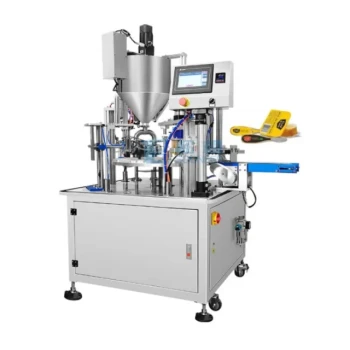
Automated honey filling and processing lines represent a strategic shift from manual labor to industrial precision. These systems primarily streamline post-harvest operations for large-scale apiaries, significantly increasing labor efficiency. By automating the extraction and packaging phases, commercial beekeepers can reallocate critical human resources back to core colony management tasks.
Core Takeaway While automation delivers immediate gains in bottling speed and hygiene, its deeper value for large apiaries is operational freedom. By minimizing the labor required for processing, apiaries can dedicate more time to vital husbandry—specifically the timely treatment of Varroa destructor mites—which directly correlates to reduced winter mortality rates and long-term business sustainability.
Reallocating Labor to Colony Health
Shifting Focus to Pest Management
The primary operational advantage of automation is the liberation of time. Manual processing consumes vast amounts of labor during the harvest season.
By installing automated lines, beekeepers can redirect this effort toward biological threats. Specifically, this allows for the timely and consistent treatment of Varroa destructor mites. Effective management of these pests is a critical factor in lowering colony mortality rates during the winter months.
Streamlining Post-Harvest Workflows
For large-scale operations, the volume of honey produced can create a bottleneck that distracts from husbandry. Automated equipment transforms this bottleneck into a seamless flow.
This ensures that the "harvest-to-market" cycle does not cannibalize the time needed to prepare hives for the off-season. The machinery handles the product, while the apiarists handle the bees.
Ensuring Product Quality and Standardization
Precision Weighing and Consistency
Industrial-grade filling machines utilize high-precision weighing sensors. This ensures that every unit bottled meets exact net weight specifications, a requirement for large-scale commercial distribution.
This consistency creates a standardized product that manual filling cannot match. It facilitates the efficient transformation of high production volumes into reliable commercial revenue.
Maintaining Chemical Integrity
Automated systems use precision pumping to control flow without degrading the honey's quality. This is vital for maintaining stable physical and chemical indicators.
Specifically, these systems help preserve optimal Hydroxymethylfurfural (HMF) levels. By minimizing exposure and handling time, the chemical composition of the honey remains consistent with high-quality standards.
Hygiene and Sterility
Vacuum suction technology and enclosed filling environments are standard in industrial automated lines. These features drastically reduce the risk of secondary contamination.
By removing human contact from the filling process, apiaries can ensure strict hygiene. This sterile packaging is often a prerequisite for entering broad retail and wholesale channels.
Operational Considerations and Trade-offs
The Shift to Industrial Processes
Adopting this technology transitions an apiary from traditional methods to high-precision industrial processes. While this enhances market responsiveness, it requires a shift in operational mindset from "craft" to "production."
Dependence on Technical Infrastructure
Automated systems introduce a reliance on machinery maintenance and calibration. Unlike manual tools, an automated line requires strict adherence to cleaning protocols and mechanical upkeep to prevent downtime during critical harvest windows.
Making the Right Choice for Your Goal
To maximize the return on investment in automated processing, align the technology with your primary operational objectives:
- If your primary focus is Colony Survival: Leverage the labor hours saved by automation to increase the frequency and precision of Varroa mite treatments before winter.
- If your primary focus is Retail Expansion: Rely on the machine's vacuum suction and precision weighing to meet the strict hygiene and standardization requirements of major grocery chains.
- If your primary focus is Supply Chain Efficiency: Use the increased throughput to shorten the harvest-to-market cycle, allowing for faster revenue realization.
Automation is not just about filling bottles faster; it is about buying the time necessary to keep your colonies alive and your product consistent.
Summary Table:
| Feature | Impact on Operations | Long-term Value |
|---|---|---|
| Automated Labor | Reallocates staff from bottling to hive husbandry | Lower winter mortality via timely Varroa treatment |
| Precision Filling | Ensures exact net weight and standardized packaging | Seamless entry into large-scale retail & distribution |
| Vacuum Technology | Maintains HMF levels and prevents contamination | Guaranteed product purity and chemical integrity |
| Process Flow | Eliminates harvest bottlenecks | Shortened harvest-to-market cycle for faster ROI |
Scaling Your Apiary Operation with HONESTBEE
Transitioning from manual labor to industrial precision is the key to sustainable growth for commercial apiaries and distributors. HONESTBEE provides the comprehensive wholesale solutions you need to make that leap. From high-precision honey-filling and hive-making machinery to essential beekeeping tools and industry consumables, we supply the hardware and expertise to transform your workflow.
Why partner with HONESTBEE?
- Industrial Efficiency: Our automated lines free up your team to focus on colony health and Varroa management.
- Standardized Quality: Achieve the strict hygiene and weighing standards required by global retail chains.
- Full Spectrum Support: We cater to everything from specialized hardware to honey-themed cultural merchandise.
Ready to enhance your production capacity and ensure long-term colony survival? Contact our experts today to build your customized processing solution.
References
- Sabrina Kuchling, Robert Brodschneider. Investigating the role of landscape composition on honey bee colony winter mortality: A long-term analysis. DOI: 10.1038/s41598-018-30891-y
This article is also based on technical information from HonestBee Knowledge Base .
Related Products
- Fully Automatic Honey Filling Packaging Machine for Processing Line
- Automatic Honey Filling and Filtering Machine for Beekeeping Bottle Filling
- Precision Automated Packaging Turntable Honey Spoon Filling Sealing Packing Machine
- Precision Durable Efficient HONESTBEE Rotary Honey Filling Machine
- Semi Automatic Small Honey Bottle Filling Machine Honey Filler
People Also Ask
- Why are fully automatic honey filling and packaging lines essential? Boost Your Honey's Market Value and Quality
- What is a fully-automatic honey filler? Streamline Your Production with High-Precision Automation
- How do automated honey filling and packaging machines affect profitability? Boost Margins with HONESTBEE Technology
- How do automated honey filling and packaging machines contribute to the market value of honey products? Maximize Your ROI
- How do industrial-grade automated honey filling and packaging machines mitigate the risk of physical contamination?