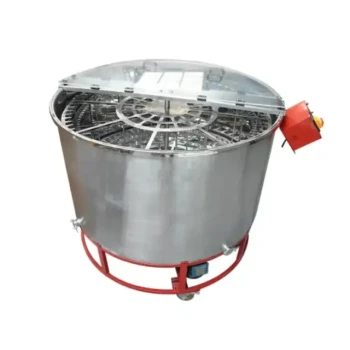
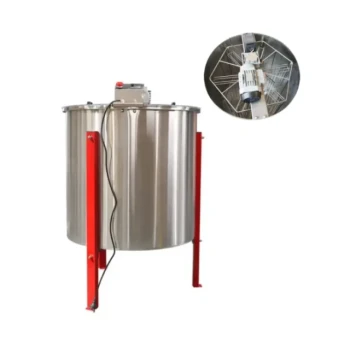
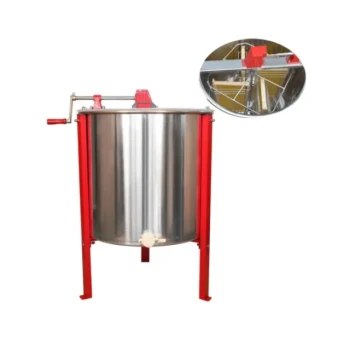
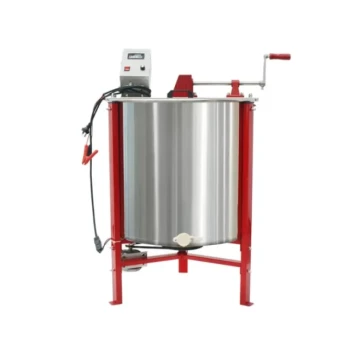
The fundamental operational difference lies in the power source. An electric honey extractor utilizes an electric motor to spin the hive frames automatically. In contrast, a manual extractor relies entirely on the operator to turn a hand crank to generate the necessary centrifugal force.
While the mechanical goal is the same—spinning honey out of the comb—the power source dictates the workflow. Manual models offer tactile control for small batches, while electric models provide the sustained power required for efficiency in larger apiaries.
The Mechanics of Extraction
Manual Operation
A manual extractor requires you to provide the energy. You operate a hand crank to spin the internal basket holding the frames.
Electric Automation
Electric extractors are driven by a motor connected to a power supply. This automates the spinning process, maintaining consistent speed without physical intervention from the beekeeper.
Operational Feedback
Manual extraction offers very good speed control because you can physically feel the resistance of the honey leaving the comb. Electric models offer good control but lack that direct tactile feedback.
Assessing Scale and Efficiency
The Hobbyist Threshold
For apiaries with eight to ten hives or fewer, a manual extractor is often the standard choice. The physical effort required is manageable for these smaller quantities of honey.
Volume and Capacity
Electric extractors are designed for medium to large-scale operations, typically recommended for those with more than ten hives. They can handle significantly larger batches, with some commercial models holding up to 100 frames at once.
Frame Placement
It is important to note that both manual and electric models can utilize tangential or radial frame placements. The method of spinning (flipping frames vs. spinning both sides at once) is a feature of the basket design, not the power source.
Understanding the Trade-offs
Cost vs. Labor
Manual extractors are cost-effective and have a lower barrier to entry. However, the trade-off is a significantly higher demand on your time and physical energy during harvest.
Physical Exertion
Manual extraction is physically demanding and can become exhausting during large harvests. Electric extractors are superior for beekeepers with physical limitations or those who wish to avoid the repetitive motion of cranking.
Material Quality
While electric extractors are typically constructed from durable stainless steel, manual models vary. Manuals are available in stainless steel but are also frequently found in food-grade plastic, which contributes to their lower price point.
Making the Right Choice for Your Goal
The decision ultimately comes down to the balance between your budget, your physical capabilities, and the size of your operation.
- If your primary focus is budget and small-scale control: Choose a manual extractor. It is ideal for hobbyists with fewer than 8-10 hives who value a hands-on experience and lower equipment costs.
- If your primary focus is efficiency and volume: Choose an electric extractor. It is the necessary investment for managing more than 10 hives, significantly reducing the labor and time required for harvest.
Select the tool that matches not just your current hive count, but your future growth and physical comfort.
Summary Table:
| Feature | Manual Honey Extractor | Electric Honey Extractor |
|---|---|---|
| Power Source | Hand Crank (Human Power) | Electric Motor (Automation) |
| Ideal Scale | 1-10 Hives (Hobbyist) | 10+ Hives (Commercial/Growing) |
| Labor Intensity | High (Physically demanding) | Low (Sustained automation) |
| Speed Control | Tactile/Manual feedback | Electronic settings/Variable speed |
| Typical Material | Plastic or Stainless Steel | High-grade Stainless Steel |
| Cost | Budget-friendly | Higher investment |
Scale Your Honey Production with HONESTBEE Professional Equipment
Whether you are managing a growing apiary or operating a high-volume commercial honey business, HONESTBEE provides the precision tools you need to maximize your harvest. We specialize in catering to commercial apiaries and distributors, offering a comprehensive wholesale range of:
- High-Capacity Extractors & Machinery: From automated honey-filling machines to industrial hive-making hardware.
- Professional Beekeeping Tools: A full spectrum of equipment designed for durability and efficiency.
- Essential Consumables: Every industry staple required to maintain your operations.
Ready to upgrade your workflow from manual labor to automated efficiency? Contact HONESTBEE today to discuss our wholesale offerings and discover how our specialized beekeeping solutions can drive your business growth.
Related Products
- HONESTBEE 72 Frame Industrial Electric Honey Extractor for Beekeeping
- Commercial Electric 12 Frame Honey Extractor Spinner Motorized Honey Extractor
- HONESTBEE 3-Frame Manual Acrylic Honey Extractor
- electric honey extractor honey centrifuge 3 frame honey extractor stainless steel honey frame extractor
- HONESTBEE 6 Frame Self Reversing Electric Honey Extractor for Beekeeping
People Also Ask
- What is the importance of balancing honeycomb frames within a honey extractor? Ensure Stability and Protect Machinery
- How is honey separated from the frames after they are uncapped? Efficient Extraction Methods for High Yields
- What are the main benefits of using a honey extractor? Maximize Yields and Protect Your Honeycomb
- What are the recommended methods for removing honey from the honeycomb? Top Extraction Techniques for Maximum Efficiency
- How do manual honey extractors compare to electric honey extractors? Choosing the Right Tool for Your Apiary Growth