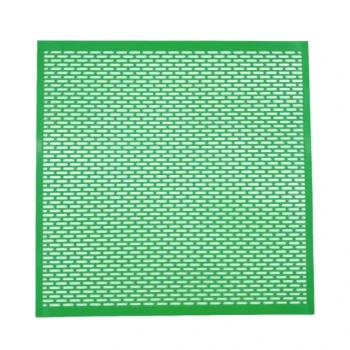
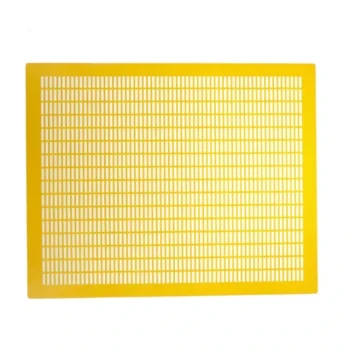
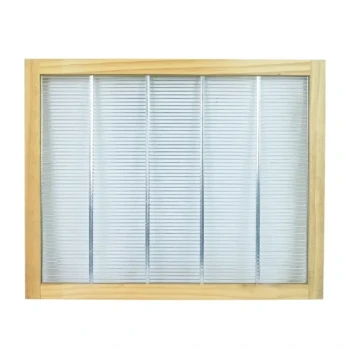
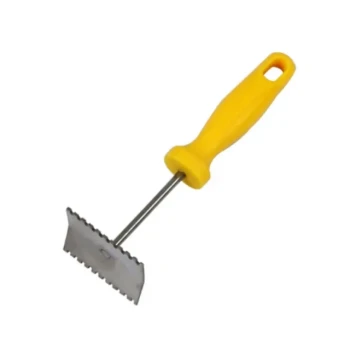
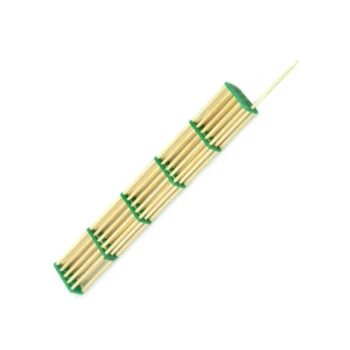
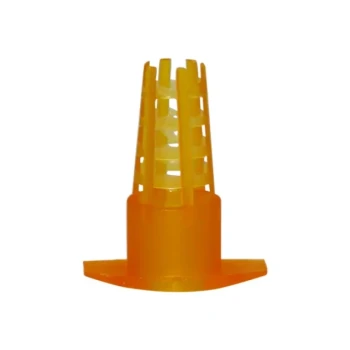
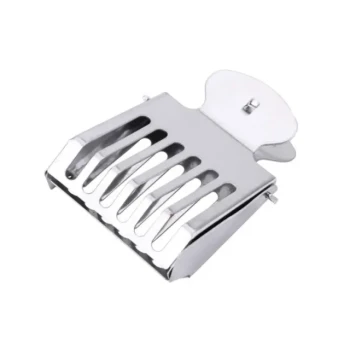
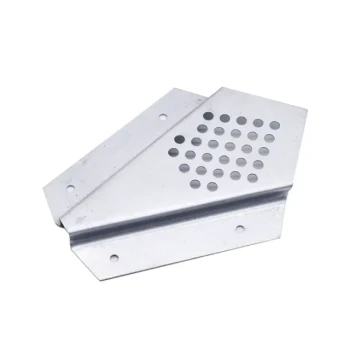
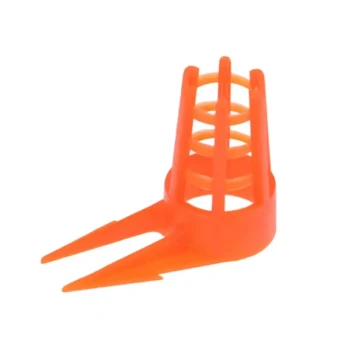
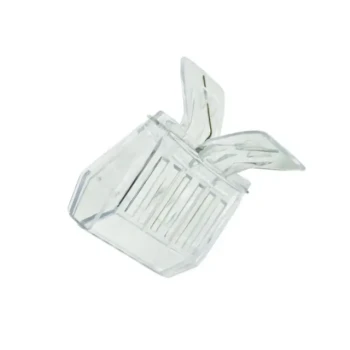
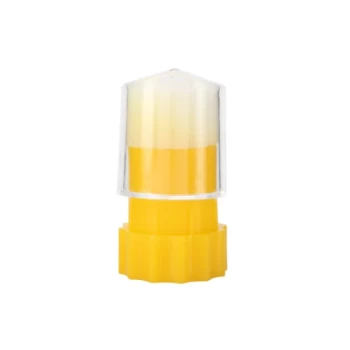
A Queen Excluder functions as a precision mechanical filter designed to leverage the physical size difference between bee castes. It consists of a metal or plastic grid placed between the hive's brood chamber and the honey supers, featuring spacing wide enough for smaller worker bees to traverse but too narrow for the larger queen and drones. In commercial beekeeping, its primary purpose is to restrict the queen to the lower brood nest, preventing her from laying eggs in the upper honey storage areas.
The Queen Excluder maximizes honey purity by strictly compartmentalizing the hive; it ensures that honey supers remain dedicated solely to storage, keeping the harvest free of larvae, eggs, and brood impurities.
The Mechanical Design Principle
Exploiting Size Differentials
The fundamental mechanism of the Queen Excluder is based on the specific anatomical size difference between the queen bee and the worker bees.
The grid is engineered with strict tolerances. The spacing is calculated to be just large enough for the foraging workforce to pass through unhindered to store nectar.
Simultaneously, the spacing is too tight for the larger thorax of the queen bee (and male drones). This effectively creates a physical boundary that segregates the colony based on caste.
Operational Function in Commercial Beekeeping
Segregating the Hive
In a standard vertical hive configuration, the excluder is installed horizontally between the bottom boxes (brood chamber) and the upper boxes (honey supers).
This forces the queen to remain in the bottom section where she continues to lay eggs and maintain the colony's population.
Ensuring Honey Purity
By physically blocking the queen's ascent, the excluder prevents "brood in the supers."
This guarantees that the frames removed for extraction contain only clean honey and wax. It eliminates the risk of harvesting frames contaminated with eggs or developing larvae, which significantly improves the quality of the final product.
Streamlining Extraction
When honey supers are free of brood, the harvesting process becomes much more efficient.
Beekeepers do not need to sort through frames to separate brood from honey, and the process of removing bees from the supers is simplified, as nurse bees are less aggressive when there is no brood to defend in the honey supers.
Advanced Colony Management
Beyond simple honey production, the excluder is a critical tool for biological management.
It is used to isolate the queen during artificial queen rearing processes or to regulate colony structure during swarm control measures.
Understanding the Trade-offs
The "Honey Excluder" Debate
While the device is standard in many commercial operations, it is classified as optional equipment and its use is sometimes controversial.
Some beekeepers argue that the barrier can act as a bottleneck, potentially slowing down worker bees as they move through the grid to deposit nectar.
Necessity vs. Preference
The excluder is not biologically required for the bees' survival. It is strictly a tool for the beekeeper's convenience and quality control.
If the grid becomes clogged with wax or propolis, or if the spacing is imperfect, it can hinder the hive's overall productivity.
Making the Right Choice for Your Goal
The decision to use a Queen Excluder depends on your specific production standards and management style.
- If your primary focus is maximum honey purity: Use an excluder to guarantee that your extraction frames are 100% free of eggs and larvae.
- If your primary focus is ease of harvest: Use an excluder to simplify the removal of bees and frames, as you will not have to sort through brood during extraction.
- If your primary focus is specialized breeding: Use an excluder to precisely isolate the queen for rearing operations or swarm management.
Ultimately, the Queen Excluder is the industry standard for ensuring a clean, separation-based harvest workflow.
Summary Table:
| Feature | Specification/Benefit |
|---|---|
| Mechanism | Precision mechanical filtration based on thorax size differential |
| Primary Role | Confining the queen to the brood chamber to prevent egg laying in supers |
| Material Options | Durable Galvanized Steel, Stainless Steel, or High-Density Plastic |
| Honey Quality | 100% purity; eliminates risk of larvae or eggs in honey extraction |
| Operational Gain | Faster harvesting and simplified queen management in large-scale apiaries |
Scale Your Honey Production with HONESTBEE Precision Equipment
Maximize your apiary's efficiency and ensure premium honey quality with HONESTBEE. As a dedicated partner to commercial apiaries and distributors, we provide a full spectrum of professional-grade beekeeping tools and machinery.
From high-precision queen excluders and hive-making hardware to advanced honey-filling machines and industry-essential consumables, our portfolio is designed to streamline your workflow and boost your bottom line.
Ready to upgrade your wholesale supply? Contact us today to discover how HONESTBEE’s comprehensive equipment solutions can empower your business growth.
References
- Jana Bundschuh, Christopher Brock. Effects of queen excluders on the colony dynamics of honeybees (Apis mellifera L.) under biodynamic management. DOI: 10.1007/s13592-023-01041-9
This article is also based on technical information from HonestBee Knowledge Base .
Related Products
- High Performance Plastic Queen Excluder for Beekeeping and Apiary Management
- Professional Plastic Queen Excluder for Modern Beekeeping
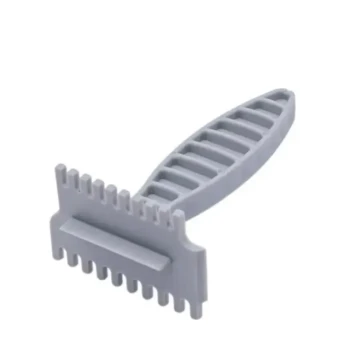
- Lightweight Durable Plastic Queen Excluder Scraper for Beekeeping
- Metal Queen Bee Excluder for Beekeeping
- Premium Wood Framed Metal Wire Queen Bee Excluder
People Also Ask
- What are the characteristics of a plastic queen excluder? Key Benefits for Cost-Effective Beekeeping
- What are the operational and cost advantages of using plastic queen excluders over metal or wire excluders in commercial hive management? Discover how they reduce labor, prevent wing damage, and lower total costs.
- What types of queen excluders are available for beekeepers? Choose the Right Tool for Your Hive
- Why are standardized hive frames and queen excluders essential for maintaining honey purity and quality? Scale Your Purity
- Do plastic queen excluders work? A Cost-Effective Solution for Modern Apiaries