The primary function of a beehive equipped with a honey super is to facilitate standardized, modular colony management by vertically separating reproductive areas from food storage. In commercial beekeeping, this setup designates the lower "brood chamber" for the queen’s egg-laying and larval development, while the upper "honey supers" are reserved exclusively for worker bees to store surplus honey. This architectural distinction allows beekeepers to harvest honey efficiently without disrupting the critical reproductive cycle of the colony below.
The honey super system solves the fundamental conflict between harvesting and hive health. By compartmentalizing the hive, it allows for high-volume production while maintaining a stable, undisturbed environment for the brood to mature.
The Mechanics of Vertical Separation
Distinct Functional Zones
The modern beehive is not a single container, but a stratified system. The brood chamber serves as the biological engine of the hive, located at the bottom where the colony raises young.
The honey super acts as a vertical expansion unit placed on top. It is strictly a storage facility for excess resources, kept distinct from the nursery operations below.
Modular Scalability
This design relies on standardized modularity. As nectar flow increases, beekeepers can stack additional supers to accommodate volume.
This flexibility prevents the hive from becoming static. The volume of the hive grows in direct proportion to the colony's productivity, ensuring bees always have space to work.
Operational Efficiency and Colony Health
Streamlined Harvesting
The separation of functions is critical for harvest efficiency. Because the honey is stored in dedicated upper boxes, beekeepers can remove and process these frames without sifting through brood combs.
This segregation maintains honey purity. It ensures that the harvested product is free from the incidental debris associated with larval development.
Swarm Suppression
Crowding is a primary trigger for the natural swarming instinct. By adding honey supers, beekeepers provide immediate relief to congestion in the main brood chamber.
This additional volume encourages bees to move upward to store resources. This movement alleviates pressure in the brood nest, significantly reducing the likelihood of the colony splitting and swarming during peak season.
Minimizing Defensive Behavior
Professional hive structures utilize precise bee space designs to facilitate gentle management. When bees are not physically crushed or agitated during inspections, their defensive recruitment behaviors are minimized.
This is particularly vital when managing aggressive strains, such as Africanized honeybees. A properly structured super allows for harvesting with minimal physical interference, ensuring the safety of the operator.
Common Pitfalls to Avoid
Premature Expansion
Adding a honey super before the colony is ready can be detrimental. If the brood chamber is not yet robust, the extra space becomes a burden rather than an asset.
Bees must heat and defend every inch of the hive. Expanding too quickly can stretch the colony's resources, making them vulnerable to pests like wax moths or small hive beetles.
Neglecting Maintenance
The honey super is not a "set it and forget it" tool. It requires active management to ensure it remains a clean, pest-free environment.
Failure to monitor the supers can lead to equipment degradation. To maximize production during the honey flow, the supers must be maintained as high-quality storage vessels.
Making the Right Choice for Your Goal
To effectively utilize honey supers, you must align their deployment with the current state of your apiary.
- If your primary focus is maximizing honey yield: Add supers immediately at the onset of peak nectar flows to encourage upward movement and storage away from the brood.
- If your primary focus is colony expansion: Delay adding supers until the brood chamber is fully populated to ensure the colony is strong enough to defend the additional vertical space.
- If your primary focus is safety and speed: Invest in professional equipment with precise bee space dimensions to reduce defensive triggers during the harvesting process.
Success in commercial beekeeping relies on respecting the vertical hierarchy of the hive; protect the brood below to ensure the surplus above.
Summary Table:
| Feature | Purpose | Key Benefit for Beekeepers |
|---|---|---|
| Brood Chamber | Queen's egg-laying & larval development | Maintains colony population & health |
| Honey Super | Dedicated storage for surplus nectar | Facilitates clean, efficient harvesting |
| Vertical Stacking | Modular expansion during nectar flow | Prevents swarming by reducing congestion |
| Bee Space Design | Precision gaps between hive components | Minimizes bee defensive behavior & crushing |
| Queen Excluder | Barrier between chamber and super | Ensures honey purity (no larvae in honey) |
Scale Your Apiary with HONESTBEE Professional Solutions
Maximize your honey yield and operational efficiency with HONESTBEE, the trusted partner for commercial apiaries and global distributors. We provide a comprehensive range of high-performance beekeeping tools, from precision-engineered honey supers to industrial-grade honey-filling machines and hive-making equipment.
Whether you are looking for durable hardware or essential industry consumables, our wholesale portfolio is designed to support high-volume production while ensuring colony health. Contact us today to discuss your equipment needs and discover how our expert manufacturing can streamline your beekeeping business.
References
- Shelke RT, Kolambkar RA. Economic analysis of beekeeping (Apis cerana indica) in South-Goa district of Goa state. DOI: 10.22271/chemi.2020.v8.i4e.10037
This article is also based on technical information from HonestBee Knowledge Base .
Related Products
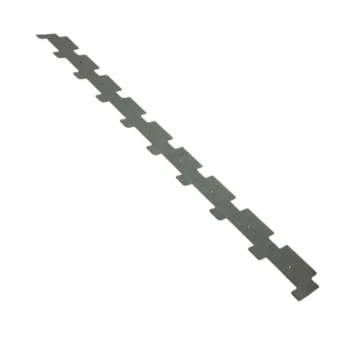
- Heavy Duty Castellated Iron Frame Spacer for Honey Supers
- Durable 16 Way Circular Bee Escape for Efficient Honey Harvesting
- High-Efficiency Diamond Maze Bee Escape for Clearing Supers
- Honey Concentrating Vacuum Heating Thickening Machine Dehumidifier for Honey
- Economy Small Scale Honey Dryer Dehumidifier Thickening Machine
People Also Ask
- What are honey super frames and what foundation options are available? Choose the Best Support for Your Bees
- What are the reasons and drawbacks of using nine frames in a ten-frame honey super? Boost Extraction Speed Today
- What are honey super frames and how many are needed per box? A Beekeeper's Essential Guide
- What are honey super frames and their foundation options? Choose the Best Support for Your Hive's Honey Production
- Why might a beekeeper use fewer than the standard number of frames in a honey super? Boost Extraction Efficiency