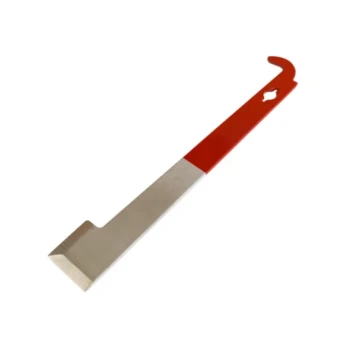
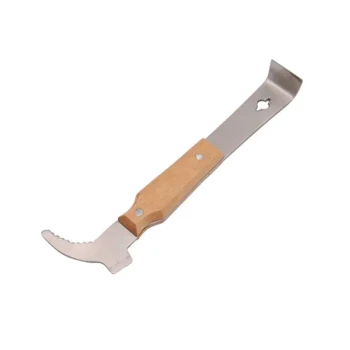
A beekeeping grafting tool is a precision instrument primarily designed to lift and transfer honeybee larvae from honeycombs without inflicting physical damage. Its core function is to facilitate the safe movement of delicate larvae—specifically 3-day-old specimens for immune response experiments, or larvae as young as 12 to 24 hours for rearing—into collection containers or queen cups while maintaining their structural integrity.
The essence of the grafting tool is not just transport, but preservation. By allowing the transfer of the larva along with a small amount of royal jelly, the tool prevents damage to the fragile exoskeleton, which is the single most critical factor for ensuring larval survival and valid experimental data.
The Mechanics of Safe Larval Transfer
Precision Tip Design
The grafting tool features a specialized, often thin and flexible tip. This design allows the operator to slide the instrument underneath the larva within the honeycomb cell.
Inclusion of Royal Jelly
A key function of the tool is to lift a small amount of the original royal jelly along with the larva. This acts as a cushion during transport and ensures the larva does not dry out, significantly increasing acceptance rates by nurse bees or survival in culture plates.
Protecting the Exoskeleton
The primary engineering goal of the tool is to prevent mechanical injury to the larval exoskeleton (epidermis). Even microscopic damage to the outer layer can trigger an immune response or lead to mortality, which would ruin the validity of subsequent biological experiments.
The Role of Timing in Collection
Handling 3-Day-Old Larvae
According to primary research protocols, this tool is essential for collecting 3-day-old larvae. These specimens are often targeted for immune response experiments where the physiological baseline of the bee must remain unaltered by the collection process.
Handling 12-24 Hour Larvae
For applications requiring even higher precision, such as in vitro rearing or queen breeding, the tool is capable of moving larvae as young as 12 to 24 hours (L1 stage). These larvae are microscopic and extremely fragile, requiring the tool (such as a Swiss grafting tool or metal transfer spoon) to act as a non-destructive support system.
Ensuring Experimental Uniformity
Using a grafting tool allows researchers to select larvae of an exact age. This uniformity is critical when comparing developmental stages or analyzing pathogen inoculation results, ensuring that all test subjects start from an identical baseline.
Understanding the Trade-offs
Mechanical Skill vs. Tool Quality
While the tool is designed for precision, it relies heavily on the manual dexterity of the user. A "Swiss" style tool offers high flexibility, but a rigid metal spoon may offer more stability; the wrong choice or poor technique can still crush the larva despite the tool's design.
Contamination Risks
The tool itself can become a vector for pathogens. Because honeybee larvae are highly susceptible to bacteria and fungi, the grafting tool must be rigorously sterilized. Failing to maintain a sterile environment during the transfer process can introduce microbial contamination, leading to abnormal development or death.
Making the Right Choice for Your Goal
Whether you are conducting laboratory research or managing a hive, the application of the tool changes slightly based on your objective.
- If your primary focus is Immune Response Experiments: Prioritize a tool that can handle 3-day-old larvae without scratching the exoskeleton to avoid triggering false immune markers.
- If your primary focus is Queen Rearing or In Vitro Culture: Select a high-precision micro-tool (like a Swiss grafting tool) capable of lifting 12-24 hour larvae with a bed of royal jelly to ensure maximum acceptance.
Ultimately, the grafting tool serves as the bridge between the natural hive environment and controlled scientific observation, ensuring the biological subject remains viable and unaltered.
Summary Table:
| Feature | Functionality | Primary Benefit |
|---|---|---|
| Precision Tip | Slides under larvae (12-72 hrs old) | Prevents mechanical injury to exoskeleton |
| Royal Jelly Bed | Lifts larvae with original food source | Provides cushion and prevents dehydration |
| Material Design | Flexible (Swiss style) or rigid metal | Ensures stability and high acceptance rates |
| Sterilization | Allows for rigorous cleaning | Minimizes pathogen transfer and contamination |
Elevate Your Apiary with HONESTBEE Precision Tools
Are you a commercial apiary or a distributor looking for professional-grade beekeeping solutions? HONESTBEE is your premier partner for high-quality wholesale equipment. From precision grafting tools and queen rearing kits to industrial hive-making and honey-filling machines, we supply the full spectrum of hardware and consumables your business needs to thrive.
Why partner with HONESTBEE?
- Comprehensive Selection: Access a wide array of tools and honey-themed cultural merchandise.
- Commercial Expertise: We cater specifically to the scale and quality demands of large-scale operations.
- Industry Reliability: Our equipment is engineered for the preservation of your colony's health and productivity.
Ready to upgrade your inventory or operational efficiency? Contact us today to explore our wholesale offerings!
References
- Abd‐ElAziem Farouk, Abdulaziz Bahobail. Inducible Antimicrobial Compounds (Halal) Production in Honey Bee Larvae (Apis mellifera) from Rumaida, Taif by injecting of various dead Microorganisms extracts. DOI: 10.7324/jabb.2017.50204
This article is also based on technical information from HonestBee Knowledge Base .
Related Products
- Stainless Steel Queen Grafting Tool for Beekeeping and Bee Queen Grafting
- Double Head Beekeeping Grafting Tools for Beekeepers
- Plastic Beekeeping Honey Bee Larvae Grafting Tools for Queen Rearing and Chinese Grafting
- Stainless Steel Beekeeping Queen Grafting Tool for Honey Bee Rearing
- Black 2 Pack Beekeeper Queen Grafting Tool for Bee Queen Larva Transferring Needle
People Also Ask
- What are the steps involved in using a queen grafting tool? A Guide to Successful Queen Rearing
- What are the benefits of using a queen grafting tool for queen rearing? Master Precision for Superior Bee Genetics
- What is grafting in queen rearing? Take Control of Your Apiary's Genetics
- What is the step-by-step process for using a queen grafting tool? Master Larva Transfer for Better Queen Rearing
- What is the primary function of a queen grafting tool? Master Precise Larval Transfer for High Queen Acceptance