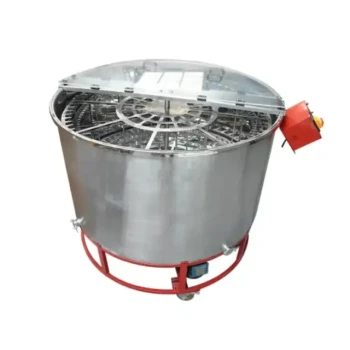
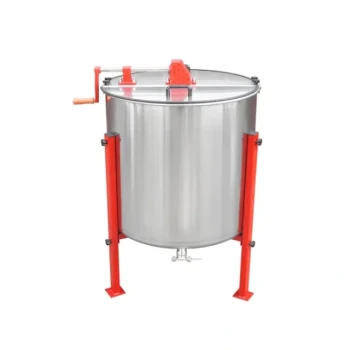
The primary function of a conventional beekeeping extractor during the sampling of Apis mellifera is to isolate liquid honey from hive combs using centrifugal force. This mechanical process spins the honeycomb frames at high speeds, effectively detaching the honey without damaging the wax structure or introducing contaminants.
Core Insight: The extractor is not merely a harvesting tool; it is a purification instrument. By avoiding the crushing involved in manual methods, it delivers a high-purity, consistent liquid substrate essential for accurate scientific testing, specifically palynological (pollen) analysis.
The Mechanics of Extraction
Utilizing Centrifugal Force
The extractor operates by placing honeycomb frames into a spinning basket or drum. An electric motor provides the necessary torque to rotate this drum at high speeds. This generates centrifugal force, which pulls the honey out of the cells and throws it against the extractor walls, where it drains into a collection tray.
Non-Destructive Separation
Unlike traditional methods that squeeze or cut the comb, centrifugal extraction separates the liquid physically without altering the solid state of the wax. This is the fundamental mechanical difference that defines its utility in modern apiculture.
Ensuring Sample Quality for Analysis
Preventing Impurity Contamination
When honey is harvested by squeezing, wax particles and other debris are inevitably mixed into the sample. The centrifugal extractor eliminates this issue. It provides a clean separation, ensuring the sample remains free of the physical impurities associated with manual handling.
Standardization for Palynology
For scientific applications, specifically palynological analysis, the substrate must be pure. The extractor ensures the collected sample is representative of the hive's production and consistent in texture. This high-purity liquid is the required baseline for accurate laboratory examination of pollen content.
Operational Efficiency and Hive Health
Preserving Comb Integrity
Because the extraction process is non-destructive, the wax combs maintain their physical structure. This allows beekeepers to return the intact frames directly to the hive for immediate reuse.
Reducing Biological Energy Costs
Bees expend significant energy and time secreting wax to build combs. When the comb structure is preserved by the extractor, the colony does not need to rebuild. This allows the bees to redirect their energy toward foraging and honey storage, effectively shortening the production cycle.
Understanding the Trade-offs
Equipment Dependence
While superior in result, centrifugal extraction introduces logistical requirements. It relies on specialized machinery and a power source for the motor. This contrasts with manual methods that require little to no infrastructure.
Maintenance for Purity
To maintain the high purity required for sampling, the equipment demands rigorous maintenance. The collection tanks and spinning drums must be kept free of residue to prevent cross-contamination between different sample batches.
Making the Right Choice for Your Goal
The choice to use a conventional extractor depends on your specific objectives regarding data quality and colony management.
- If your primary focus is scientific accuracy: Use a centrifugal extractor to generate a contaminant-free, high-purity substrate suitable for palynological analysis.
- If your primary focus is colony efficiency: Rely on the extractor to preserve wax combs, minimizing the metabolic cost to the bees and accelerating the next honey storage cycle.
The conventional extractor is the critical link between maintaining high analytical standards and supporting the biological sustainability of the hive.
Summary Table:
| Feature | Centrifugal Extraction | Manual Squeezing |
|---|---|---|
| Primary Force | Centrifugal (Spinning) | Mechanical Compression |
| Honey Quality | High Purity (Lab Grade) | High Impurities (Wax/Debris) |
| Comb Impact | Non-destructive (Reusable) | Destructive (Requires Rebuild) |
| Main Benefit | Accurate Palynological Data | Low Equipment Cost |
| Hive Efficiency | High (Energy Saving) | Low (Metabolic Strain) |
Elevate Your Apiary Operations with HONESTBEE
At HONESTBEE, we specialize in empowering commercial apiaries and distributors with the professional-grade tools needed for scientific-level honey production. Whether you require high-speed centrifugal extractors to ensure sample purity or specialized honey-filling machines to scale your output, our comprehensive wholesale portfolio has you covered.
Our Value to You:
- Industrial-Scale Machinery: From hive-making to advanced processing equipment.
- Essential Consumables: A full spectrum of beekeeping tools and industry essentials.
- Commercial Expertise: Tailored solutions for large-scale operations and global distributors.
Ready to optimize your honey harvest and reduce biological energy costs for your colonies? Contact our expert team today to explore our wholesale equipment offerings!
References
- Fabio Fernando Flores, Liliana C. Lupo. Pollen analysis of honeys from Apis mellifera and Tetragonisca fiebrigi (Hymenoptera: Apidae) in the Upper Paraná Atlantic Forest, Argentina. DOI: 10.1590/2175-7860202172100
This article is also based on technical information from HonestBee Knowledge Base .
Related Products
- HONESTBEE 72 Frame Industrial Electric Honey Extractor for Beekeeping
- Manual Hand Crank 4 Frame Honey Extractor Centrifuge for Beekeeping
- 2 Frame Stainless Steel Manual Honey Spinner Extractor for Beekeeping
- HONESTBEE 2 Frame Manual Acrylic Honey Extractor Beekeeping Equipment
- HONESTBEE 3-Frame Manual Acrylic Honey Extractor
People Also Ask
- What is the importance of balancing honeycomb frames within a honey extractor? Ensure Stability and Protect Machinery
- How is honey separated from the frames after they are uncapped? Efficient Extraction Methods for High Yields
- What are the main benefits of using a honey extractor? Maximize Yields and Protect Your Honeycomb
- What are the recommended methods for removing honey from the honeycomb? Top Extraction Techniques for Maximum Efficiency
- How do manual honey extractors compare to electric honey extractors? Choosing the Right Tool for Your Apiary Growth