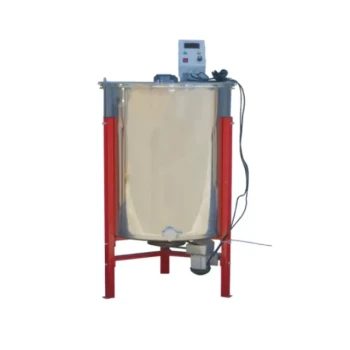
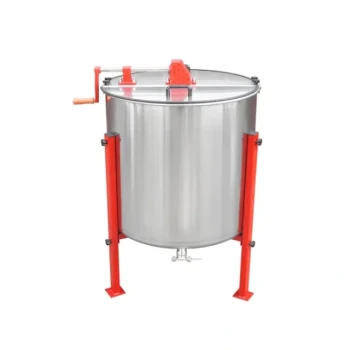
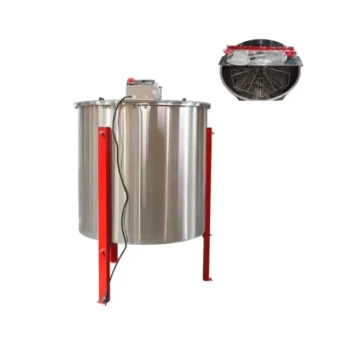
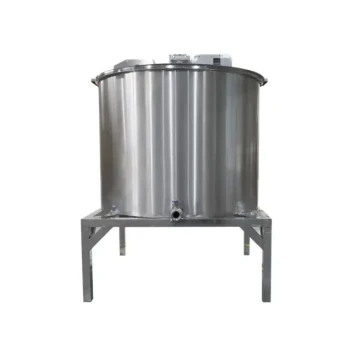
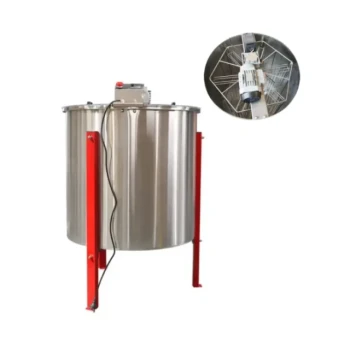
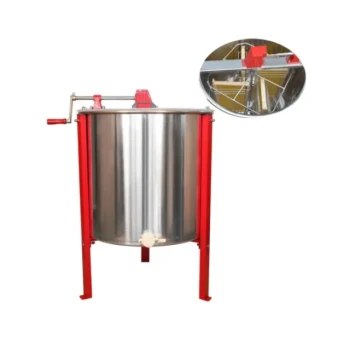
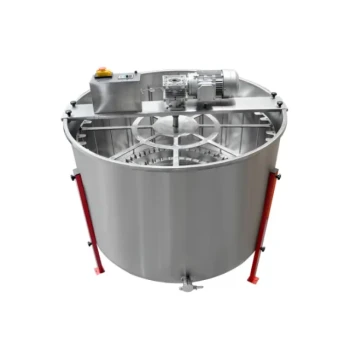
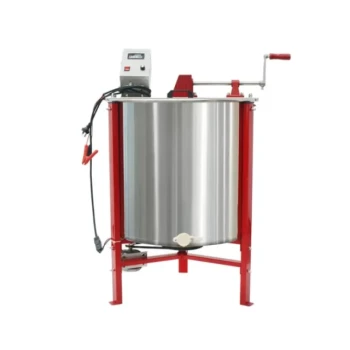
Centrifugal honey extractors leverage high-speed rotation to generate centrifugal force, effectively flinging liquid honey out of the comb cells. This mechanical separation allows for the harvesting of mature honey without destroying the delicate wax structure of the honeycomb frames.
By substituting destructive crushing methods with rotational force, the extractor preserves the wax comb for immediate reuse. This drastically reduces the biological energy the colony must spend on rebuilding, shifting their focus directly back to honey production.
How the Separation Process Works
Generating Centrifugal Force
The extractor works by spinning the honeycomb frames at high speeds. This rotation creates centrifugal force, which acts on the liquid honey inside the cells.
Expelling the Honey
Before placement in the extractor, the wax cappings are removed from the frames. The centrifugal force then pulls the honey out of these uncapped cells, pushing it away from the center of rotation.
Collection and Drainage
The expelled honey is flung against the inner wall of the extractor drum. From there, gravity takes over, and the honey drains to the bottom of the unit for collection, leaving the wax structure largely untouched.
The Biological Advantage: Why Preservation Matters
Saving Bee Energy
Producing wax is a metabolically expensive process for honeybees. They must consume significant amounts of honey and energy to secrete the wax necessary for building combs.
Accelerating Production Cycles
When a centrifugal extractor is used, the beekeeper returns intact, empty combs to the hive. Because the bees do not need to rebuild the nest structure, they can immediately begin refilling the cells, significantly shortening the honey production cycle.
Hygiene and Purity Benefits
Reducing Contamination Risks
Traditional harvesting methods often involve crushing the comb and filtering the result. This can inadvertently mix pollen, larvae, or other hive impurities into the honey.
Cleaner Extraction
By spinning the honey out rather than crushing the medium, the centrifugal method maintains a higher level of hygiene. It ensures that the final product is primarily pure honey, separated cleanly from the solid hive components.
Operational Requirements and Trade-offs
The Necessity of Structural Support
While efficient, centrifugal force places physical stress on the comb. This method is generally not suitable for natural combs lacking support; frames typically require wire or plastic foundations to prevent the comb from breaking apart during the spin.
Importance of Load Balancing
To prevent damage, the frames inside the extractor must be balanced carefully. An uneven load can cause severe vibration, which may damage the extraction equipment or shatter the honeycomb frames you are trying to preserve.
Making the Right Choice for Your Goal
- If your primary focus is maximizing yield speed: Prioritize returning intact, spun frames to the hive immediately to minimize the colony's downtime.
- If your primary focus is equipment longevity: Ensure you strictly balance the weight of the frames within the extractor basket to avoid mechanical wear or frame breakage.
The centrifugal extractor represents the optimal balance between efficient harvesting and sustainable colony health.
Summary Table:
| Feature | Centrifugal Extraction Benefit | Impact on Apiary Operations |
|---|---|---|
| Comb Integrity | Preserves wax structure for immediate reuse | Reduces colony energy expenditure & downtime |
| Honey Purity | Separates honey without crushing pollen/larvae | Higher quality, cleaner final product |
| Production Speed | Rapid rotational force extraction | Significantly shortens the honey production cycle |
| Structural Need | Best with wired or plastic foundations | Ensures stability during high-speed rotation |
Scale Your Honey Production with HONESTBEE
At HONESTBEE, we specialize in empowering commercial apiaries and distributors with the high-performance tools needed to excel in the competitive beekeeping industry. From precision-engineered centrifugal honey extractors and honey-filling machines to durable hive-making hardware and essential consumables, our comprehensive wholesale portfolio is designed for maximum efficiency.
Ready to enhance your yield and protect your colonies? Contact our expert team today to discover how our specialized machinery and tailored beekeeping solutions can streamline your operations and grow your business.
References
- Shunhua Yang, Kun Dong. Impact of Comb Cell Diameter on Nectar Evaporation Efficiency in Honey Bees. DOI: 10.3390/insects16010071
This article is also based on technical information from HonestBee Knowledge Base .
Related Products
- electric honey extractor honey centrifuge 3 frame honey extractor stainless steel honey frame extractor
- Manual Hand Crank 4 Frame Honey Extractor Centrifuge for Beekeeping
- Professional 4 Frame Self Reversing Electric Honey Extractor for Beekeeping
- 24 Frame Honey Extractor Commercial Radial Honey Frame Extraction Machine
- Electric 4 Frame Tangential Honey Extractor
People Also Ask
- What are the characteristics of electric honey extractors? Boost Your Apiary Efficiency with Automated Technology
- What are the disadvantages of using an electric honey extractor? Weighing Cost, Power, and Comb Safety
- What are the advantages of an electric honey extractor? Boost Efficiency and Scale Your Honey Production
- What are the technical advantages of electric honey extractors? Maximize Yield and Protect Your Bee Colony
- How does an electric honey extractor affect the quality of honey? Preserve Flavor & Purity with Precision Extraction