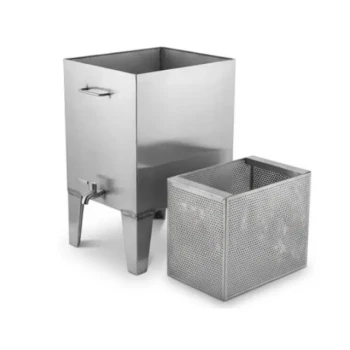
The primary function of a detergent solution in beeswax extraction is to dissolve and wash away honey residues adhering to the crude beeswax. By soaking the wax in this solution, you effectively strip away sticky, water-soluble impurities before the material enters the heating phase.
The detergent solution acts as a critical pre-treatment agent. It targets and removes honey remnants to ensure the thorough separation of beeswax from contaminants during the subsequent thermal melting process.
The Mechanics of Purification
Targeting Water-Soluble Impurities
Crude beeswax obtained directly from honeybee colonies is rarely pure; it is structurally bound with residual honey.
Honey is water-soluble, whereas beeswax is hydrophobic (repels water). The detergent solution bridges this gap, penetrating the crude structure to dissolve the honey residues that plain water might not rinse away effectively.
The Role of Pre-Treatment
This soaking phase is distinct from the melting phase; it serves as a preparatory step.
By introducing the detergent solution before heat is applied, you ensure the raw material is free of heavy sugar residues. This simplifies the later stages of extraction, preventing the honey from interfering with the wax recovery.
Understanding the Process Implications
Improving Thermal Melting Efficiency
The ultimate goal of extraction is to melt the wax down for filtration and molding.
If honey residues are left on the wax, the separation of impurities during thermal melting becomes difficult. The detergent soak ensures that the melting process is dedicated to liquefying the wax rather than separating it from sticky contaminants.
Ensuring Thorough Separation
The quality of the final product depends on how well the beeswax is isolated from non-wax materials.
The detergent solution facilitates a thorough separation, ensuring that the final yield consists of pure beeswax rather than a mixture of wax and caramelized sugar or organic debris.
Optimizing Your Extraction Workflow
To achieve the best results, tailor your approach based on your specific quality targets:
- If your primary focus is Purity: Ensure the crude beeswax is soaked long enough for the detergent to fully dissolve all visible honey residues before heating.
- If your primary focus is Process Stability: Use this pre-treatment to prevent water-soluble impurities from contaminating the melting vessel or complicating the filtration step.
A clean start with a detergent soak is the most reliable variable for predicting a clean final product.
Summary Table:
| Process Phase | Function of Detergent Solution | Benefit to Final Product |
|---|---|---|
| Pre-treatment | Dissolves water-soluble honey residues | Removes sticky contaminants early |
| Soaking Phase | Penetrates crude wax structures | Strips away honey that water alone misses |
| Thermal Melting | Prevents sugar caramelization | Ensures thorough separation and higher yield |
| Final Output | Isolates beeswax from organic debris | Guarantees high-quality, pure beeswax |
Maximize Your Beeswax Production with HONESTBEE
For commercial apiaries and distributors, achieving pharmaceutical-grade purity starts with the right equipment. HONESTBEE provides the industry's most comprehensive wholesale range, from specialized honey-filling machines to advanced beekeeping machinery designed for high-efficiency extraction.
Whether you are scaling up your processing line or sourcing professional-grade consumables, our expertise ensures your operation runs smoothly and profitably. Let us help you refine your workflow with tools that deliver a clean start and a perfect finish.
Contact HONESTBEE Experts Today
References
- K.A. FASASL, S. L. O. Malaka. Life Cycle and Impact of Greater Wax Moth. Gallenia niellonella L (Lepidoptera: Pyralidae), Feeding on Stored Beeswax.. DOI: 10.36108/nje/6002/32.0130
This article is also based on technical information from HonestBee Knowledge Base .
Related Products
- Solar Beeswax Melter Easy Solar Wax Melter for Beeswax
- Steam Beeswax Melter Wax Warmer for Wax Processing
- Beeswax Melter for Candle Making Honey Bee Wax Melter
- Adjustable Formic and Acetic Acid Dispenser for Bee Mite Treatment
- Compact Circular Bee Mite Treatment Dispenser
People Also Ask
- How does a solar melter work to process beeswax? The Eco-Friendly Way to Pure Wax
- What is a solar wax melter and how does it work? Harness the Sun for Pure Beeswax
- What are the benefits of using a solar wax melter? Harness the Sun for Pure, Cost-Effective Beeswax
- What is the purpose of a solar wax melter in beekeeping? Sustainable Wax Processing for Modern Apiaries
- How does a solar-powered frame wax melter work? Harness the Sun for Sustainable Beekeeping