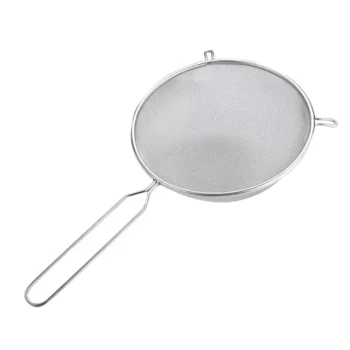
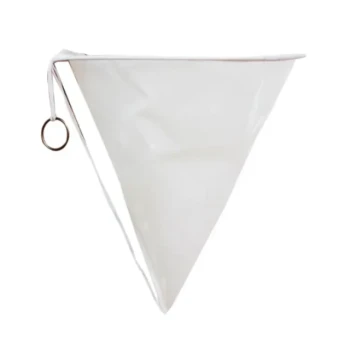
The primary function of a high-mesh stainless steel sieve in the initial honey processing stage is to act as a definitive mechanical barrier against solid contaminants. This tool serves to physically remove residual wax debris, bee parts, and other suspended impurities that inevitably mix with the honey during the crushing or pressing of the hive.
Core Takeaway While the immediate goal is removing physical debris like wax and bee fragments, the ultimate purpose is ensuring the honey meets strict market sensory standards. By creating a stable, corrosion-resistant barrier, the sieve guarantees both the visual clarity and the chemical purity of the final product.
The Mechanics of Physical Purification
Removing Macro-Impurities
The extraction process—whether by pressing or crushing—introduces significant solid matter into the raw honey.
Focusing on Suspended Solids
The high-mesh sieve is specifically engineered to intercept these suspended solids. It targets wax particles, honeycomb fragments, and organic debris that would otherwise cloud the product.
Enhancing Visual Clarity
Beyond simple cleaning, this step is vital for marketability. The filtration process polishes the honey, significantly enhancing its transparency to meet the sensory quality standards expected by consumers.
Why Material Selection Matters
Resisting Acidic Corrosion
Honey is naturally acidic and high in sugar, creating a chemically aggressive environment for processing equipment.
Preventing Chemical Leaching
Stainless steel is essential because it offers high chemical stability. Unlike lesser metals, it resists corrosion and prevents metal ions from leaching into the honey, ensuring the product remains chemically pure and safe for consumption.
Meeting Hygiene Standards
The use of food-grade stainless steel allows producers to comply with rigorous food safety regulations. It ensures the equipment remains sanitary and durable despite constant contact with the viscous, acidic fluid.
Impact on Long-Term Stability
Reducing Fermentation Risks
Filtration does more than improve looks; it stabilizes the product. By removing organic matter and proteinaceous debris, the sieve reduces the risk of microbial fermentation that can spoil the honey.
Standardizing for Analysis
For producers conducting quality control, this initial filtration is a prerequisite. It ensures that subsequent checks on physicochemical properties are accurate and not skewed by random particulate matter.
Understanding the Trade-offs
Flow Rate vs. Filtration Quality
There is an inherent tension between the mesh size and processing speed. A higher mesh count (finer screen) captures smaller particles for better clarity but significantly increases the time required for the honey to pass through, potentially creating bottlenecks.
The Risk of Clogging
High-mesh sieves are prone to rapid clogging, especially when processing honey with high wax content. This necessitates frequent cleaning or a multi-stage "gradient" filtration approach (using a coarse filter before the fine filter) to maintain efficiency without sacrificing quality.
Making the Right Choice for Your Goal
To select the appropriate filtration strategy, consider your end-use requirements:
- If your primary focus is Commercial Retail: Prioritize a higher mesh count to maximize visual clarity and shelf stability, ensuring the product appeals to consumer sensory expectations.
- If your primary focus is Laboratory Analysis: Ensure the sieve effectively removes all solid particulate interference to guarantee the accuracy of physicochemical detection results.
Effective filtration is the bridge between raw extraction and a stable, high-value product.
Summary Table:
| Feature | Function & Benefit |
|---|---|
| Core Function | Removes wax debris, bee parts, and suspended organic solids |
| Material Advantage | Food-grade stainless steel resists acidic honey corrosion and leaching |
| Sensory Impact | Enhances visual clarity and transparency for retail marketability |
| Stability Factor | Reduces fermentation risk by removing organic proteinaceous debris |
| Sieve Density | High-mesh count ensures finer filtration for premium quality standards |
Elevate Your Honey Quality with HONESTBEE
At HONESTBEE, we understand that professional-grade filtration is the difference between raw harvest and a premium, market-ready product. As a dedicated partner to commercial apiaries and distributors, we provide a comprehensive range of food-grade stainless steel sieves and advanced honey-processing machinery designed to withstand the rigors of industrial beekeeping.
From high-precision filtration tools to honey-filling machines and essential consumables, our wholesale solutions are built to enhance your operational efficiency and product purity. Contact us today to discover how our specialized hardware and beekeeping equipment can help you meet the highest industry standards.
References
- Alemayehu Anza, Amssalu Bezabeh. Postharvest Handling Practices and Marketing of Honey at Arba Minch Zuria District of Gamo Zone, Southern Ethiopia. DOI: 10.59122/135a351
This article is also based on technical information from HonestBee Knowledge Base .
Related Products
- Professional Stainless Steel Honey Filter with Support Handle
- Heavy Duty 304 Stainless Steel Honey Dipper
- Stainless Steel Triangle Support Honey Strainer and Filters
- Stainless Steel Double Layer Honey Strainer Sieve Filters
- Professional Stainless Steel Honey Filtering Machine with Water Bath Heating for Beekeeping
People Also Ask
- Why are stainless steel filters essential during the initial purification phase of honey processing? Ensure Purity
- What are the benefits of using a high-quality honey filter? Elevate Purity and Preserve Natural Flavor
- What is the primary purpose of honey filters? Achieve Professional Clarity & Pure Honey Quality
- What micron filter should I use for honey? Choose the Right Filter for Sales or Competitions
- Why do people filter honey? For Clarity, Stability, and Consumer Appeal