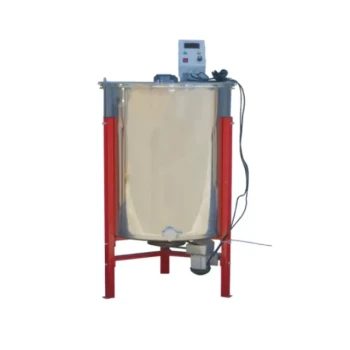
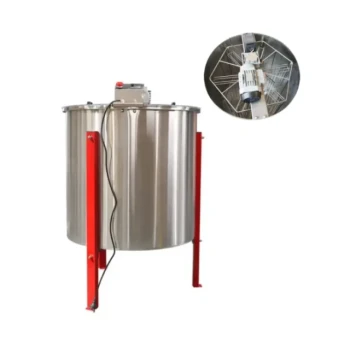
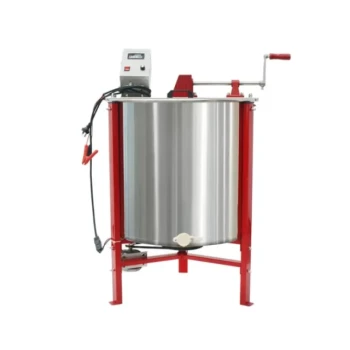
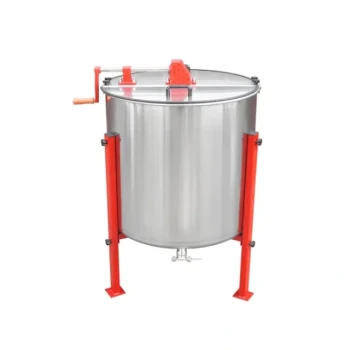
The primary function of a honey centrifuge is to mechanically separate liquid honey from the honeycomb using high-speed rotation. By utilizing centrifugal force, this device flings the honey out of uncapped cells, allowing for efficient extraction without crushing or destroying the delicate wax structure of the frames.
Unlike traditional pressing methods that destroy the honeycomb to retrieve the harvest, a centrifuge extracts honey while keeping the frame intact. This unique capability allows beekeepers to return the empty combs to the hive, saving the colony the immense energy required to rebuild wax and significantly shortening the production cycle.
The Mechanics of Extraction
Leveraging Centrifugal Force
The core mechanism involves spinning the honeycomb frames at high speeds. This generates centrifugal force that pulls the honey outward, separating it from the wax cells.
Enhancing Purity and Hygiene
Because the process relies on physics rather than crushing pressure, it minimizes the amount of wax debris and impurities that mix with the final product.
This mechanical separation helps maintain the honey's natural flavor and physicochemical properties, providing a cleaner raw material for filtration or bottling.
The Strategic Value of Comb Preservation
Recycling Hive Infrastructure
The most critical advantage of the centrifuge is that it prevents damage to the honeycomb structure.
Apiarists can recycle these intact frames back into the apiary immediately after harvesting.
Increasing Seasonal Yield
Bees consume a significant amount of honey and energy to secrete the wax needed to build new combs.
By returning drawn combs to the hive, you allow the colony to focus its energy on foraging and nectar collection rather than construction, directly increasing overall honey production.
Understanding the Trade-offs
Equipment Complexity and Cost
While efficient, centrifuges represent a higher initial investment compared to simple gravity draining or crush-and-strain methods.
They also require maintenance, cleaning, and storage space, which can be a logistical challenge for smaller operations.
Risk of Structural Damage
While designed to protect combs, improper operation can still cause damage.
If the rotation speed is too high, or if the frames are unbalanced, the centrifugal force can blow out the wax foundation, rendering the frame unusable for immediate recycling.
Making the Right Choice for Your Goal
Selecting the right extraction method depends on the scale of your operation and your available resources.
- If your primary focus is large-scale production: Prioritize an electric industrial centrifuge to maximize throughput and ensure consistent hygiene standards.
- If your primary focus is remote or low-energy harvesting: Utilize a manual centrifuge to achieve efficient separation without requiring electrical infrastructure.
- If your primary focus is colony health: Ensure your centrifuge is calibrated to run smoothly, preserving every frame to reduce the biological stress on your bees.
The honey centrifuge is not just a harvesting tool; it is a resource management device that balances human yield with the biological needs of the colony.
Summary Table:
| Feature | Function & Benefit |
|---|---|
| Core Mechanism | Uses centrifugal force to separate liquid honey from cells without crushing the wax. |
| Comb Preservation | Keeps frames intact so they can be reused immediately, saving bee energy. |
| Purity Control | Minimizes wax debris and impurities compared to traditional pressing methods. |
| Yield Efficiency | Accelerates the harvest cycle by reducing the time bees spend rebuilding combs. |
| Scalability | Available in manual and electric models to suit different apiary sizes. |
Elevate Your Commercial Honey Production with HONESTBEE
Are you looking to scale your apiary's efficiency and maximize seasonal yields? HONESTBEE specializes in supporting commercial apiaries and distributors with premium, heavy-duty beekeeping solutions. From high-capacity electric honey centrifuges to automated honey-filling machines and hive-making equipment, we provide the full spectrum of tools needed to optimize your operations.
Our comprehensive wholesale offering ensures you have access to both durable machinery and essential industry consumables. Partner with us to streamline your harvest and protect your colony's infrastructure.
Ready to upgrade your equipment? Contact HONESTBEE today to discuss our wholesale catalog and discover how we can help your business thrive.
References
- Weiwen Jiang, Jean-Charles Robinson. Melissopalynological Analysis of Honey from French Guiana. DOI: 10.3390/foods13071073
This article is also based on technical information from HonestBee Knowledge Base .
Related Products
- electric honey extractor honey centrifuge 3 frame honey extractor stainless steel honey frame extractor
- Manual Hand Crank 4 Frame Honey Extractor Centrifuge for Beekeeping
- Professional 4 Frame Self Reversing Electric Honey Extractor for Beekeeping
- Honey Concentrating Vacuum Heating Thickening Machine Dehumidifier for Honey
- Honey Concentrating and Filtering Dehumidifier Machine 2T Capacity for Honey
People Also Ask
- What are the characteristics of electric honey extractors? Boost Your Apiary Efficiency with Automated Technology
- What are the disadvantages of using an electric honey extractor? Weighing Cost, Power, and Comb Safety
- What are the advantages of an electric honey extractor? Boost Efficiency and Scale Your Honey Production
- What are the technical advantages of electric honey extractors? Maximize Yield and Protect Your Bee Colony
- How does an electric honey extractor affect the quality of honey? Preserve Flavor & Purity with Precision Extraction