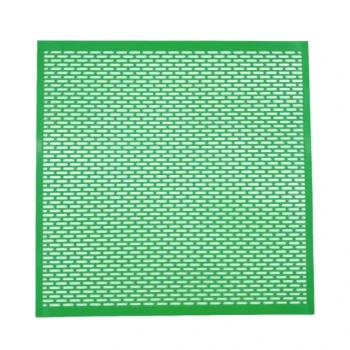
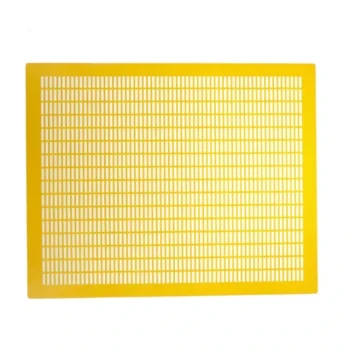
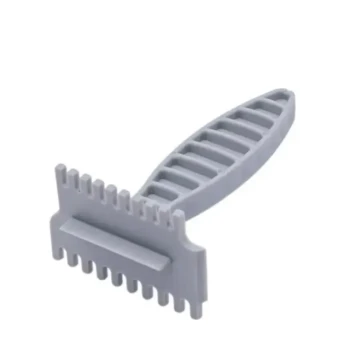
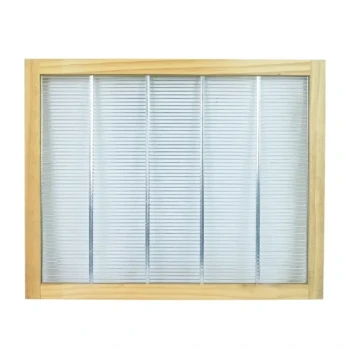
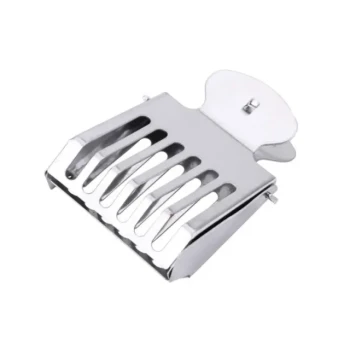
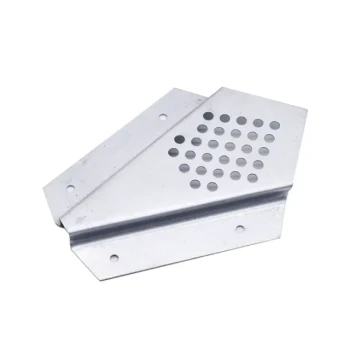
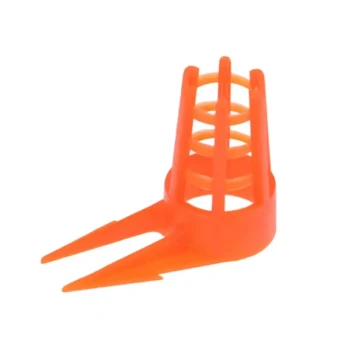
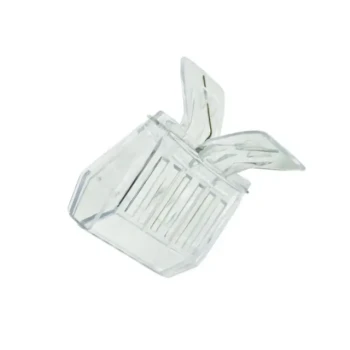
A Queen Excluder is a precision spatial management tool designed to enforce strict zoning within a commercial beehive. It utilizes specific aperture sizes to physically restrict the queen bee to the lower brood chamber while allowing smaller worker bees to pass through to the upper supers.
The excluder’s primary function is to segregate the hive into reproductive and storage zones. By preventing the queen from entering the honey supers, it ensures the harvest remains free of brood impurities and facilitates organized colony management.
The Mechanics of Spatial Management
Precision Physical Barriers
The device operates on a simple but effective principle of calibrated pore sizes. These holes are engineered to be large enough for worker bees to traverse freely but too narrow for the larger abdomen of the queen bee.
This physical constraint limits the queen's egg-laying activities to specific sections of the hive, typically the bottom box known as the brood chamber.
Ensuring Honey Purity
The most critical outcome of using an excluder is the protection of the honey production area. By barring the queen from the upper levels, she cannot lay eggs in the honey supers.
This ensures that the honey harvested is free of larvae or pupae impurities. It keeps the supers dedicated strictly to honey and pollen storage, significantly enhancing the quality and purity of the final product.
Coordinating Colony Rhythm
Beyond purity, the excluder plays a role in the broader strategy of swarming management. It helps coordinate the rhythm of colony expansion by defining clear boundaries for reproduction.
When used in conjunction with artificial splitting techniques, it aids in preventing colony loss. It works alongside the addition of supers—which provide vertical expansion space—to alleviate the overcrowding that often triggers natural swarming.
Operational Considerations
The Necessity of Active Management
While the excluder is a powerful tool for organization, it imposes a hard physical limit on the queen's environment.
Restricting the queen means the beekeeper must actively monitor the brood chamber. You must ensure the queen has adequate space to lay within her designated zone, as she cannot migrate upward to relieve reproductive pressure.
Making the Right Choice for Your Goal
To effectively utilize a Queen Excluder, align its function with your specific management objectives:
- If your primary focus is Honey Purity: Deploy the excluder to guarantee that your extraction frames remain completely free of brood and larval contaminants.
- If your primary focus is Swarm Control: Use the excluder in combination with vertical supers to manage density and coordinate the timing of colony expansion.
Mastering the use of the Queen Excluder allows you to transition from reactive beekeeping to a proactive, highly organized management system.
Summary Table:
| Feature | Primary Function | Key Benefit |
|---|---|---|
| Spatial Zoning | Restricts queen to the brood chamber | Maintains clear boundaries between larvae and honey. |
| Honey Purity | Prevents egg-laying in upper supers | Ensures harvest is free from brood and larval impurities. |
| Swarm Control | Coordinates colony expansion | Manages hive density to prevent natural swarming triggers. |
| Pore Precision | Calibrated physical barrier | Allows worker transit while blocking larger queens. |
Scale Your Apiary Efficiency with HONESTBEE
Maximize your honey purity and colony productivity with professional-grade spatial management tools. At HONESTBEE, we specialize in supporting commercial apiaries and distributors with a comprehensive wholesale range of beekeeping equipment.
From high-precision queen excluders and hive-making machinery to advanced honey-filling systems and essential consumables, we provide the hardware you need to run a proactive management system. Whether you are expanding your commercial operation or sourcing premium supplies for distribution, our expertise is your competitive advantage.
Contact HONESTBEE today to optimize your wholesale supply chain!
References
- Piotr Dziechciarz, Krzysztof Olszewski. Dead Brood of Apis mellifera Is Removed More Effectively from Small-Cell Combs Than from Standard-Cell Combs. DOI: 10.3390/ani12040418
This article is also based on technical information from HonestBee Knowledge Base .
Related Products
- High Performance Plastic Queen Excluder for Beekeeping and Apiary Management
- Professional Plastic Queen Excluder for Modern Beekeeping
- Lightweight Durable Plastic Queen Excluder Scraper for Beekeeping
- Metal Queen Bee Excluder for Beekeeping
- Premium Wood Framed Metal Wire Queen Bee Excluder
People Also Ask
- What are the characteristics of a plastic queen excluder? Key Benefits for Cost-Effective Beekeeping
- What are the operational and cost advantages of using plastic queen excluders over metal or wire excluders in commercial hive management? Discover how they reduce labor, prevent wing damage, and lower total costs.
- What types of queen excluders are available for beekeepers? Choose the Right Tool for Your Hive
- Why are standardized hive frames and queen excluders essential for maintaining honey purity and quality? Scale Your Purity
- Do plastic queen excluders work? A Cost-Effective Solution for Modern Apiaries